The plague on the firstborn sons of Egypt was the tenth and final plague God sent on the nation of Egypt, and it was the one that finally ended the brutal enslavement of the people of Israel.
In Exodus 11:5-6, God declared through Moses, “Every firstborn son in Egypt will die, from the firstborn son of Pharaoh, who sits on the throne, to the firstborn son of the female slave, who is at her hand mill, and all the firstborn of the cattle as well. There will be loud wailing throughout Egypt-worse than there has ever been or ever will be again.”
This dire prophecy was fulfilled in Exodus 12:29-30, “At midnight the Lord struck down all the firstborn in Egypt, from the firstborn of Pharaoh, who sat on the throne, to the firstborn of the prisoner, who was in the dungeon, and the firstborn of all the livestock as well.
The other plagues were terrible (see Exodus chapters 7-10), but the tenth plague was particularly harsh.
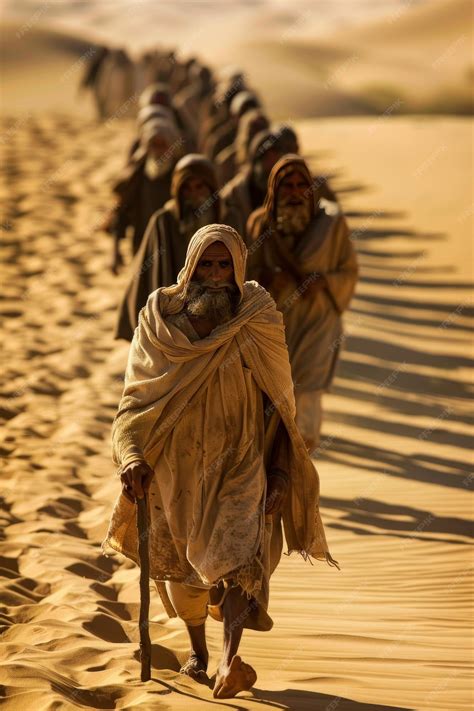
Israelites in the desert
Read also: Black Education Pioneers
The Context of the Plague
Warnings and Opportunities
First, God gave Pharaoh and the Egyptians nine warnings, in the form of nine plagues, before He sent the plague that caused the death of the firstborn. With each plague, the Egyptians had an opportunity to repent and release the Israelites from slavery. Every time, the Egyptians refused.
Three times Pharaoh said that he would let the Israelites go, only to change his mind once God ended a plague (Exodus 8:15; 9:35; 10:20). Further, God gave Pharaoh advance warning that all of the firstborn sons of Egypt would die in Exodus 11:4-8.
Retribution for Past Actions
Second, Pharaoh and the Egyptians brought this plague on themselves by their own actions. Exodus 1:22 records a grim edict from the king of Egypt: “Then Pharaoh gave this order to all his people: ‘Every Hebrew boy that is born you must throw into the Nile, but let every girl live.’” That command was given prior to Moses’ birth.
Eighty years later, Moses came to Pharaoh and asked for him to release the Israelites from slavery. There is no indication that the murdering of Hebrew boys ever ceased. How many thousands of Israelite sons had been murdered by the Egyptians? How many Israelite men and women had been murdered during the time of slavery in Egypt?
There is no denying that the tenth plague causing the death of the firstborn of Egypt was severe. But, with the brutal slavery and countless Israelites murdered by Egyptians, whether as adults or as infants, the Egyptians brought God’s brutal judgment on themselves. God had promised Abraham, “I will bless those who bless you, and whoever curses you I will curse” (Genesis 12:3).
Read also: Sade Adu's Grammy Achievement
Theological Significance
God's Choice and Purpose
God consistently chooses unlikely leaders-at least according to human standards. God’s “choosing” is always for a twofold purpose: to rule and represent Yahweh as an image of God and to receive the Eden blessing of abundance. Sometimes, those purposes are separated and split between more than one person.
Ultimately, God wants to bless all humanity, but he chooses one person/family to be a vehicle for that blessing.
At the opening of the Exodus scroll, we’re told that the family of Israel has been fruitful, multiplying in Egypt since the death of Joseph (Exod. 1:7). This detail is a key indicator that God has chosen Israel for the Eden blessing, even though strong and powerful Egypt would be the more obvious choice.
Israel as God's Firstborn Son
The Lord said to Moses, “When you go back to Egypt, see that you perform before Pharaoh all the wonders which I have put in your power; but I will harden his heart so that he will not let the people go. Then you shall say to Pharaoh, ‘This is what the Lord says, “Israel is my son, my firstborn. So I said to you, ‘Let my son go so that he may serve me;’ but you have refused to let him go.
Yahweh is so closely identifying himself with Israel that he is designating them as his image on earth.
Read also: About Macon Bolling Allen
In Exodus 4:23, Yahweh explains the final plague against Egypt, the plague of the firstborn. All people of all statuses belong to Yahweh, so he can give or take away their lives.
Challenge to Power Structures
In the plague of the firstborn, Yahweh challenges Egypt’s sense of security and power-the continuation of its lineages through firstborn sons. However, this is not the only power structure Yahweh is challenging here.
The Passover event is a strike not only against humans and animals but also against the elohim (gods) of Egypt. This sounds odd unless we consider this against the backdrop of the rest of the Hebrew Bible. Again and again, we read that human choices to do evil are always intertwined with the influence and animating power of spiritual forces-spiritual beings set against Yahweh and his purposes.
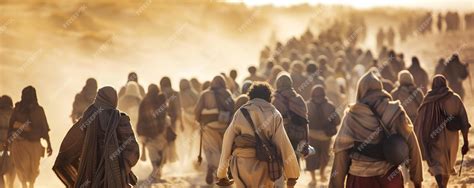
Departure of the Israelites from Egypt
The Passover and Redemption
Yahweh reverses what Pharaoh brought on Israel when he decreed that all firstborn sons be killed (Exod. 1:15-16), but Yahweh provides something Pharaoh never did: a choice and a chance to be saved. Just as when he asks Abraham to sacrifice Isaac, Yahweh is the one who both demands the life of the firstborn and provides a substitutionary sacrifice.
Before this final plague, God commands Moses to tell the Israelites to mark a lamb's blood above their doors in order that the Angel of Death will pass over them (i.e., that they will not be touched by the death of the firstborn).
How was the doorway transformed? The blood was the "sign" of the portal to salvation for mankind. The posts on either side of the door and the lintel above the door became a "sign of salvation".
On Passover evening the only person who had to know how to apply the rule was the Angel of Death.
Pharaoh orders the Israelites to leave, taking whatever they want, and asks Moses to bless him in the name of the Lord.
The 10 Plagues of Egypt: Moses, Pharaoh, and the Power of Faith | AI Animation
Historical Context and Interpretations
Scholars are in broad agreement that the publication of the Torah took place in the mid-Persian period (the 5th century BCE).
The Book of Deuteronomy, composed in stages between the 7th and 6th centuries, mentions the "diseases of Egypt" (Deuteronomy 7:15 and 28:60).
In visual art, the plagues have generally been reserved for works in series, especially engravings. Still, relatively few depictions in art emerged compared to other religious themes until the 19th century, when the plagues became more common subjects, with John Martin and Joseph Turner producing notable canvases.
The Ten Plagues
The Book of Exodus, various translations, chapters 7 to 12--The plagues:
- The river Nile turned the colour of blood, the water stank and the fish died
- Hordes of frogs left the river, then they died and their bodies stank
- Swarms of gnats attacked the people and their animals
- Swarms of flies then did the same
- An epidemic disease killed many farm animals
- Boils and skin sores broke out on the people and their animals
- A violent hail storm ruined the crops
- A swarm of locusts ate what was left of them
- Darkness blanketed the country for three days
- The eldest child in each family died suddenly, and so did the first born animals.