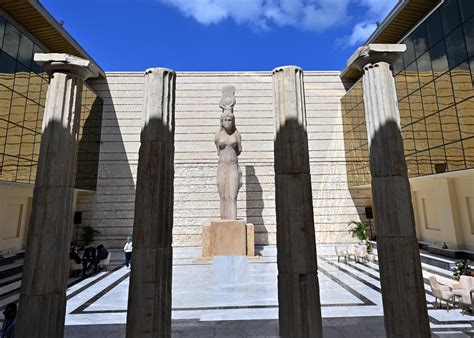
The Graeco-Roman Museum in Alexandria, Egypt, is an archaeological museum housing a rich collection of artifacts from the Graeco-Roman period. Founded in 1892, the museum offers visitors a glimpse into the art, culture, and history of ancient Greece and Rome within the context of Egypt.
Historical Overview
The museum was erected in 1892, initially housed in a five-room apartment on Rosetta Street (later Avenue Canope, now Horriya). In 1895, it moved to a larger building near Gamal Abdul Nasser Street. The current museum building, with its Greek Revival-style architecture, was designed by German engineer Dietrich and Dutch engineer Leon Sténon. It first opened its doors in September 1895.
Giuseppe Botti served as the museum's first director. The museum's collection grew through donations from wealthy Alexandrians and excavations led by successive directors, both within the city and its surroundings. Objects from the Organization of Antiquities in Cairo, particularly those from the Pharaonic period, and digs in Fayoum and Benhasa also contributed to the collection.
Renovation and Reopening
In 2005, the museum closed for a comprehensive expansion and redevelopment project. The renovation and restoration project started in 2009 but was halted in 2011 due to funding shortages. It was reopened after nearly two decades of closure.
The museum development project included painting the interior and exterior walls, reinforcing the old walls with an iron structure, restoring the museum’s classic facade, and renewing the lighting and security systems. An additional hall has been opened, serving as a gypsotheca, housing gypsum reproductions of antiquities, some of which are on display in the museum. The project also included improving services provided to visitors, such as cafeterias and a gift shop.
Read also: Journey Through Roman Morocco
Collections and Exhibits
The Graeco-Roman Museum houses a collection of over 40,000 objects, including sculptures, mosaics, woodwork, and coins. The museum consists of more than 27 halls, with more than 6,000 artifacts on display, walking you through various facets of Egypt’s civilization in the Greek and Roman eras until 641 AD.
In the ground floor there are 27 halls with antiquities arranged in chronological order, starting from before Alexander the Great (5th century BC) until the Byzantine era (6th century AD). Finally in the first floor the permanent exhibition is unfolded according to a thematic classification. There are halls dedicated to the Nile, the Agora, the Red Land (desert), industry and trade, numismatics and currency, Alexandrian art, the Bubasteion, the area of Kom el-Shoqafa region, Alexandrian sculpture.
The permanent exhibition covers topics such as the ruling state and political life in Egypt during the Ptolemaic and Roman era, Greek and Roman daily life in Alexandria, and religion and worship in the Greek and Roman eras. The display also presents the doctrinal development of funerary ideas in the Greek and Roman eras through mummies, amulets, canopic vessels, funerary tombstones, Fayum portraits, and coffins across the different eras of Alexandria in particular and Egypt in general.
Among the objects in the collection are a cast of the Rosetta Stone. There is a colossal porphyry statue representing an emperor or Jesus Christ, found outside the Attarin Mosque, Alexandria, and believed to be the largest example known in that material. The collection also includes terra-cottas, Tanagra figurines, capitals, pottery, silver objects, and coins.
The Greco-Roman Museum pays homage to Alexandria’s founder, Alexander the Great, through this section. In 306/5 BC, Ptolemy, the son of Lagos, declared himself the king of Egypt and consistent the construction of Alexandria. It’s believed that Ptolemy I was the one who initiated the concept the Mouseion (the shrine/temple of muses) and its great library.
Read also: Roman Province of Africa
The Greco-Roman era in Egypt, that lasted for almost a millennium, saw the funerary beliefs of 3 of the most important civilizations in the history of mankind come together. The Afterlife exhibits showcases the tools and objects that were used in burials during that time.
Byzantine art was a form of imperial art inspired by Christianity and Greek mythology. Coptic art first came out in Egypt around the 2nd century AD with the spread of Christianity. The most prominent artistic product in Coptic art was textiles, as they were not just vibrant fabrics, but also served as a source of information about the social classes.
The museum introduces its visitors to the principals Alexandria have always reflected, knowledge and intellectuality.
Practical Information
The Greco-Roman Museums is located on Fouad Street, also known as Al Horreya Road’s extension; however, the entrance is from the side road, Al Mathaf street. If you’re coming from Cairo, the Greco-Roman Museum is only 10 minutes away from the Cairo-Alexandria Desert Road. It’s also a 4-minute ride from the Alexandria Railway Station.
On-site amenities include restrooms, both an outdoor and indoor cafeteria, as well as a gift shop. There are also elevators available, making the museum accessible to everyone. Be strategic with your itinerary.
Read also: African American History in Northeast Louisiana
My top 2 hotels in the area are Steigenberger Cecil Alexandria and Paradise Inn Windsor Palace - the first one is a bit pricier but it’s my favorite.
The Graeco-Roman Museum of Alexandria officially open
Other Museums and Archaeological Sites in Alexandria
While the Graeco-Roman Museum is a key attraction, Alexandria offers other significant sites related to the Greco-Roman period:
- Alexandria National Museum: Housed in a restored Italian-style palace, this museum features artifacts from different historical periods, including the Greco-Roman era.
- Kom el-Dikka: This archaeological site contains the ruins of a Roman-era theater complex and the Villa of the Birds, a Roman-era residential complex.
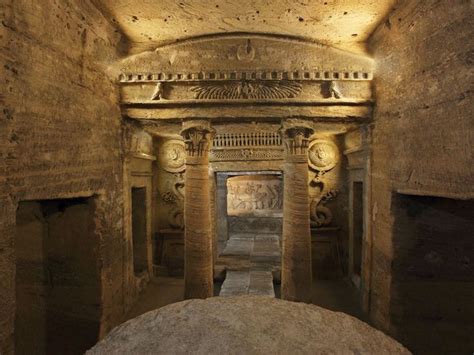
- Catacombs of Kom el-Shoqafa: A historical necropolis from the Greco-Roman period, this underground burial complex combines ancient Egyptian, Greek, and Roman architectural styles.
These sites, along with the Graeco-Roman Museum, provide a comprehensive view of Alexandria's rich history and cultural heritage.
The Sensory Experience of Ancient Art
Archaeologists are increasingly recognizing the importance of sensory experiences in understanding ancient cultures. This includes not only visual aspects but also olfactory, tactile, gustatory, and auditory elements.
The white marble artifacts seen in museums are far from “representative” of ancient art, as they were originally painted, yet only few colour traces have survived the ravages of time. Although it is a well established fact that ancient sculpture and architecture were painted, further research is needed.
Besides being painted, ancient sculpture was sometimes embellished with or even dressed in textiles. The addition of textiles potentially transformed their appearance drastically. Thus, neither the marble nor the polychromy alone is sufficient in understanding the original appearance and expression of ancient art.
One of the most interesting things about scent is its impermanence and general absence in archaeological contexts. Scent, however, was a complex and controversial part of the ancient sensory system and it has been argued that the sense of smell is a powerful tool in understanding the Graeco-Roman world.
Sound also influences how we perceive our surroundings, including artefacts. The archaeology of sound or “archaeo-acoustics” is a new research field, which has, so far, focused primarily on music and the relationship between architecture and sound through acoustic analyses of megalithic monuments.
Light played a functional, spiritual, as well as a social role in ancient societies and obviously had an impact on how the colors, for example, were experienced.
Polychromy in Ancient Sculpture
Analyses of the original polychromy of ancient art are carried out, primarily employing non-invasive methods of analysis such as X-ray fluorescence (XRF), UVF and Visible Induced Luminescence (VIL) photography. VIL is a particularly useful tool which enables the identification of the ancient pigment Egyptian Blue - the world’s first synthetic pigment, invented in the 3rd millennium BCE.
UVF works on the principle that some organic compounds fluoresce in ultraviolet light. This is the case with colourants such as madder lake (from the roots of the plant Rubia tinctoria) as well as binding media such as resins, glues, and waxes.
Popular articles:
tags: #Egypt
