Today, we journey to Ethiopia to explore the captivating customs that define traditional Ethiopian weddings. These celebrations often span three days, filled with unique rituals and deep-rooted cultural significance.
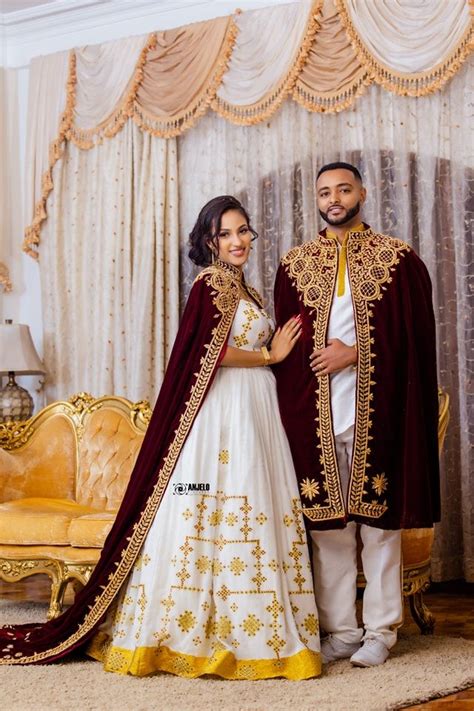
Traditional Ethiopian wedding attire
Ethiopia's Diverse Cultural Landscape
Ethiopia boasts a rich cultural tapestry, with over 80 distinct ethnic groups, each possessing unique marriage customs and traditions. According to estimates, two-thirds of people living in Ethiopia are Christians, and one-third are Muslims. Asides from these two popular religions, there are also a few people in Ethiopia who are Jewish. Despite this diversity, family involvement remains a central theme throughout every aspect of the wedding process.
Each ethnic group has marriage customs and traditions that are peculiar to them. For instance, in the Tigre cultural setting, the women from the bride’s family come together to celebrate the impending wedding by cooking the Ethiopian porridge - popularly known as Genfo. In the Aruz Mawala cultural setting, an event called Aruz Mawalal takes place. The bride and her unmarried friends move from one house to another, singing their traditional songs to announce the wedding date to friends and family. In the Gurage cultural setting, an event called Ensosela takes place. This event brings together the bride, her female friends, and the female family members for this important occasion.
Pre-Wedding Traditions
The beauty of Ethiopian weddings begun long before the big day with plenty of meaningful prewedding and engagement customs.
Read also: Ethiopian Cuisine: Philadelphia Guide
The Shimagelay
The Shimagelay ceremony typically takes place during the morning of the wedding ceremony and "involves the future groom sending senior members of his family to the bride's home to request her hand in marriage. The elders elaborate on the groom's background, family upbringing and qualities, trying to convince the bride's parents that he can care for her financially, emotionally and spiritually," explains Khalil. As for the bride's family, they "usually resist at the door. There is a friendly and fun tussle before they finally let the groom into the house. Once he is in, he presents his gift to the bride and then everyone dances, and enjoys Ethiopian coffee and breakfast together before heading to the ceremony. This for us, is one of our favorite parts of the wedding and we always make sure it's photographed," adds Ogunfemi.
Traditional Harari Engagement Traditions
Within the Harari culture, "the formal engagement involves delivering Kusha Khaat, a gift of sweets and chat leaves, to the bride's family. The leaves hold great significance in Harari culture. The bride's family does not immediately accept the proposal and asks the representatives to return. This allows for a convenient time to respond and places the bride's family on a pedestal.
Common Wedding Customs
Although every ethnic group has its unique practices during a traditional wedding, there are several customs all the ethnic groups share in common. These are:
1. Telosh
This is a crucial wedding custom that takes place two days before the wedding to celebrate the groom, the bride, and their families. This event takes place at the home of the parents of the bride. Alternatively, this event can as well take place in the bride’s house.
The bride receives a lot of gifts from the groom and also from his family. The groom and his family always include the gown and jewelry the bride will wear on the wedding day as part of the gifts they present. As the groom’s family presents the gifts to the bride, guests cheer them up with claps. Once the groom and his family have finished presenting their gifts, the guests can then present their gifts to the bride.
Read also: Authentic Ethiopian Cuisine
2. The Arrival of The Groom
Very early on the wedding morning, the groom’s entourage, also known as the groomsmen, prepares the groom for the big day. While the groom prepares himself at his parents’ home, the bride also does the same thing at her parents’ home in the company of her entourage, also known as bridesmaids.
Once the groom is ready, he and the groomsmen find their way to the house of the bride’s parents. Upon arrival at the bride’s home, everyone, including the bride, is ready to receive them. The people inside the house will come out one after the other, singing and dancing to the traditional song that communicates their readiness not to allow anyone in to see the bride. The atmosphere is always filled with excitement, and the groom pleads with these people to allow him to see the bride.
The groom gets permission to see the bride and presents flowers to her. After the bride accepts the flower, she kisses the groom and follows it up with a warm hug. Afterward, everyone finds their way to the next event.
3. Photos and Videos
While the groom, bride, and everyone else finds their way to the next event, the wedding photographers capture every moment of the procession. The scene is a beauty to behold. The bride’s vehicle leads the procession, and all other vehicles that follow are designed with customary flowers. People in each vehicle sing their favorite traditional wedding songs with loud voices - a display of excitement.
The groom, bride, and everyone else on the train goes to a garden or park - an exquisite one where they share the wonderful moment with the lovebirds. The event photographers capture beautiful moments, and it lasts for close to an hour.
Read also: A Taste of Ethiopia in South Carolina
4. Kissing Of The Knees
After the amazing time at the garden or the park, the procession heads straight to the ceremonial hall while still maintaining the same arrangement - the bride’s vehicle leads. At the ceremonial hall are people - family and friends, awaiting the bride and the groom.
At the hall’s entrance, the bride and groom’s great-grandparents and grandparents sit and beautifully dress in their traditional attires as they await the groom and the bride. Immediately the groom and the bride arrive, they move closer to them and appreciate their presence by kissing their feet, and they shower them with blessings. This event is not restricted to the great-grandparents and grandparents alone; the parents of the groom and bride can also be a part of it.
Once the groom and bride receive blessings for sound health and prosperity from the parties involved, they then proceed to the ceremonial hall.
5. Wedding Lunch
The groom and bride enter the hall like a prince and a princess. The groomsmen, bridesmaid, flower girls, and the candle girls usher them in with beautiful traditional wedding songs. The flower girls lead the procession as they drop lovely, colorful, and beautiful flower petals on the ground for the bride and groom to step on as they find their way in.
The groom and bride move from one table to another, offering their appreciation to the guest in attendance. Afterward, the groom and bride find their way to their seats. The atmosphere of the hall is always exciting and filled with fun. Everyone sings and rejoices. The groom and bride sit down in their designated position, and the priest blesses the lunch. Upon the blessing of the lunch by the priest, the couple opens the floor by serving themselves, followed by their entourage and then the guests.
6. The Official Engagement
This is a unique part of the traditional Ethiopian wedding, as the official engagement doesn’t happen until the actual wedding day. Once everyone has finished eating, the groom and the bride move to the designated part of the ceremonial hall for the official engagement ceremony and as well cut the cake. To open this phase of the ceremony, the bride and the groom exchange their wedding rings and follow it up by cutting the wedding cake. Pop!!! The champagne cork opens - a move that re-establishes the purpose of the event.
The guests have a taste of the cake, alongside a glass of wine, and the bride shares gifts with the guest by throwing the gifts to them.
7. Calling Out Of Names
After the official engagement, the bride and groom share the moment with the guests by taking beautiful pictures with them one after the other. Once they have taken pictures with everyone, they proceed to the dance floor as they have their first taste of this beautiful moment as husband and wife. Now, the wedding is official.
After a brief period of dancing together, a beautiful moment the wedding photographers capture, the guests and family members join them and dance with them. They bring this event to a close as the band reads out the messages that family members and friends who couldn’t make it to the wedding had sent. The band reads out every message and accompanies each message with the sender’s name.
8. Dinner at the Home of The Groom’s Parents
Once the celebration at the ceremonial hall ends, the latest couple in town move to the home of the groom’s parents. The parents of the groom host the couple’s entourage, family members, and close friends to dinner. This dinner compensates them for a long day. This creates a time for everyone to relax their mind and as well talk about those beautiful moments of the wedding.
9. Melse
The wedding doesn’t end on the evening of the official wedding. The excitement runs to the following day. On the second day of the wedding, they dress the husband and wife in traditional attire. This traditional attire is known to a lot of people as Kaba. This event is organized by the parents of the husband and the wife. The event is only attended by close family members and friends of the two families. The wife gets a nickname from her mother as the bread cutting takes place. The nickname establishes a connection to the wedding. With it, people in attendance will use that to remember the wedding.
10. Kelekel
This event takes place on the third day after the wedding. This event is organized to honor those family members who could not make it to the wedding. The parents of the husband and the wife choose a location for this event. Once the ceremony is approaching the end, the parents of the couple give their final blessings, commend and cheer them, as they say, their goodbyes. This is always an important moment for family members to come together one last time as one big extended family before the next traditional wedding.
Some Popular Concepts That Make Up the Traditional Ethiopian Marriages
1. Arranged Marriage
This concept is very common in Ethiopia. This tradition gives the parents of the man and lady full right to arrange or fix the marriage of their children. Once the man’s parents find an ideal lady, the man’s father meets with the lady’s father to arrange for courtship. Sometimes, instead of the man’s father meeting with the lady’s father, the man’s family may make use of a mediator to negotiate with the lady’s family. This is always someone that they trust, and who is very close to the man’s family.
Although arranged marriage is still a big part of the traditional Ethiopian marriage, today, couples old enough for marriage can choose their ideal partners or who they want to marry. This freedom doesn’t erase the involvement of families in the marriage process.
2. Bride’s Preparation
This is very important to the bride and her family. Once it is a few days to the wedding, the preparation takes place. The key focus is to prepare the bride for up to a week of wedding events and celebrations. The family calls on beauty professionals to enhance her looks, especially the palms, fingernails, and also decorating the feet with a dye known as henna.
3. Family tree Research
The wedding traditions forbade marriage between two blood-related individuals. To avert this, the two families always carry extensive research that cuts across the families’ lineage - up to seven generations. This is different now. The requirement has shifted from seven to five. If the families fail to do the necessary findings, in case of incest, the families involved may attract a big curse upon themselves.
4. Virginity
The traditional Christian weddings in Ethiopia expect the bride to be a virgin. If she’s not, she will bring disappointment and shame upon her family. The Ethiopian tradition identifies virginity as a sign of endurance, strength, and patience.
5. Consummation
This signals the completion of the marriage. The tradition requires the husband to take the wife to his parent’s home. The tradition gives the husband an obligation to have sexual intercourse with her and claim her virginity by three days.
6. The Honeymoon
Once the marriage procedures have ended, the Ethiopia wedding tradition requires the husband and wife to stay with the groom’s parents for the period of their honeymoon. The honeymoon is always between one to three weeks. During the period of the honeymoon, the bride must only step out of the house at sunset.
7. Living with the Bride’s Parents
Once the honeymoon ends, the husband and the wife move to the home of the bride for a particular number of days alongside the groom’s right man - the best man.
8. The Marriageable Age in Ethiopia
In Ethiopia, a lady can get married once she’s 18. For the men, they fix the marriageable age at 28 or 29.
9. Food & Logistics
This is an important part of the wedding. The groom takes over the responsibility of making adequate availability of vehicles for the procession.
Food is the most important part of wedding arrangements in Ethiopia. The people in charge of food must prepare the food to the highest standards in terms of taste, familiarity, and options. The food must meet the traditional standards and must be memorable. Popular food that you will come across at Ethiopia weddings include vegetables, lamb, chicken, beef, and the popular bread known as enjera. One of the most prevalent practices at Ethiopia weddings is the provision of raw meat - Ethiopians love raw meat. You will hardly find pork in Ethiopia weddings.
10. Shemma
This is a popular attire the groom and bride wear in traditional Ethiopian weddings. The shemma is handmade, and it is neatly stitched with an attractive shiny thread. The beauty and elegance of the attire, as it flows over the shoulders of the newly married, is mouth-watering. Besides this, the groom and the bride wear handmade gold-coated crowns. The crowns are symbols of how exceptional marriage is in God’s presence.
Ethiopian Wedding Attire
With regard to attire, Ogunfemi explains that women usually wear Habesha Kemis (which are ankle-length dresses commonly worn to formal events). These dresses are usually white and contain Ethiopian print around the neckline. Meanwhile, men usually wear Habesha Libs. With this being said, you should be prepared to dress up for the occasion. It is important to note that "the different regions in Ethiopia have different clothing styles that are sometimes represented on the wedding day as well," adds Endale.
Traditional Harari Wedding Attire
If you're attending a traditional Harari wedding, "guests are expected to wear the Gey Ganafi or Fotha outfits, without outshining the bride. The bride is dressed in the most extravagant Gey Ganafi outfit with jewelry from head to toe and she distinguishes herself with a Siyaasa, a piece of jewelry worn on her head," explains Khalil.
Ethiopian Wedding Dance #ethiopia #eskista #habeshawedding
Traditional Ethiopian Wedding Ceremony Customs
Wondering what to expect when it comes to the actual wedding ceremony? This is your guide to traditional Ethiopian wedding ceremony customs.
Church or Mosque
Since much of the Ethiopian population is Christian or Muslim, "traditional Ethiopian weddings usually take place in a church or mosque," notes Endale. "The wedding ceremony (the how) depends on the couple's denomination, whether they are orthodox, Catholic, or Protestant. The processional will vary based on the couple's religious background. All family members and guests are dressed in their best Habesha attire and are seated, waiting for the bridal party to enter. The groom and his party enter the church first, followed by the bride and her parents. As soon as the bride enters, everyone rises and greets her. The priest or pastor leads the ceremony with the exchange of rings, vows and unity candles. Once the bride and groom are officially married, family and friends greet them outside of the church and celebrate their union with singing," explains Khalil.
The Wedding Party
As for the wedding ceremony processional, "it's similar to western weddings except that the groom and groomsmen stand on the left side of the altar and bride and bridesmaid stand on the right," explains Endale.
Ethiopian Wedding Reception Traditions
Ethiopian wedding receptions are beautiful, festive events packed with plenty of singing and dancing. Here's what you should know about traditional Ethiopian wedding receptions.
Ethiopian Traditional Wedding Song
To kick off the wedding reception, the newlyweds generally enter with a special song. When entering the reception, it is common for the newlyweds to enter the venue to the traditional Amharic song "Mushiraye," says Khalil.
Traditional Ethiopian Wedding Dance
Depending on the region where the wedding takes place, Khalil notes that there may be different traditional dances participated in at a traditional Ethiopian wedding. In the Amhara region, a traditional wedding dance may include the Eskista.
Traditional Ethiopian Wedding Food
Traditional Ethiopian wedding food may include "Doro Wat ( chicken stew), Injera, Kitfo (beef tartare/minced with spices, butter ), rice and goat meat, sambusa's, lasagnas, etc, and Yebeg tibs ( lamb stew with jalapenos)," says Khalil. Desserts may be a staple of Ethiopian weddings, especially for the Harari people. There is "lots of butter biscuits, Halawa (sweet jelly dessert), Atriya (sweet vermicelli) and coffee and tea served," explains Khalil.
Traditional Ethiopian Postwedding Customs
The traditions don't stop once the wedding day ends. Many Ethiopian weddings also include a unique postwedding tradition the day after the main event.
Ethiopian Melse Wedding
Festivities continue the day following the wedding reception. According to Khalil, "the Melse is an event reception that occurs on the day after the wedding reception. Only close friends and family attend this event and it's usually hosted by the bride's side of the family. The bride and groom wear their best habesha outfits coupled with a Kaba/Ethiopian embroidered cape and head jewelry. The bride and groom wear traditional habesha clothes as well as a "Kaba" which is a traditional cape embellished with gold or silver trimmings. The bridal party and guests also wear traditional habesha clothes.
Marriage in the Ethiopian Orthodox Tewahedo Church
In the Ethiopian Orthodox Tewahedo Church, marriage is a sacred covenant that mirrors the union between Christ and His Church (Ephesians 5:32). It is a lifelong commitment grounded in love, faith, and obedience to God's commandments.
