The world’s largest land animal, the African elephant, faces numerous threats, as do the people who live alongside them. This article explores the complex dynamics of human-elephant conflict, its causes, impacts, and potential solutions.
What is Human-Elephant Conflict?
“Human-elephant conflict” describes negative interactions between elephants and humans. The most common forms are crop raiding (when elephants eat or destroy crops), property destruction, or simply people getting too close to elephants and triggering defensive behaviours that may lead to injury or death of people and elephants. Although the term doesn’t usually include wildlife crimes like poaching and trafficking of elephants’ body parts, people who feel threatened by elephants may be more likely to ignore or take part in these crimes.
These conflicts endanger not only people’s safety and elephants’ survival but also the health of ecosystems and the traditional lifestyles of rural communities.
Human-Elephant Conflict Conservation at The Great Elephant Project | The Great Projects
Causes of Human-Elephant Conflict
People have coexisted with elephants for thousands of years, but boundaries, development activities, the climate, and natural resources are changing, putting pressure on us and them. Elephants are mega-herbivores that eat up to 150 kilograms of forage and drink up to 190 litres of water a day. They must navigate across large areas to find enough food and water to survive-but the land on which they depend is transforming due to growing human needs and a changing climate.
Around 1.2 billion people worldwide live on less than USD$1.25 a day. Many live in elephant range countries-countries where elephants roam. As some of the world’s most marginalised people, they frequently find themselves competing with wildlife for land, food, water, and other natural resources; they are also often unaware of their own encroachment onto the habitat of elephants and other wildlife.
Read also: Experience Fad's Fine African Cuisine
Meanwhile, elephants increasingly find their home ranges fragmented by new villages, farms, cities, highways, or industrial growth such as mining. Barriers like fences and train tracks force them to travel longer distances and risk injury. The land where they once foraged is now home to human agriculture, and accessing watering holes increases their contact with villagers. As climate change raises temperatures and changes rainfall patterns, resources become even more scarce and elephants get pushed into new areas, including communal lands. Humans face their own challenges as they must move deeper into elephant territory to collect water or firewood.
The competition becomes fierce and life-threatening-for people and wildlife. In some locations, however, successful conservation measures focused on law enforcement are seeing increasing populations of elephants, which require proper management. As elephants feel safer, they become less likely to confine themselves to areas with low human presence.
Key Factors Contributing to the Conflict:
- Habitat Loss and Fragmentation: Encroachment of human settlements and agriculture into elephant habitats.
- Resource Scarcity: Climate change and increasing human populations lead to competition for water and food.
- Population Growth: Both human and, in some areas, elephant populations are expanding, increasing the likelihood of encounters.
The Devastating Impact on Elephants
All three remaining elephant species are on the IUCN’s Red List of Threatened Species. The African forest elephant is critically endangered, and the African savannah elephant and Asian elephant are listed as endangered. Even more worryingly, all three have declining populations.
Every year, Sri Lanka reports the deaths of around 200 elephants from human-elephant conflict situations, and in India around 100 elephants die annually from conflict with humans. Wildlife authorities in Kenya report having to kill up to 120 elephants a year because of conflicts with humans.
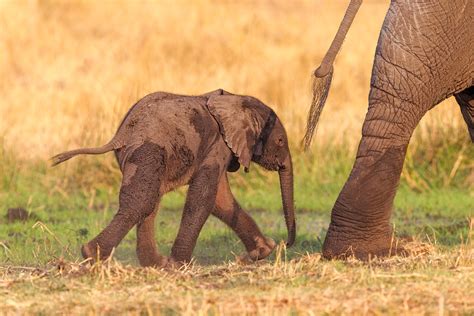
The average female African elephant is 10-12 years old before she has her first baby, and Asian elephant females are slightly older. Because of their long generation time, it can take elephant families decades to recover from early deaths in the herd. And when adult females are killed, they often leave behind a calf who struggles to survive. Every elephant death drives the species closer to a point from which it can’t recover.
Read also: The Story Behind Cachapas
Human Cost of the Conflict
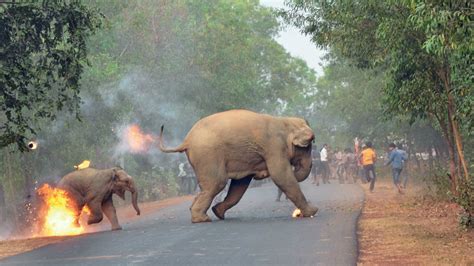
The largest male elephants weigh up to 6,800 kilograms (15,000 pounds). That makes them a hundred times heavier than many adult humans. When elephants feel threatened-or come across a barrier on their path toward food and water sources-they can injure or kill people and destroy homes and crops.
In India, around 400 people a year die from conflict with elephants. In Kenya, around 200 people died in human-elephant conflicts between 2010 and 2017. Many people living in elephant range areas are already vulnerable in other ways. For example, they may be refugees who have fled their homes looking for safety or migrants seeking better living conditions, only to find themselves living in a core elephant habitat, putting their safety at risk.
Beyond the tragic loss of life, elephants can cause tremendous damage to homes, community buildings (such as schools), and farmland. In India alone, around 500,000 families a year lost crops due to elephants, which threatens families’ fragile incomes as well as their health and nutrition.
Statistical Overview of the Conflict
The following table summarizes key statistics related to human-elephant conflict:
| Region/Country | Elephant Deaths (Annual) | Human Deaths (Annual) | Families Affected by Crop Loss (Annual) |
|---|---|---|---|
| Sri Lanka | ~200 | Data Unavailable | Data Unavailable |
| India | ~100 | ~400 | ~500,000 |
| Kenya | Up to 120 (killed by authorities) | ~25 (average, based on 200 deaths between 2010-2017) | Data Unavailable |
Strategies for Coexistence
The causes of conflict are complex-and so are our solutions. We work with communities to transform conflict into coexistence. In Africa, our Room to Roam initiative gives elephants space to roam freely within scientifically identified key habitat and at a distance from people. Our goal is to secure and connect habitat within 12 critical landscapes in East and Southern Africa, where more than 330,000 elephants can roam freely by 2040. The result will be greater biodiversity, natural resilience to climate change, and a future where animals and human communities can coexist and thrive.
Read also: Techniques of African Jewellery
At its core, Room to Roam centres on the understanding that community involvement is key to successful conservation. When communities get involved in natural resource management, ecosystems and incomes both become healthier. When families have reliable incomes and sustainable livelihoods, they become more resilient to financial shocks, such as having their crops raided. That’s why we partner with the communities that live alongside elephants to improve their livelihoods and increase their involvement in conservation.
For example, in Amboseli, Kenya, we created Team Lioness, the first all-women ranger unit in East Africa. This team from the Maasai community is defying social norms and creating new opportunities for women. Our Jenga Mama project is also helping 60 women in the Amboseli community learn professions and set up microenterprises to generate sustainable incomes for their families and communities. In Zimbabwe, a Junior Ranger Programme implemented by ZimParks with our support educates preteens as conservation ambassadors in the communal lands bordering Hwange National Park. And to reduce deadly encounters with wildlife in Malawi, we built a pipeline that carries irrigation and household water from the Shire River to villages outside Liwonde National Park.
In China, we launched the Asian Elephant Protection project in 2000, covering Xishuangbanna, Pu’er and Lincang, the three last remaining Asian elephant habitats in the Yunnan province. In Xishuangbanna, home to most of the approximately 300 remaining wild Asian elephants in China, we’ve trained community rangers to patrol villages and train communities in elephant safety. In the Pu’er region, we provided micro-credit loans to more than 210 households in seven villages, achieving an average annual income growth of 35%. We also launched the first-ever community-level early warning system in Yunnan, covering more than 60 villages in areas where elephants are active.
In India, IFAW-WTI has been closely working with the local Bodoland Territorial Council (BTC), the Assam Forest Department, fringe villagers, and local community-based organisations in the Greater Manas landscape of Assam, India. We gave support to more than 30 families of human-elephant conflict victims between 2009 and 2021. We jointly formed 28 Eco Development Committees (EDC) with the forest department and prepared micro plans with the EDC members, prioritising human-elephant conflict mitigation measures. We are providing livelihoods support to critically forest-dependent households to reduce their need to enter into the park for collection of fuelwood and other non-timber forest products. Additionally, we provided more than 100 families with new LPG connections as a source of clean energy for cooking.From 2016 to 2021, IFAW-WTI played a key role in the entire process in upgrading 77,200 hectares of reserved forest areas to a protected areas network for better protection, ecological integrity, and a secured habitat for wildlife. The collaborative management approach involved local communities in the Greater Manas landscape.
In a new paper led by Mara Elephant Project’s Director of Research and Conservation Dr. Jake Wall, new research has found that while elephants can live almost anywhere in Africa, their range is restricted by the growing human footprint and the available protected areas. The study combined tracking data from several organizations, including MEP, and analyzed it in relation to satellite imagery and other spatial covariates, and found that more than 62 percent of Africa remains suitable habitat for elephants. However, elephants are distributed across just 17 percent of that area.
Based on tracking data, the research team estimated that nearly two-thirds of the continent still offers suitable habitat for elephants. But elephants currently inhabit only 17% of suitable habitat across Africa, more than half of which is outside protected areas.
Douglas-Hamilton, Wall and Okita-Ouma all agree that planning for elephants is key, in particular wildlife corridors that allow connectivity for elephants to roam and access the resources they need. “We still have the opportunity to plan our lands better, to designate lands for wildlife and to ensure that those areas that are designated for wildlife are well connected,” Okita-Ouma says.