Ethiopian Airlines, the largest aviation group in Africa, offers a business class experience known as Cloud Nine, available on medium- and long-haul routes. Founded in 1945, Ethiopia's flag carrier has grown to be the largest aviation group in Africa in terms of passenger numbers and one of the largest airlines in the world in terms of countries served. The airline joined the Star Alliance in 2011, increasing its reach through codeshares and partnerships. Ethiopian was awarded the title of Africa's best airline in both the 2021 Business Traveller Awards and the 2021 Skytrax World Airline Awards.
This review provides a detailed look at what you can expect when flying business class with Ethiopian Airlines, covering various aspects from the lounge experience to the in-flight amenities and service.
What to Know About Ethiopian Airlines Business Class
Ethiopian Airlines business class food options highlight both Ethiopian and international cuisine, with some of the Horn of Africa's most celebrated fare-including coffee and the fermented staple bread injera-offered on board. While a basic version of Cloud Nine is available on many domestic flights across Ethiopia, this guide focuses primarily on the services found on medium- and long-haul flights. While there are many consistencies found across Cloud Nine in Ethiopian’s international fleet, there are a few variations, primarily when it comes to seating arrangements.
Ethiopian Airlines operates direct flights from Chicago, New York, Washington DC, and Toronto to Addis Ababa as well as to a number of capital cities across Africa, Europe, Asia, and the Middle East.
Here are some examples of business class fares on Ethiopian Airlines:
Read also: Ethiopian Cuisine: Philadelphia Guide
- South Africa for $2,674 roundtrip
- Kenya for $2,318 roundtrip
- Namibia for $2,888 roundtrip
- Maldives for $2,550 roundtrip
AFRICA’S Best BUSINESS CLASS: Ethiopian Airlines
The Airport Experience
Lounge Access
Business class travelers have access to the Cloud Nine Lounge in Terminal 2 of Addis Ababa (ADD) and can use Star Alliance partner lounges around the world. The Cloud Nine lounge offers free Wi-Fi, showers, plush chairs, and a buffet service at lunch and dinner, with plenty of global and Ethiopian dishes to try. Snacks and beverages, including wine and liquor, are available both during and outside of meal times.
Other features include luggage storage, a kids' corner, a prayer room, and meeting and business spaces. Guests can also join in on a traditional Ethiopian coffee ceremony right in the lounge. Note that if you are changing flights in Addis Ababa, you can only use the lounge if your outbound flight is also in business class.
Check-In and Baggage Allowance
Business passengers get expedited check-in, with dedicated counters, though you can speed things up even more by entering passport details and any other additional required information online, before you head to the airport. Some airports also offer priority security lanes for business class travelers.
Cloud Nine business class passengers enjoy generous checked baggage allowances, and three pieces weighing no more than 23 kg (50 lbs) each is standard across international routes, compared to only two pieces for economy passengers. Passengers on flights to and from the USA can opt to instead check two pieces weighing no more than 32 kg (70 lbs) each. An additional piece of luggage can be checked free for ShebaMiles Gold and Silver members and Star Alliance Gold Members, though weight limits vary.
Passengers may carry up to two pieces weighing no more than 7 kgs (15.4 lbs) each on board, with dimensions of 20x40x55 cm (8x16x22 in).
Read also: Authentic Ethiopian Cuisine
The In-Flight Experience
Seats
Ethiopian Airlines operates a long-haul fleet of Boeing 787-8 and 787-9, 777-200LR, 777-300ER and Airbus A350-900 aircraft with various seating types. The seat configurations in Cloud Nine vary depending on the aircraft:
- Airbus A350-900: The Airbus has 30 Cloud Nine seats, configured in a 2-2-2 layout across five rows. These seats lie fully flat and are 22 inches wide, making them the roomiest of the lie-flat options.
- Boeing 777-200: This aircraft features a 2-2-2 layout in the first row of Cloud Nine, and a 2-3-2 layout in rows 2 through 5 for a total of 34 seats. These seats are fully lie-flat, but if you are traveling alone and end up in a middle seat, you may have difficulty getting around sleeping neighbors if you need to get up in the middle of the flight.
- Boeing 777-300: Cloud Nine in the 777-300 is very similar to what's found in the 777-200, with the first row in a 2-2-2 layout and four additional rows in a 2-3-2 layout. The main difference is that the 34 seats are angle lie-flat as opposed to fully lie-flat.
- Boeing 787-8: This plane offers a 2-2-2 layout in Cloud Nine, with four rows for a total of 24 seats, making it the smallest Cloud Nine cabin in Ethiopia’s international fleet. Most seats are fully lie-flat but some aircraft still have the older angled seats.
- Boeing 767-300: Ethiopian’s 767-300 originally had recliner seats, but has since been retrofitted with full lie-flat seats in a 2-2-2 configuration. There are only two of these remaining in the fleet and only one is used for commercial services (the other is used for charters).
Here is a table summarizing the seat configurations on different aircraft:
| Aircraft | Configuration | Number of Seats | Seat Type |
|---|---|---|---|
| Airbus A350-900 | 2-2-2 | 30 | Fully Lie-Flat |
| Boeing 777-200 | 2-2-2 (Row 1), 2-3-2 (Rows 2-5) | 34 | Fully Lie-Flat |
| Boeing 777-300 | 2-2-2 (Row 1), 2-3-2 (Rows 2-5) | 34 | Angle Lie-Flat |
| Boeing 787-8 | 2-2-2 | 24 | Fully Lie-Flat/Angled |
| Boeing 767-300 | 2-2-2 | N/A | Fully Lie-Flat |
The fully flat seats on the A350 are spacious, well-padded, and comfortable for overnight travel, though the 2-2-2 configuration means not everyone gets direct aisle access.
Amenities
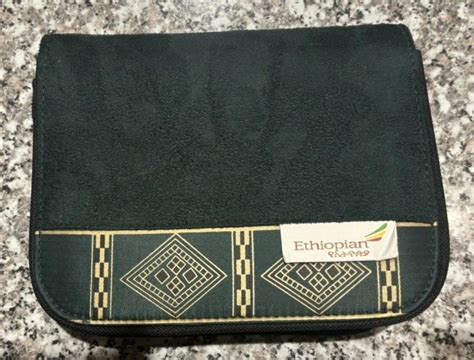
Along with plush blankets, pillows, and over-ear headphones for in-flight use, Ethiopian offers a simple in-flight amenity kit for Cloud Nine travelers, complete with essentials such as earplugs, sleep masks, socks, hand sanitizer, lip balm, hairbrushes, toothpaste, and toothpaste. The toiletry bags have a built-in hook so that you can hang them up instead of setting them on shared surfaces.
Wi-Fi is available on select flights, and seats have global power outlets and USB jacks along with personal entertainment screens with ejectable controls.
Read also: A Taste of Ethiopia in South Carolina
Food and Beverage
Cloud Nine passengers are served plated meals with canapes, starters, main dishes, cheese-and-fruit plates, and desserts. There's also a soup service at dinner and visitors are invited to try Ethiopia's quintessential dish of injera (fermented flatbread made from teff, a gluten-free grain) and wot a spiced stew before the main service.
While it's a good idea to notify the airline at least 24 hours ahead of your flight of any dietary requirements, both non-vegetarian and vegetarian options are available on board, and most vegetarian items are vegan by default, particularly if you opt for Ethiopian dishes. Iftar meals are also available during Ramadan. Note that pork is not served on any Ethiopian flights.
Ethiopian offers a large selection of beverages on board. The wine selection is particularly impressive, with red, white, and sparkling options available-you may even get the chance to try options produced right in Ethiopia's Rift Valley. Beer and a small selection of liquor and liqueurs are also available on board. Mixer options include ginger ale and other soft drinks, juice, and tonic water, as well as non-alcoholic beverages in flavors such as cinnamon, ginger, and tenadam (fringed rue), a popular flavor in Ethiopia. Drinks are served with kolo, a traditional Ethiopian snack made of roasted barley and often mixed with other roasted pulses.
Service
Flight attendants are generally friendly and attentive. The service is definitely what shined the brightest about this flight. Everything from discussing their experiences from living in Addis Ababa to traveling the world and past experiences visiting D.C. The flight attendants were excited and invested in my sampling of different Ethiopian cuisines, which was an enjoyable experience.

How to Upgrade
Cost of Upgrading
If you want to upgrade to business outright, you'll need to contact the airline and pay any difference in fare. A better, but riskier, bet is to bid for an upgrade. However, you can also enter your booking reference online to see if your trip is eligible. You’ll then have the chance to submit an offer of how much you are willing to pay for an upgrade. Winners will be notified if their bids have been successful between 50 and 6 hours before departure.
Prices vary quite a bit depending on a number of factors, but in general start at around $500-$600 for a long haul one way.
Using Miles for Upgrades
ShebaMiles members flying internationally can upgrade from economy to business class using miles on both one-way and roundtrip tickets and are determined by segment. For example, upgrades from North America to Ethiopia require 90,000 roundtrip (or 45,000 miles for one-way flights), while upgrades from Ethiopia to India will set you back 50,000 ShebaMiles (or 25,000 each way). If you’re flying roundtrip between New York and Delhi with a layover in Addis Ababa, you’ll need to fork over 140,000 miles to upgrade the entire ticket to business. However, you could also upgrade just your outbound segment from New York to Addis for 45,000 ShebaMiles. Note that upgrades are not eligible on award tickets or on codeshares operated by other carriers.
