Eid al-Adha and Eid al-Fitr are two main festivals in Islam.
Eid al-Adha, also called Eid II or "Greater Eid" (Arabic: العيد الكبير, romanized: al-ʿĪd al-Kabīr), is the second of the two main festivals in Islam alongside Eid al-Fitr.
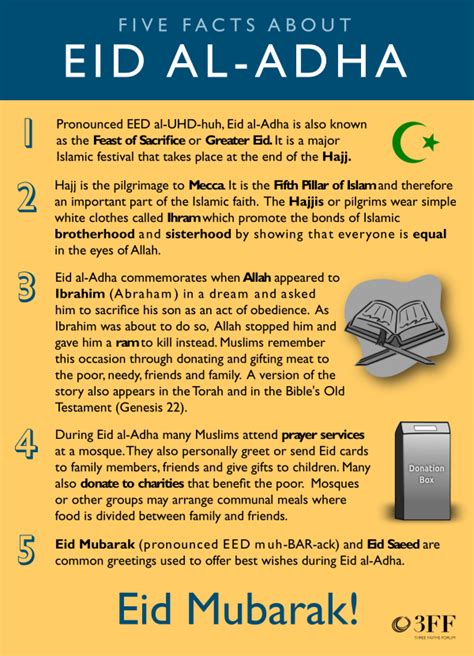
Since the introduction of Islam in Nigeria, Muslims have celebrated Eid al-Adha, which falls on the tenth day of Dhu al-Hijjah every year.
It is referred to as "Eid Al-kabir", or in Hausa Babbar Sallah.
Known as Eid al-Adha, Eid ul Adha, Id-ul-Azha, Id-ul-Zuha, Hari Raya Haji or Bakr-id; the 'Feast of Sacrifice is the most important feast of the Muslim calendar.
Read also: The Rise of Nigerian Basketball
The festival may also be known as Al Eid Al Kabeer, which means the 'Grand Eid'.
Simply, Eid al-Adha is considered the holier of the two religious holidays and so it is referred to as 'Big Eid' while Eid al Fitr can be known as 'Lesser Eid'.
Eid al-Kabir means 'Greater Eid' and is used in Yemen, Syria, and North Africa, while other translations of 'Large Eid' are used in Pashto, Kashmiri, Urdu and Hindi.
As with Eid al-Fitr, the Eid prayer is performed on the morning of Eid al-Adha, after which qurban the udhiyah or the ritual sacrifice of sheep, is performed.
Muslims in Nigeria celebrate it with ritual worship that includes going to the praying ground in the morning, slaughtering sacrifices mostly in the form of male sheep (a core activity of the day), and sharing meals with family and friends.
Read also: Requirements for Nigeria Police Clearance
Males and females of all ages visit the prayer ground to perform the Eid prayer.
Most of them wear new clothes to show joy and happiness, as this is one of the year's most important days.
They perform this prayer by observing two rak’ahs after the imam and then staying on the prayer ground to listen to the sermon from the imam, also attended by kings and other dignitaries.
After completing the prayer and the sermon, the imam slaughters his sacrifice, often a male sheep.
This sheep is present at the prayer ground before the prayer begins.
Read also: Nigeria's Thriving Music
After the slaughter, the Muslims return to their homes to slaughter theirs in order to draw closer to God and celebrate.
Most Muslims slaughter sheep, which are very expensive in this season.
The Arabic word عيد (ʿīd) means 'festival', 'celebration', 'feast day', or 'holiday'.
The holiday is called عيد الأضحى (Eid-al-Adha) or العيد الكبير (Eid-al-Kabir) in Arabic.
The words أضحى (aḍḥā) and قربان (qurbān) are synonymous in meaning 'sacrifice' (animal sacrifice), 'offering' or 'oblation'.
The first word comes from the triliteral root ضحى (ḍaḥḥā) with the associated meanings "immolate; offer up; sacrifice; victimize".
No occurrence of this root with a meaning related to sacrifice occurs in the Qur'an but in the Hadith literature.
The second word derives from the triliteral root قرب (qaraba) with associated meanings of "closeness, proximity...
In Islamic tradition, it honours the willingness of Abraham to sacrifice his son as an act of obedience to God's command.
One of the main trials of Abraham's life was to receive and obey the command of God to slaughter his beloved son, Ishmael.
According to the narrative, Abraham kept having dreams that he was sacrificing his son.
Abraham knew that this was a command from God.
He told his son, as stated in the Quran,"Oh son, I keep dreaming that I am slaughtering you".
Abraham prepared to submit to the will of God and to slaughter his son as an act of faith and obedience to God.
During the preparation, Iblis (Satan) tempted Abraham and his family by trying to dissuade them from carrying out God's commandment, and Abraham drove Iblis away by throwing pebbles at him.
Acknowledging that Abraham was willing to sacrifice what was dear to him, God honoured both Abraham and his son.
Angel Gabriel (Jibreel) called Abraham, "O' Ibrahim, you have fulfilled the revelations," and a ram from heaven was offered by Angel Gabriel to prophet Abraham to slaughter instead of his son.
This story is known as the Akedah in Judaism (Binding of Isaac) and originates in the Torah, in the first book of Moses (Genesis, Ch. 22).
The same story appears in the Bible and is familiar to Jews and Christians.
According to the Quran, Ibrahim was about to sacrifice his son when a voice from heaven stopped him and allowed him to make something else as a 'great sacrifice'.
During the feast of Eid Al Adha, Muslims re-enact Ibrahim's obedience by sacrificing a cow or ram.
When preceding Eid al-Adha and during the Eid and Tashreeq days, Muslims recite the takbir.
Like on Eid al-Fitr, the Eid prayer is performed on Eid al-Adha any time after sunrise and before the Zuhr prayer.
In the event of a force majeure, the prayer may be delayed to the day after or the second day after Eid.
The Eid prayer is followed by a khutbah (sermon).
At the conclusion of the prayers and sermon, Muslims embrace and exchange gifts and greetings with one another, such as the phrase Eid Mubarak.
After the Eid al-Adha prayer ends, the emirs and chiefs in northern Nigeria come out at the head of the crowd of worshippers and others watching the proceeding, riding adorned horses.
It is also known as the Durbar festival.
After the Eid prayer, udhiyah, or the ritual sacrifice of cattle, is performed.
The act of Qurbani (sacrifice) is carried out following the Eid Salaah (Eid Prayers), which are performed in congregation at the nearest Mosque on the morning of Eid.
The tradition for Eid al-Adha involves slaughtering an animal and sharing the meat in three equal parts - for family, for relatives and friends, and for poor people.
The goal is to make sure every Muslim gets to eat meat.
The days of animal sacrifice total three days, from the 10th to the 12th of Dhu-al-Hijjah.
The sacrificial animal must be a sheep, lamb, goat, cow, bull or a camel; the sheep, lamb or goat consist of one Qurbani share, whereas a bull, cow or camel consist of seven shares per animal.
The animal must be in good health and over a certain age in order to be slaughtered, in a “halal” friendly, Islamic way.
The Qurbani meat can then divided into three equal portions per share; one-third is for you and your family, one-third is for friends, and the final third is to be donated to those in need.
Popular articles:
tags: #Nigeria
