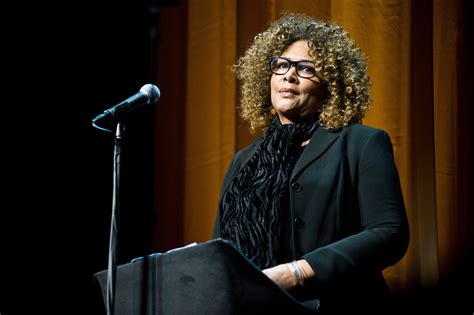
Julie Dash, born in Long Island, NY in 1952, is widely acclaimed for her debut feature Daughters of the Dust, the first film by an African American female director to receive a general theatrical release.
Julie Dash
The film was later inducted into the Library of Congress’ National Film Registry in 2004. Influenced by the likes of Sara Gómez, Alice Walker and Toni Morrison, Dash’s elegant explorations of Black communities in America have inspired Ava DuVernay and Beyoncé; the latter noting Daughters of the Dust as a major influence on Lemonade. Thirty-two years ago, filmmaker Julie Dash broke racial and gender boundaries with her Sundance award-winning film (Best Cinematography) Daughters of the Dust. She became the first African American woman to have a wide theatrical release of her feature film. The Library of Congress placed Daughters of the Dust and her UCLA MFA senior thesis, Illusions, in the National Film Registry.
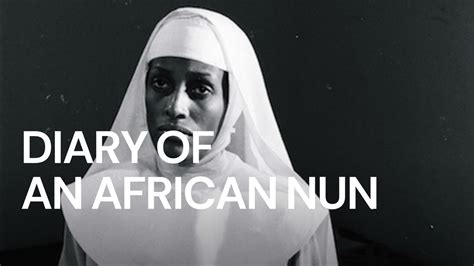
Made during her tenure at UCLA, Julie Dash’s Diary of an African Nun sees the young director fully in control of a poetic and political style whose influence would ripple across cinema.
The Diary of an African Nun holds holy, magnetic, demanding poetics that are worth ten times every second it takes up.
Read also: Experience Fad's Fine African Cuisine
Themes and Style
An African nun is consumed by fear and doubt about her decision to take the solemn vows of poverty, chastity and obedience. Temptation knocks at commitment’s door with sounds of men, fire, and dancing in this heady early work from Julie Dash. At once sensual ("pale lover"; "oily, slippery body"; "roiling thighs") and ruthlessly analytical, The Diary of an African Nun starts with the objectification the narrator experiences at the hand of any number of individuals, and ends with a wrenching, compelled compliance with the colonialism of faith.
Diary of an African Nun
As the film maneuvers away from its peaceful opening into an extended moment of crisis in the loneliness of her quarters, the camerawork becomes enveloped in Jones’ unraveling. Light illuminates nothing, but sound and shadow do. The frustrated motion of an inability to generate a space true to the soul-marked by drums so powerful that they subsume her complicities, fears, and protests . Composed of stunning landscape shots, delicately singled close-ups and the eternal grace of Barbara O. Jones’ visage, Diary of an African Nun’s beautiful arrangement belies its bleaker themes.
Interpretations and Connections
O silêncio de Deus é assunto recorrente na filosofia e cinema sob um aspecto existencial. À existência de alguns, porém, esse silêncio se manifesta de forma ainda mais direta através da materialidade. Julie Dash explora esses elementos com alguma proximidade das experiências realistas, mas também de uma abordagem mais direta com cineastas como Ousmane Sembene (em especial A Negra de…).
I find it hard not to think of this film in relation to one of my all-time favourites, Powell & Pressburger's Black Narcissus: nuns, the bringing of Christianity to a land that is not Christian, sexual repression, Doubt, drums that go on and on in the night. Though, perhaps needless to say, this film's take perspective on (post)colonial matters is more sophisticated, with its nuanced portrayal of a woman whose identity partakes of both the coloniser and the colonised. And Orin Mitchell's b&w cinematography feels just as alive and electric as Jack Cardiff's Technicolor work on Black Narcissus, especially in the night portion, with those sharp contrasts between black shadow and skin and the whites of walls and wimples, the moonlight shining off beads of lust-sweat and tears of guilt. This deserves to sit alongside the works of Scorsese, Ferrara, and Schrader in the pantheon of the cinema of Catholic guilt.
Read also: The Story Behind Cachapas
Walker uses the voice of an unnamed Ugandan nun to explore the contrast between a white colonial mindset and a black native mindset. That being said, I think it would have been more powerful if it wasn’t quite as stark a political message. Even though the narrator is a black nun, she doesn’t seem to believe in Catholicism at all, longing for her native customs, and Walker never really explains why she became a nun in the first place. I think a more nuanced approach, more story telling and less parable, would have been stronger. Still, Walker’s sheer writing ability has definitely impressed me.
“What we have to say is so personal and so very different that there’s no way that anyone else can say it. They can’t say it for us and when they do, it’s more of an external condition made about us or about our condition. In her quest to explore the “world of ways of shooting out there that we don’t even know about,” Dash’s films mark an intervention upon the conventions upheld by a longstanding history of white, male production.
Dash has written and directed for CBS, BET, ENCORE STARZ, SHOWTIME, MTV Movies, HBO, and OWN Television. Her long-form narrative films include the NAACP Image Award-winning, Emmy, DGA nominated, The Rosa Parks Story, Incognito, Funny Valentines, Love Song, and Subway Stories: Tales From The Underground. Her work as a film director includes museum and theme park exhibits and design for Disney’s Imagineering, Brothers of the Borderland for The National Underground Railroad Freedom Center Museum, and Smuggling Daydreams into Reality at the Indianapolis Museum of Art. Her most recent museum installations include Standing at The Scratch Line at the Philadelphia Museum of African American History and the Philadelphia Museum of Art and Shine a Light, a large-scale video mapping projection for the Charles H.
Read also: Techniques of African Jewellery
