In the years before gossip magazines gave way to Instagram, head-turning sneakers became ingrained in contemporary American celebrity. But long before today’s gaudy designer kicks dominated the lower-fourth of paparazzi photos, there was another eye-catching sneaker that celebrities couldn’t seem to get enough of.
It wasn’t from a French or Italian luxury house, or designed by a famous rapper. In fact, the sneaker wasn’t even from a fashion label-it came from a skate brand hailing from an unassuming city-suburb in Southern California.
The Supra Skytop is a glossy high-top skate shoe that could easily pass for an expensive designer sneaker-at least at first glance. In reality, the sneaker has more in common with pair of Vans than shoes you’d buy from Bergdorf Goodman, running around $120.
It showed up at red carpet premieres and outside of nightclubs, worn by chart-topping musicians like Justin Bieber and Lil Wayne and movie stars like Bradley Cooper. For its time, the Skytop was as wild as sneakers got, groundbreaking in its combination of skate-ready durability, extravagant silhouette, and seriously out-there colorways. It was a cool ugly sneaker before ugly sneakers were cool.
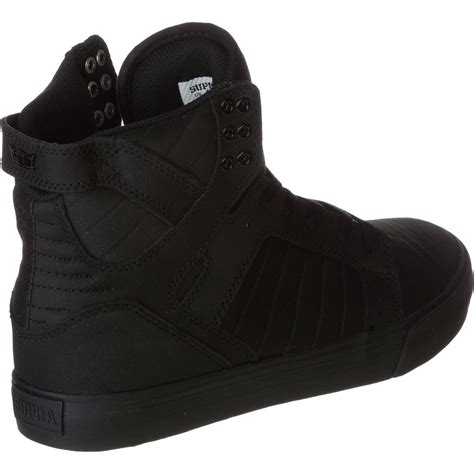
It also cemented a handful of ideas-like influencer-driven, hype-based marketing-that we don’t think twice about today. And then, as the celebrity fashion zeitgeist moved on to the next trend, the shoe slowly vanished from the Hollywood spotlight and went back to the skateparks and high school hallways from which it came.
Read also: The Life of Chad Everett Harris
The Skytop was designed by Chad Muska, a charismatic pro skater on the Supra team, alongside Josh Brubaker, the first footwear designer hired at the company. Supra, which was founded in 2006, is widely credited for blowing up the skate-lifestyle category that would eventually result in every suburban mall having a PacSun and Zumiez-and now, every fashion kid owning a pair of Dickies. But when they sat down to design the Skytop, Supra was just a small-time skate brand trying to make a name for itself.
The Design Process
“When we first met, Chad walked in with a big suitcase filled with shoes for inspiration. He knew exactly what he wanted,” says Brubaker, who worked at Supra until 2013 and now runs his own footwear brand with his brother. “I was so excited that I worked on it all day and night, and sent him two options the next day. He said ‘That’s the one,’ and we sent it off for sampling.”
It’s not too often you hear about a hit sneaker being designed in a single day; the elongated process usually includes rough sketches, three-dimensional models, and rounds upon rounds of design review. But back then, Supra was a small, scrappy company, which meant they could move much faster than the bigger shoe brands.
And what was in the suitcase? Chad Muska remembers, but he’s keeping quiet. “I will say it was a mix of several high fashion shoes from that era and some vintage ‘80s high tops that I had in my collection,” he says. “I was influenced by the ‘80s a lot during this time period. I liked how hip-hop groups like Grandmaster Flash and the Furious Five were wearing high tops with skinny pants and so were heavy metal bands like Metallica.
Even though it felt unprecedented, the Skytop was just the latest skate sneaker to bear Muska's name. By the time he teamed up with Supra, he was an established and marketable skater with a few wildly popular sneakers under his belt. One of those shoes, the “éS Muska,” was a huge hit, notorious for its hidden “stash” pocket in the tongue.
Read also: "Married to Evil": Chad Graves
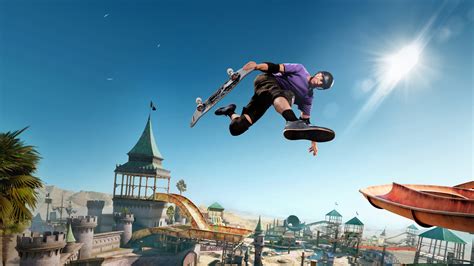
That mini-pocket became a cheeky signature that Muska carried over from éS to Circa, and eventually to the Skytop. Regardless of Supra’s infancy, Muska was a larger-than-life personality with a knack for eccentric flair (he once filmed a skate part while famously holding a boombox) who came with built-in hype so any sneaker with his name was bound to make waves. The skater was even immortalized as playable character in the hit video game Tony Hawk’s Pro Skater-boombox and all.
In essence, Muska was a bonafide style influencer before the buzzy term was embedded within modern fashion vernacular.
Initial Reception and Rise to Fame
Upon the shoe’s initial release, skaters and sneakerheads weren’t really sure what to make of it. A skate shoe heavily influenced by high fashion and the wacky style of 1980s definitely didn’t look like anything else on the market when it first dropped in the 2007. “It was met with a lot of doubt because it was very different than what was going on in skateboarding,” Muska recalls.
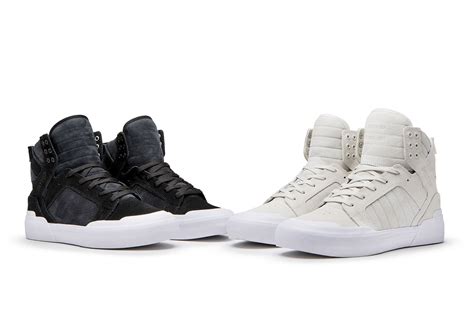
That's an understatement. The exaggerated ankle cuff stood unusually tall, like a flashy Chelsea boot, and versions of the shoe featured loud prints and metallic finishes. But in the years to follow, intrigue gave way to desire and the Skytop won over men’s style publications and sneaker blogs-and eventually started showing up on the feet of celebrities.
“I had a gut feeling that it would become huge before we released it-there was nothing like it,” says Supra’s founder Angel Cabada, who sold his stake in the company in 2015 and now runs his new footwear label, Stray. “It was beautiful to look at it from day one. You either loved it or hated it.”
Read also: Vallow-Daybell Trial: Key Evidence
История создания Toyota Supra
The Skytop hit the sneaker scene at a time when flashy high-top kicks dominated sneaker culture around the globe. In 2009, Louis Vuitton released the “Street Sneaker,” a luxury shoe with some streetwear flair that sneakerheads went crazy for. Kanye West was also designing his own sneakers for the French fashion house, a collaboration that resulted in a number of high-top basketball-esque sneakers. And the luxury label Lavin had its own upscale high top.
“Everyone was wearing some sort of unkempt high-top sneaker and Supra was just there at the right time,” says Jeremy Kirkland, then a celebrity stylist and now host of the menswear podcast Blamo!. “I think every single celebrity who was half-informed wanted to look like all the other cool people wearing these designer high tops.”
Supra’s own riff on the style-making it cheaper and more durable and adding a vulcanized sole so you could still skate in it-came at a time when places like H&M and Zara hadn’t yet invented the affordable runway sneaker. Couple that with the fact that Supra was relentless in its output, offering the the sneaker in an endless number of colorways and finishes, and the Skytop rose to the top as the best (and most visible) option.
Celebrity Endorsements and Cultural Impact
Thanks, in part, to famous guys. Heading into the early 2010s, every celebrity from Justin Bieber and Kanye West to Justin Timberlake and Jay Z wore the Skytop. Fall Out Boy bassist and late-aughts tabloid favorite Pete Wentz was constantly photographed wearing them. Lamar Odom, fresh off an NBA championship, wore the kicks at award shows alongside his then-wife Khloe Kardashian. Lil Wayne name dropped the sneaker on his certified Platinum single, "Blunt Blowin." Slash donned a pair during his cameo in the Black Eyes Peas’ Super Bowl XLV halftime show.
And Supra won over female superstars too: Rihanna started wearing the brand’s shoes, and so did others like Jennifer Lopez, Heidi Klum, and Lindsay Lohan. But no celeb wore the sneaker more than a then-baby-faced Justin Bieber. The singer wore his pairs religiously as he went from YouTube sensation to global pop music phenomenon.
Muska and Cabada say the celebrity association came about organically. Muska was well-connected himself, running around in the Hollywood scene at the time and got the shoes in the hands of the right people. “It was never a plan, to be honest,” says Cabada. But once the sneaker officially hit, Supra’s marketing and PR teams went into overdrive to make sure the it stayed there.
“If you were a stylist, Supra would just give you like ten pairs of these shoes for free,” says Kirkland. Back then, Supra stood out for shamelessly giving out product to the right people, but seeding new sneakers to stylists and famous people is now considered the norm.
But it didn’t matter if one anonymous movie star didn’t like the shoe. The brand had enough mega-famous fans and was selling sneakers at record pace. Bieber wore Supras on stage every night of his sold-out Believe tour that ran throughout 2012 and 2013. And the same way kids across the country asked for “the Bieber” at the barber shop, they headed to their local malls and bought a pair of Supras.
Supra's Financial Success and Acquisition
The results were staggering: in just nine years, Supra had gone from a small-time skate brand to a $100 million footwear label, with about 90 percent of the label's sales coming from its sneakers-much of that attributed to the Skytop. In 2015, at the height of the brand’s buzz, K-Swiss Global Brands purchased Supra (along with the skate clothing brand KR3W, also started by Cabada).
The Decline in Popularity
But shortly after, the sneaker started to fall out of favor with many celebrities. By 2016, even Bieber had mostly abandoned his leather drop-crotch pants and Skytops for ultra-shredded skinny jeans and Adidas Boosts. The Hadids, Jenners, and Kardashians of the world are usually wearing Balenciagas-or Vans Old Skools. Even Pete Wentz is now wearing Yeezy Desert Rats.
The days of celebrities and style influencers in Supra Skytops appear to be behind us. The shoe hit the scene when stuff like Ed Hardy was still deemed wearable, and it rose to fame as popular culture became more obsessed with every aspect of celebrities-including their sneakers. In many ways, the Supra was the perfect beacon of 2010s style: unapologetically loud, more than a little bit goofy, and extremely visible in photographs.
Just like fashion, sneakers are beholden to trend cycles-not even the Skytop, with the countless celebrity co-signs and all of its opulent glory, could live in spotlight forever. But it had one hell of a run. “It was just kind of the perfect storm that only comes around so often,” says Muska of the Skytop’s glory days.
You’d hard pressed to find the sneaker in the paparazzi photos or street style round-ups of today, but if you head to any mall, the Skytop is still alive and well. Even though he’s no longer with Supra, Cabada can’t help but honor the Skytop’s legacy. “I don’t remember the exact numbers of sales, but let’s put it this way: We sold millions,” he says.
Chad Muska: The Man Behind the Design
In the gritty streets of Southern California in the early '90s, a young skateboarder named Chad Muska was about to change the game. With an innate ability to transform urban landscapes into his personal playground, he was destined for greatness in the world of skateboarding. This is the story of Chad Muska, a man whose career, shoe models, sponsors, and legendary tricks have forever altered the course of skateboarding history.
Chad Muska's journey into skateboarding began like that of many others-out of pure love for the sport. He started perfecting his skills, turning heads wherever he rode, and quickly caught the eye of the skateboarding world. In 1998, Muska unleashed his raw talent on the world in the Shorty's "Fulfill The Dream" video, a performance that etched his name into skateboarding lore. His style was a mesmerizing blend of technical wizardry and raw charisma, creating a unique flavor that set him apart from the rest.
Chad was known for pushing the limits of what could be done on a skateboard. His legendary tricks include the "Muska Flip," a stylish twist on the hardflip that showcased his creative approach. Another crowd-pleaser was the "No-Comply 360 Flip," a fusion of a no-comply and a 360 flip that demonstrated his technical prowess.
But it wasn't just about nailing tricks; Muska possessed an uncanny ability to turn everyday objects into skateboarding playgrounds. The most iconic of these was when he nose-manualed down the famed Hollywood High set, displaying an unmatched level of balance and control.
Chad Muska's influence extended far beyond the wheels of his skateboard. His collaboration with the brand éS brought to life some of the most coveted skate shoes in history. The éS Muska 1 was a game-changer, featuring a unique lace protection system and a handy stash pocket that revolutionized skate shoe design. The éS Muska 2 continued his legacy with a sleeker design while retaining the style fans loved.
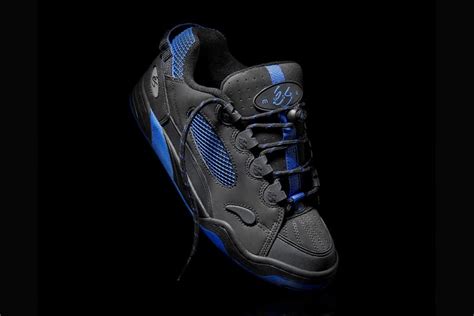
Throughout his career, Muska's association with influential skateboarding brands played a pivotal role in his success. Starting with Shorty's Skateboards, which launched his career with the "Fulfill The Dream" video, he was destined for stardom. His partnership with éS Footwear not only led to his signature shoe line but also further solidified his place in skateboarding history. Later, his transition to Supra Footwear showcased his evolving style and influence.
He wasn't content with revolutionizing skateboarding alone. He lent his talents to video games, immersing gamers in the skateboarding culture he loved. I mean, who hasn’t played Tony Hawk’s Pro Skater as Chad Muska?! As if that wasn't enough, he also pursued a successful career as a visual artist, showcasing his diverse talents and passions.
The Skytop Legacy and Muska's Continued Influence
As of 2023 Chad Muska has reunited with éS and they’ve released a reissue of his first shoe that first came out in 1997, the Muska 1. In Chad’s own words “I thank you all for your continued support, I actually can’t believe this shoe is coming back out!
Supra’s 10-year anniversary and the skate brand is beginning to celebrate. The Decade X pack is actually a series that will include one special execution of each of Chad Muska’s four signature silhouettes from the Supra Skytop line. “I think doing anything positive consecutively for 10 years is worth celebrating, especially in business,” said Chad Muska, professional skateboarder and co-creator of the Skytop. “So we decided to do a few special edition products to celebrate this milestone.
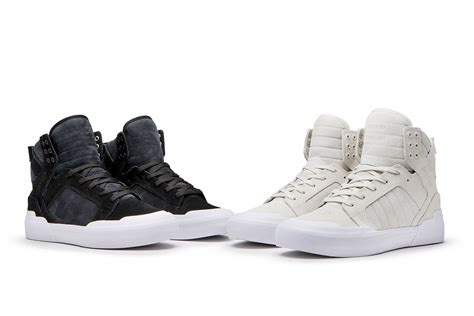
According to Supra, the Decade X series releases are inspired by Muska’s artwork and creative process with a focus on several key themes. The first Decade X drop is the Supra Skytop 001 ‘Layers’, done up in white printed leather and inspired by Muska’s creative space. Coming themes include the Skytop II ‘Transitions’, Skytop III ‘Reflections’ and Supra IV ‘Textures’.
“The idea for layers comes from a wall in my studio where I have been painting for years,” said Muska. “I paint on it awhile then it’s painted white over top of the colorful layers to reflect the continuous buffing and painting that occurs on our walls in the streets and studio through time, which I felt was a good representation for this collection and for SUPRA. This first Decade X drop sits atop a translucent outsole - through it, a myriad of colors can be seen. The pink sole is painted and is complimented by matching foxing tape. Notable details include the “Forever” mark on the EVA footbed and a boldly stitched “X” at the heel.
Popular articles:
tags: #Chad
