While raising pets isn’t as significant in Nigeria as in other Western countries, the culture is largely shifting, and more Nigerians are embracing the idea of having furry friends. Over the decades, Nigerians have traditionally kept dogs as pets in their homes. However, many are not accustomed to owning cats because they still adhere to the superstitious notion that cats are witches’ and wizards’ vessels. This is changing, though. Increasing media exposure is shifting the mentality of many Nigerians about being cat parents. These days, there are a lot of adverts on e-commerce sites for the adoption of cats, and both domestic and international breeds are being adopted.
Cats are incredibly playful and friendly animals, making them the perfect companions for anyone wishing to get one. While parenting these pets isn’t currently considered common in Nigeria, many Gen-Zs and even millennials have become beacons of hope and possibility for anyone who dreams of becoming a cat parent in Nigeria.
To better understand the experience of cat ownership in Nigeria, here are some insights from Nigerian cat parents:
Jorge, a freelancer based in Ile-Ife:
Jorge has been a cat parent for about three years, and Bast was his first cat. He currently has two cats - Bast, an unpredictable, short-haired female diva, and Oreo, a mostly mellow male.
Read also: Protect Your Cat: African Violets
“I’ve always liked animals, and I’ve wanted a pet for as long as I can remember. Once I had a bit of freedom and independence, I started considering getting a pet. A dog seemed expensive at the time, but lucky for me, a friend’s cat had just been delivered and said friend offered me one of the kittens for free. I had always thought cats’ personalities were more interesting than dogs’ anyway, so I said, why not?”
Jorge shares some of the challenges he has faced:
“I have not faced a lot of challenges, thankfully. The major one I struggled with was the issue of litter when I was starting as a cat parent. Actual cat litter is surprisingly expensive and I was not ready to be shelling out N13,000 or so for it circa 2020. So, improvisation was needed, and I got a plastic bowl wide enough for a kitten as a litter box and used sand as litter. The sand was also problematic as it meant the cat was tracking dirt everywhere. Later on, I moved to chicken pellets. The pellets were significantly cheaper than real litter and helped a bit with the smell, but those got harder to procure at a point, so I gave up.”
When it comes to the crazy parts of having a cat, Jorge mentions:
“One’s the fur. Furry cats shed and you have to be prepared for that. Another is the burst of energy they sometimes get after dark; they will run around and climb whatever they can. Some may even yowl in the process. Trying to train them to use the litter as kittens can be hard, but if you’re lucky like me, your cat will pick it up in a day or two.”
Read also: Cat-Friendly Houseplants: African Violets
Jorge's advice for people looking to adopt a cat:
“For people looking to adopt a cat, be sure that you can really handle the responsibility and change that comes with them. I have seen several people get frustrated and give up shortly after getting a cat once the reality of those responsibilities sets in. Those first few weeks can be stressful on both cat and human, new environment and all. Remember that cats have such different personalities. You should also prepare your mind for the eventuality that your cat may not be as into you as you are into him or her. The internet has helped me a lot when it comes to being a cat parent. There’s no doubt that it can be dramatically negative when looking up what is wrong with your cat, but it can help with a hint at what you’re looking for. You also get to read about how other people who have similar problems with their cats navigated the issue. Access to a vet is also valuable. I just love their cuteness.”
Olúwatamílọ́re Ọ̀shọ́, a 26-year-old writer and poet living and working in Lagos, Nigeria:
Olúwatamílọ́re has been a cat parent for 6 or 7 years now. She has an orange cat named Ginger.
“Ginger is actually the 5th cat I’ve owned within those years before her. There’s been Nala, which is my first cat, Anyanwu, Lucifer and Stromae. My motivation for raising cats stems from my deep affinity for animals. I’ll adopt any animal in a heartbeat as long as I have the space and funds to take care of them. I actually became a cat parent accidentally; I was walking to school one day when I found a tiny kitten in front of my neighbour’s gate. Their gateman told me that the kitten had fallen from their roof, and he was worried the dogs in the compound would kill it, so he brought it out; he wasn’t willing to adopt it, so I did. Of course, my mum & neighbours were against having a cat in the compound, but I stood my ground. It’s been a great experience since then.”
Read also: Exhibits: African Cats
Olúwatamílọ́re loves cats because of how neat, independent, fierce and big on boundaries they are. Parenting cats has taught her a lot about boundaries and also how to see and learn from a different being existing in this world just as she is.
“It’s been so beautiful. However, my major challenges with raising cats are financially related; the cost of cat food, litter boxes, cat carriers and other things are so expensive, but I’ve been able to find my way around that by getting cheaper alternatives. For example, I went to the market and got a big bowl which serves as my cat’s litter box. I also had someone buy me sawdust to use for her litter.”
Olúwatamílọ́re's advice for anyone looking to become a cat parent:
“For anyone looking to become a cat parent, do your research, read up on a lot of articles and watch videos about cats. I watched a lot of YouTube videos and read articles when I got my first cat. These materials helped me understand their behavioural patterns and how to navigate them. Also, make sure to have a neat environment because cats hate dirt.”
Another cat parent expresses that they just love how cute cats are and how they snuggle around them.
“I have been a cat parent for close to a year now. I just love how cute cats are. I don’t have many challenges with raising my cat. I really love the way they snuggle around me. However, if I had to name something, the only thing I can say I have is people’s perception of cats in this part of the world. A lot of Nigerians believe that they’re evil and can’t be trusted. So, if you’re a cat parent, you may have to keep them from a lot of people because people are ready to harm them.”
Like many places around the world, pets have found their way into several Nigerian homes. That’s why we decided to ask three cat parents immersed in this life.
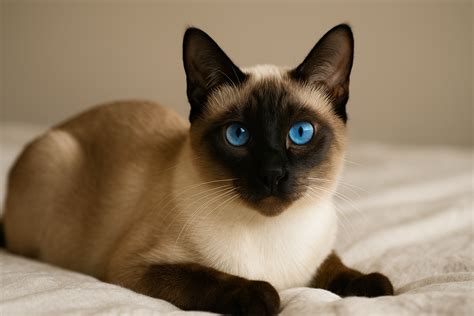
If you are looking for one of the most popular breeds, you likely want a recognizable cat or a type you can find readily. You want to avoid scarce or rare breeds, like the Scottish fold or the Egyptian Mau. These cats are beautiful and make sweet housemates but are tough to find. Other cats you want to avoid are hybrid cats that carry on many wildcat traits, like chausies, toygers, and savannahs.
Here's a look at some popular cat breeds:
Popular Cat Breeds
- Siamese: Popular since the 19th century, this cat breed originated in Thailand (formerly known as Siam). The Siamese has been a foundational breed for the Oriental shorthair, sphynx, and Himalayan. Most Siamese cats have distinct markings called "points," which are the areas of coloration on their face, ears, feet, and tail. Two varieties of Siamese cats have an "apple" shaped head and chubbier body and the other features a larger head and slender body. The animated Disney film "Lady and the Tramp" featured Siamese cats singing a song, demonstrating their intelligence and vocal skills.
- Persian: Also lovingly referred to as one of the "smushed-face" cats, the Iranian cat, or Shiraz cat (named for a city in Iran), Persians have beautiful, long fur coats. They can come in almost any color and have a flat face when compared to most other breeds of cats. Persians are featured in many movies, artworks, and commercials and have been one of the most popular breeds of cats for decades. Their coats demand regular grooming, otherwise, matting will result.
- Maine Coon: Known for its large stature and thick fur coat, the Maine coon is a cat that is difficult to ignore. Hailing from the state of Maine and the state’s official cat, the Maine coon is a gentle giant. They are great hunters and were popularized after the CFA recognized them as purebred in the late 1970s. They remain one of the most popular cat breeds. Many Maine coons have polydactylism, or extra toes, which makes their already large feet even larger. This great feature helps for hunting in the snow since large feet act as snowshoes.
- Ragdoll: Ragdoll cats get their name from their docile temperament. They tend to go limp when picked up, much like a rag doll. At one time, people thought they couldn’t feel pain, but that is not true. Ragdolls look a lot like long-haired Siamese cats with pointed color patterns.
- Bengal: Bengals are wild-looking cats-literally. Their markings make them look more like they belong in the jungle rather than in your home, but they are domesticated. They are talkative and require a lot of exercise. They come in many colors with patterns like spots and rosettes. Their name comes from the Asian leopard cat’s taxonomic name, Prionailurus bengalensis. Bengals were initially bred from domestic cats and a wildcat.
- Abyssinian: Originally from Ethiopia (previously known as Abyssinia), the Abyssinian cat has a distinctive ruddy agouti coat that gives the breed its unique banded look. It has tall, pointy ears, a wedge-shaped head, and a slender and muscular body. Personality-wise, Abys are active, curious cats that frequently follow owners around.
- Birman: Birmans are another color-pointed cat like the Siamese and ragdoll. They have blue eyes and a medium-long coat but no undercoat, the primary trait that sets them apart from Persians and Himalayans. Birmans were the original stock for breeding ragdolls, so they look very similar, but they have slightly different markings and personalities. They are fun, social cats that love attention-from their chosen person.
- Oriental Shorthair: At a glance, you may think this slender cat looks like a Siamese, but the Oriental shorthair is a separate breed. Unlike Siamese cats, they usually have green eyes and many color patterns and colors. The Oriental can also have long hair.
- Sphynx: If you are looking for a cat that doesn't shed, then the sphynx is for you. Sphynx cats look unique due to their lack of fur and are very social, active, dog-like felines.
- Devon Rex: Devon rex cats have wavy, soft short hair and slender bodies with enormous ears. The Devon Rex is a playful, active cat described as "a monkey in a catsuit." This kitty will steal your heart with its lively, sweet disposition.
- Himalayan: Like the Persian, the Himalayan cat is considered a sub-breed in some cat associations and a separate breed in others. Himalayans were bred from crossing Persians and Siamese to achieve their color points.
- American Shorthair: An all-American breed, the American shorthair cat is an intelligent, shorthaired feline that has a round face and short ears. They are often confused with domestic mixed-breed cats but are purebred. Its breed name changed from domestic shorthair cats in 1966 to differentiate them. This medium-sized cat has a gentle nature that makes this breed a great companion for families with children or other pets.
A cat is either domestic, purebred, or hybrid. Domestic cats do not have a pedigree history of their lineage, while purebred cats do. Hybrids are domesticated cats crossbred with wild feline varieties.
Indoor cats have the longest lifespans, living up to 20 years. Outdoor cats rarely make it past 10 years. Outdoor cats are prone to infections from other animals, can get into fights, may be attacked by predators, or may get run over by vehicles.
Tips for Nigerian First-Time Cat Owners
Popular articles:
tags: #Nigeria
