African sculpture is a rich and diverse art form with deep cultural and spiritual significance, encompassing many different styles, techniques, and materials. From figurative to abstract, African sculpture can be made from a wide range of materials, including wood, stone, bronze, and clay.
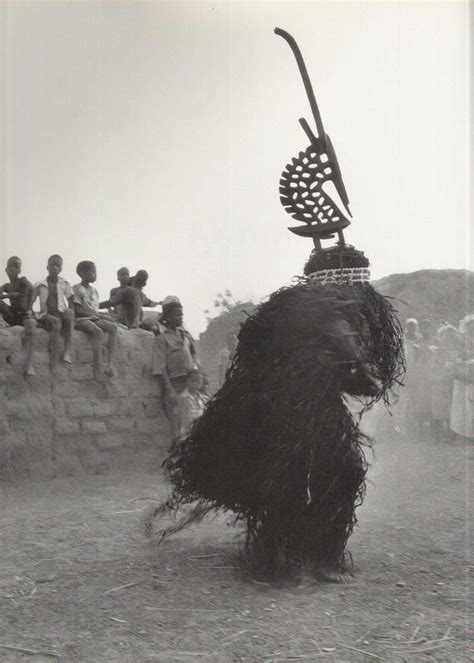
Chiwara headdress (male); late 19th-early 20th century; 72.4 x 30.5 x 7 cm (281⁄2 x 12 x 23⁄4 in.); by Bambara people; Brooklyn Museum
The History and Evolution of African Sculpture
African sculpture has a long and complex history, dating back centuries before the arrival of colonial powers on the continent. It has been influenced by a wide range of factors, including geography, religion, and trade.
One of the earliest known examples of African sculpture is the Nok culture, which flourished in what is now Nigeria between 500 BCE and 200 CE. The Nok people created highly realistic terracotta sculptures of human heads and animals, which are considered some of the finest examples of ancient African art.
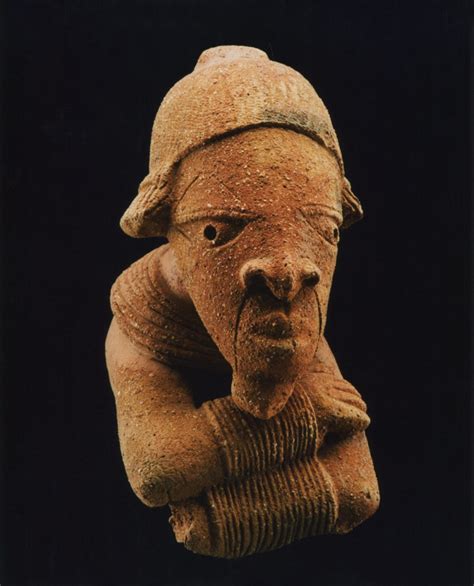
Nok seated figure; 5th century BC - 5th century AD; terracotta; 38 cm (1 ft 3 in); Musée du quai Branly (Paris)
Read also: Delving into Antique Moroccan Pottery
Over time, African sculpture evolved and diversified, with different regions developing their own distinct styles and techniques. For example, the Benin Empire, which existed in what is now Nigeria from the 13th to the 19th century, was renowned for its bronze sculptures, many of which depicted the royal family and other important figures. The Benin Bronzes led to a greater appreciation in Europe of African culture and art.
The region of Africa in which the objects pictured here originated is one whose historical connection with Europe has been unbroken for more than four hundred years. The mouth of the Congo was reached by the Portuguese towards the end of the fifteenth century in the course of those explorations which gave us our first knowledge of the shores of Africa to the south of the great western limb of the continent.
The Portuguese learned from the natives on the coast of a great lord or king of Kongo (territory, not river) living in the interior. An embassy was sent to this potentate, who consented to be baptized and to recognize Christianity as the religion of his country. This was about ten years after the discovery of the Congo River.
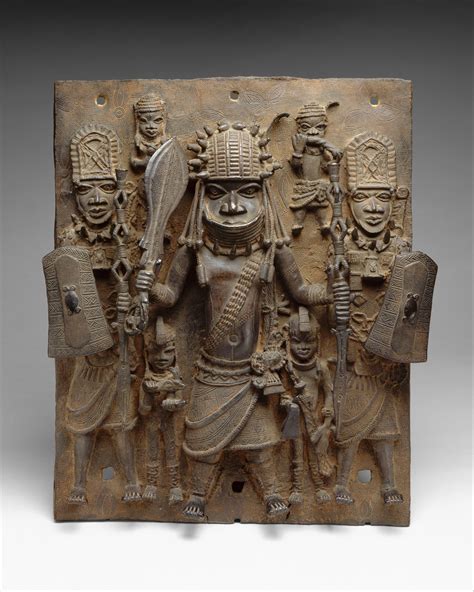
Benin plaque with warriors and attendants; 16th-17th century; brass; 47.6 cm (183⁄4 in.) height; Metropolitan Museum of Art
Through the remainder of the sixteenth century and in the seventeenth and eighteenth, numerous attempts, Portuguese, Italian, Belgian, and French, were made to fortify or reestablish the earliest missionary efforts. But except in the coast country to the south of the estuary, where the Portuguese established themselves in force at Sao Paolo de Loanda, and inland on the middle Kwango, Christianity never obtained a firm foothold among the people of the region west of the Cataracts, between the Kwanza River to the south and the Kwilu to the north of the estuary, until within recent years.
Read also: Antique Dolls and African American History
It was, and still is, the home of some of the most highly developed forms of fetishism in Africa; and, with the best intentions, the early missionaries merely succeeded in modifying primitive religious ideas and practices with suggestions for new ritual and new objects, such as the cross, for employment as fetishes. To the north of the Congo the Portuguese obtained what was for long a precarious foothold near the mouth of the river, where they still remain in Cabinda.
While the whole region as far inland as the cataracts of the Congo seems to have been at one time under the overlordship of the King of Kongo, at the time of the Portuguese discovery this suzerainty, so far at least as Loango was concerned, had survived merely or chiefly in the recognition of Kongo as a kind of holy land, the source of fetish power and influence.
The early favourable response, superficial though it was, to Portuguese diplomatic or political christianizing efforts, led to a reaction against all things European in Loango, north of the estuary, and the territories formerly subject to or allied with Loango-broadly speaking the country between the Kwilu and the Congo rivers. So a new taboo, or prohibition having supernatural sanction, was instituted in Kakongo, according to which the king must not wear or have in his house any article of white man’s making.
However little success, apart from a merely nominal one, the Portuguese may have had in their, efforts to import Christian ideas, some of their imports of a material nature had a great influence for good on their negro subjects and customers in Angola. This name, originally the title of the king of the southern portion of the old empire or confederacy of Kongo, came to be applied to all Portuguese territory between the Congo and the Kunene, including the provinces of Loanda, Benguela, and Mossamedes, with their back country.
Between Lakes Tanganyika and Mweru in the east and the neighborhood of the Kwango River in the west, the whole region traversed by the northward flowing affluents of the Kasai-the principal left tributary of the Congo-has been greatly influenced by the people known as Baluba. They or their kin founded the great Lunda empire in the west of this region, and other similar groupings of tribes were brought about by the conquering and organizing genius which enabled them to impose their rule upon the aboriginal tribes of a different stock among whom they came as leaders or conquerors.
Read also: Explore the Egypt Mills Antique Tractor Club's agricultural legacy
It was the same state of things as we have already noticed in the seaward region, where the intruders were very likely akin to the Baluba.
Politically the Baluba, as represented by the ruling forces in the...
Significance of traditional African masks - in 1 minute
Different Types of African Sculpture
African sculpture encompasses many different types and styles, each with its own unique characteristics and cultural significance.
Some of the most common types of African sculpture include:
- Figurative sculpture: This type of sculpture depicts human or animal figures, and can be highly realistic or abstract.
- Mask sculpture: Masks are an important part of many African cultures, and can be used for ritual or ceremonial purposes.
- Relief sculpture: Relief sculptures are typically carved into a flat surface and can be highly detailed and intricate.
- Abstract sculpture: Abstract sculptures can take many forms, from simple geometric shapes to more complex and organic forms.
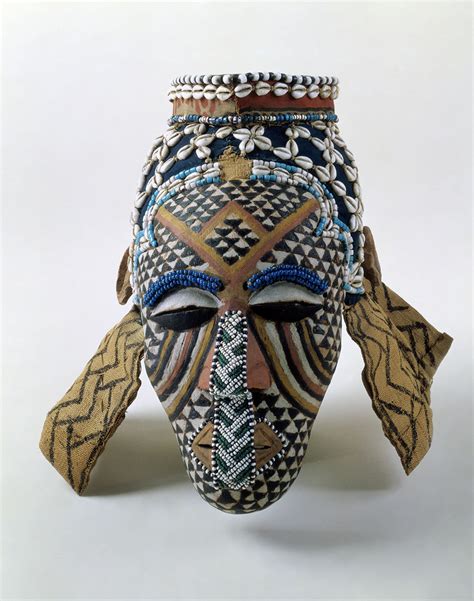
Ngady-Mwash mask; 19th century; from Kuba Kingdom; Ethnologic Museum of Berlin
Materials Used in African Sculpture
African sculpture can be made from a wide range of materials, depending on the region and the intended purpose of the sculpture.
Some of the most common materials used in African sculpture include:
- Wood: Wood is one of the most common materials used in African sculpture and can be carved into highly detailed and intricate forms.
- Stone: Stone sculptures are typically more durable than those made from wood, and can be highly polished and detailed.
- Bronze: Bronze sculptures are often used in West Africa and are known for their intricate detail and realistic depictions of people and animals.
- Clay: Clay sculptures are common in many African cultures and can be used for both functional and decorative purposes.
Symbolism in African Sculpture
African sculpture is often imbued with deep cultural and spiritual significance and can be used to convey a wide range of meanings and messages. Many African sculptures are symbols of power, fertility, or protection, while others are used to represent important figures or events.
For example, the Akan people of Ghana create sculptures known as akua'ba, which are believed to bring fertility and good fortune to women who are trying to conceive. These sculptures typically depict a female figure with an elongated head and a flat back and are often carried by women who are hoping to become pregnant.
Significant moments in African art history
| Time Period | Event |
|---|---|
| c. 25,000 BCE | Paintings in charcoal, ochre and white pigments of animals found in the Apollo 11 cave in Namibia. |
| c. 8,000 BCE | Rock-carvings of large animals are created by hunter gatherers during the Bubalus antiquus period. |
| c. 6,000 BCE | Rock paintings made in North Africa during the Pastoral period, as represented by scenes of cattle herding and vignettes of daily life at Tassili N'Ajjer in Algeria. |
| c. 3,500 BCE | The paintings of boats, animals, hunting and combat scenes, as well as the scene of a hero holding back two lions, that decorate the walls of Tomb 100 at Hierakonpolis are among the most important monuments of Egypt's Predynastic and Early Dynastic periods. |
| c. 3,000 BCE | King Cheops orders the construction of the Great Pyramid at Giza, the largest pyramid ever constructed and originally 146 metres tall. |
| c. 3,000 BCE | Considered ancient Egypt's first great work of art, the large schist Narmer Palette celebrates the glory of King Narmer, shown smiting his enemy. |
| c. 2,700 BCE | The first monumental structure built entirely of stone is a six-stage stepped pyramid designed by the architect Imhotep for King Djoser at Saqqara, Egypt. |
| c. 2,500 BCE | The Great Sphinx at Giza depicts in stone the head of the Egyptian King Khafre atop the body of a reclining lion. This monumental statue guards the roadway to Khafre's pyramid tomb. |
| c. 2,000 BCE | Kerma, the site of a Kushite town in Sudan, produces finely made pottery vessels. While most are black-topped red wares, some containers are elaborately painted and others are decorated with appliquéd or incised markings. |
| c. 2,000 BCE | Multi-chambered tombs at the Egyptian necropolis of Beni Hasan are carved from living rock, requiring great skill and effort. Painted scenes from daily life on the walls of the tombs provide an invaluable glimpse into the common concerns and activities of the upper classes at the time. |
| c. 1,470 BCE | Queen Hatshepsut, one of ancient Egypt's three female rulers, constructs a massive and imposing funerary temple at Deir el-Bahri as part of an extensive campaign using art and architecture to glorify her reign. |
| c. 1,450 BCE | Ancient Egyptian glassmakers make lively-looking small bottles for scented oils and cosmetics in a variety of shapes and with multiple colours. These core-formed vessels are made by applying and working molten glass on a rigid interior base. |
| c. 1,340 BCE | This famous painted limestone bust of Queen Nefertiti celebrates the unique status and privileges granted to her by her husband Akhenaten, as she is depicted in the same royal style as he is in his official portraits. |
| c. 1,323 BCE | King Tutankhamun is buried in a lavish tomb, furnished with magnificent jewellery, textiles, throne, gold chariots and a coffin made of gold inlaid with glass and semi-precious stones. The sumptuousness of the grave goods attests to the pharaoh's wealth and power in life, and the rich symbolism of the ornamentation reveal his beliefs about the afterlife. |
| c. 1,300 BCE | Ancient Egyptians bury finely illustrated manuscripts, known as Books of the Dead, in their tombs to provide guidance to the deceased in the trials that take place in the afterlife. |
| c. 800 BCE | A wide variety of burial urns and tomb furnishings maintained at the Sanctuary, or Tophet, of Tanit, Carthage's primary goddess, illustrate the city's religious concerns and practices, including for a time the sacrifice of young children. |
| c. 500 BCE | Sculptors in Nok, Nigeria produce terracotta heads, probably for religious purposes, that seem highly animated, although their features are exaggerated so that they appear slightly caricatured. |
| c. 230 BCE | A one-roomed temple is developed in Nubia, presumably to accommodate local rituals. One of the earliest examples is the shrine built by King Arnekhamani and dedicated to the lion-headed god Apedemak. |
| c. 200 BCE | Nubian sculptors ornament temples, palaces and tombs with relief scenes of the king and his family paying tribute to the deities. Nubian potters of the Meroitic period create ceramic containers that have eggshell-thin bodies, refined finishes and lively painted or stamped decoration. |
| c. AD 100-c. 300 | During the period of Roman rule, mummies in Faiyum, Egypt are capped with highly lifelike painted portraits of the deceased, introducing a new level of realism into Egyptian art. |
| c. AD 200-c. 300 | Monumental stone obelisks are hewn at the Ethiopian city of Aksum to serve as funerary markers for the uppermost members of society. These stelae, the largest of which is a towering 33.5 metres tall, are carved to resemble the surfaces of buildings. |
| c. AD 400-c. 500 | The earliest known clay figures in South Africa, found at Lydenburg, are a series of fired ceramic heads that are thought to have been used as part of initiation rituals. |
| c. AD 550-c. 600 | Among the earliest surviving Christian icons is the depiction of the Virgin and Child Enthroned with SS George and Theodore, painted using the encaustic technique. |
| c. AD 700-c. 800 | The sensitive painting of St Anne is one of the earliest images painted on the walls of the cathedral of Faras, which is the source of the best-known examples of Byzantine painting in Nubia. Her enormous eyes and simplified features continue Egyptian traditions and are characteristic of the early Faras images. |
| c. AD 836-c. 875 | Expansion begins on the Great Mosque of Kairouan in Tunisia. This religious centre in the western part of the Islamic world stands as a model for other mosques in the region. |
| c. AD 850-c. 1000 | Highly accomplished smiths at Igbo-Ukwu in Nigeria fashion elaborately decorated bronze containers and ritual implements that are among the earliest items made of copper alloy in western Africa. |
| c. AD 1003 | The mosque of al-Hakim is constructed by the Fatimid caliphate to accommodate the entire population of Cairo for worship and grand ceremonies. |
| c. 1000-c. 1400 | Massive stone walls are built in Great Zimbabwe, forming the largest ancient structure in sub-Saharan Africa. |
| c. 1000-c. 1400 | Life-size portrait heads made of terracotta or bronze at Ife in Nigeria are strikingly naturalistic and are pierced with holes that may have allowed the attachment of crowns and facial hair. |
| c. 1106-c. 1143 | Artistic interchanges between different parts of the Almoravid domain can be seen in the Qubbat al-Ba'diyyin, the surviving ablution centre of the primary mosque in Marrakesh. Ribbed domes and intersecting horseshoe arches from Andalusia are combined with local Moroccan architecture. |
| c. 1200-c. 1300 | Twelve churches are cut from the living rock at Lalibela in Ethiopia. Their architecture is derived from wooden buildings, no longer extant, in the region. |
| c. 1200-c. 1500 | Artisans in the inland Niger River delta fashion equestrian figures from ceramic, metal and wood to depict mythological figures and important political individuals. |
| c. 1275-c. 1300 | Ife smiths cast in copper the half-life-size statue of a seated man known as the Tada figure. The figure's posture and proportions, as well as his animated facial expression, are exceptionally realistic. |
| c. 1300-c. 1500 | Illustrated copies of the Gospels are produced in Tigray province in Ethiopia that reveal the region's ties with the Byzantine Empire and close relationship with the Eastern Mediterranean. |
| c. 1300-c. 1500 | The Dogon people of Mali carve some of the most accomplished and oldest surviving figural wooden statues in Africa. While most figures are stylized to some degree and emphasize geometric forms, sculptures of women often include children and thereby underscore their maternal role in society. |
| c. 1325-c. 1326 | The Great Mosque is Timbuktu is built, probably at the order of King Mansa Musa, who had just returned after making a pilgrimage to Mecca. |
| c. 1375-c. 1400 | During their 'Golden Age', the Swahili of East Africa build stone tombs for the wealthy that are highly unusual and distinctive. |
| c. 1389 | Sultan Sha`ban II of Egypt commissions several large and sumptuously illuminated copies of the Koran that include double-page frontispieces, chapter headings and page margins richly decorated in gold, lapis lazuli and red. |
| c. 1500-c. 1600 | Ivory-carvers of Sierra Leone are commissioned by Portuguese traders to fashion intricate salt-cellars that incorporate European and African forms and motifs. |
| c. 1500-c. 1600 | Benin kings of the Edo people wear finely carved ivory pendants of revered deceased ancestors. While somewhat stylized, these carvings are portraits of specific individuals. |
| c. 1500-c. 1600 | Upon his coronation, each king (oba) of Benin must commission within his first year of rule the production of a brass commemorative head of his father, the former king, to be placed on an altar. While not realistic portraits, these images are individualized and are meant to represent the actual person. |
| c. 1700-c. 1800 | The painting of Michael the Archangel in the Church of Debre Sina is indicative of the new painting style developed in Gondar, the capital of Christian Ethiopia, and reveals the characteristic bright palette and long-faced figures. |
| c. 1700-c. 1800 | A king of the Kuba dynasty in Zaïre commissions a representation in wood of the founder of the royal family Shyaam aMbul aNgoong and another of himself. Henceforth, each king has a commemorative statue of himself made. |
| c. 1800-c. 1900 | The Yoruba develop the tradition of making wooden Gelede masks for large festivals that celebrate the power of the tribe's elderly women. |
| c. 1850-c. 1900 | Kongo carvers, working closely with spiritual advisers, make power figures, called minkisi, for use in divination rituals to consult the spirits. |
Famous African Sculptors and Their Works
There have been many talented African sculptors throughout history, each with their own unique style and approach to the art form.
Some of the most famous African sculptors include:
- Ousmane Sow: Sow was a Senegalese sculptor known for his large-scale, realistic sculptures of African figures.
- El Anatsui: Anatsui is a Ghanaian sculptor who creates intricate, abstract sculptures from discarded materials such as bottle caps and aluminum foil.
- Sokari Douglas-Camp: Douglas-Camp is a Nigerian sculptor who creates large-scale, abstract sculptures inspired by traditional Nigerian art.
Where to See African Sculpture
If you're interested in seeing African sculpture up close, there are many places where you can do so. Many museums around the world have extensive collections of African art, including sculpture, and there are also many galleries and exhibitions that focus specifically on African sculpture.
Some of the best places to see African sculpture include:
- Zeitz Museum of Contemporary Art Africa (Cape Town, South Africa): Situated in a repurposed grain silo, the Zeitz Museum of Contemporary Art Africa (MOCAA) is the largest museum of contemporary African art on the continent. MOCAA exhibits cutting-edge works from established and emerging artists, offering a platform to explore themes such as identity, social change, and globalization. Its striking architecture and thought-provoking installations make it a must-visit destination for art enthusiasts.
- Egyptian Museum (Cairo, Egypt): Located in Cairo, is home to one of the world's most extensive collections of ancient Egyptian artefacts. Housing over 120,000 items, including the iconic treasures of Tutankhamun, the museum provides a fascinating insight into the grandeur and mysteries of ancient Egypt, from intricate carvings to mesmerizing statues.
- Museum of Black Civilizations (Dakar, Senegal): Opened in 2018, the Museum of Black Civilizations in Dakar celebrates Africa's vast cultural heritage and its diaspora. The museum showcases over 14,000 artworks and artefacts, spanning various regions and time periods. Its exhibits explore the historical achievements, contributions, and resilience of black civilizations globally, emphasizing the interconnectedness of African cultures.
Collecting African Sculpture
If you're interested in collecting African sculpture, there are a few things to keep in mind. First, it's important to do your research and make sure you're buying from a reputable source. Many African sculptures are considered cultural treasures, and it's important to ensure that you're not buying a stolen or illegally acquired piece.
Second, it's important to consider the cultural and spiritual significance of the piece you're buying. Many African sculptures are deeply connected to the cultures and beliefs of the people who create them, and it's important to approach them with respect and understanding.
Appreciating African Sculpture
Whether you're a collector, an art lover, or simply someone who appreciates the beauty and richness of African culture, there's no denying the power and significance of African sculpture. From the intricate carvings of the Nok culture to the abstract sculptures of contemporary artists, African sculpture is a vibrant and diverse art form that deserves to be celebrated and admired.
