This article aims to assist Airbnb hosts in South Africa by providing an overview of hosting responsibilities, relevant laws, regulations, and best practices. It's crucial to adhere to Airbnb's guidelines, such as the Hosting Standards, and to comply with all applicable laws and rules specific to your circumstances and location. This article is not exhaustive and doesn’t constitute legal or tax advice, so conducting your own research is highly recommended.
In light of the COVID-19 health crisis, implementing appropriate health and safety measures is essential for the recovery of the tourism sector. The South African government is developing recommendations that you should consider when listing your property.

Taxation for Airbnb Hosts in South Africa
Tax is a complex topic. Tax forms for South Africa are due around 22nd November each tax year, with the tax filing season commencing in July. It is important to consult with the South African Revenue Service (SARS) to determine if you need to declare your hosting income, which can be found in your host earnings summary.
You must register for VAT if your VAT taxable turnover exceeds R50,000 or is expected to within any consecutive 12-month period. Further details on VAT thresholds can be found on the SARS VAT registration section. The standard VAT rate in South Africa is 15% and applies to all short-term lettings.
SARS may request Airbnb to provide specific data regarding certain taxpayers. Airbnb is legally obligated to provide a limited amount of transaction data to SARS upon request.
Read also: Airbnb in Cape Town, South Africa
The 5 Tips BEFORE You Start Your Airbnb - Tips for New Airbnb Hosts
Local Regulations and By-Laws
Currently, there are no specific short-term rental regulations at the national level in South Africa. Local authorities, or municipalities, are authorized to regulate rental activity. Therefore, it is essential to comply with any applicable by-laws in your local municipality.
In 2019, the City of Cape Town approved a by-law permitting short-term letting from a house or flat for a period not exceeding 30 consecutive days for the same guest/traveler. It is important to check with your local municipality for the most up-to-date regulations in your area.
Contracts and Rules
As a host, it is your responsibility to understand and abide by any contracts or rules that bind you, including leases, co-op rules, or other rules established by tenant organizations. Contacting your housing authority (such as a community council) or landlord can provide more information.
Insurance Coverage
AirCover includes Host damage protection and Host liability insurance, providing basic coverage for listed damages and liabilities. However, this coverage does not replace homeowner’s insurance, renter’s insurance, or adequate liability coverage. Review and understand the terms of your insurance policy to ensure you have appropriate coverage.
Airbnb's Commitment
Airbnb is committed to collaborating with local officials to demonstrate the benefits our community brings. Please note that Airbnb has no control over the conduct of hosts and disclaims all liability. Airbnb isn’t responsible for the reliability or correctness of the information contained in any links to third party sites (including any links to legislation and regulations).
Read also: Local Experiences in Uganda
Experiences on Airbnb
This information page can help you get started in learning about some of the laws and registration requirements that may apply to your experiences on Airbnb. Please understand that this information page is general, not comprehensive and are not legal advice. These pages are intended to give you an idea of the types of rules that may apply to your experiences and to help you understand some of the things to consider in relation to your experience. Different countries, states, and cities have different licensing requirements and rules and it is your responsibility as a host to make sure you comply with local laws and regulations. These pages are not intended to be an explanation of the specific rules that apply in your jurisdiction, or your particular situation, nor are these pages a substitute to seeking legal advice.
Experiences hosts that provide tour-related services may require a license, certification, and/or training. Some jurisdictions may have such requirements pertaining to tour guides for specific types of experiences, or activities in specific locations. We encourage you to contact your local government and/or a lawyer to determine whether or not a specific license or permit might be required for your experience. Many markets have specific regulations concerning tour guiding which may apply to hosts. It is a good idea for you to contact your local government or a lawyer to determine whether a license is required to engage in tour guide activities and obtain more information about the license requirements and procedure for obtaining a license in your jurisdiction.
Even if you do not need to be a licensed or certified tour guide, hosts should generally seek permission to give guided tours of private and public points of interest, government-owned land, or public waters. Many jurisdictions regulate carrying passengers for hire or offering transportation for the specific purpose of guided sight-seeing tours. Typically, operating watercraft for hire, including power-propelled boats, charter boats, tour or excursion boats, fishing vessels, and white water rafts requires registration and can require the driver to hold a special license. Regulation may be based on passenger capacity or geography. Please consult the Transportation page and contact your local government for more information.
Transporting guests may subject hosts to related safety requirements that are often specific to the type of transportation. Usually, although many jurisdictions regulate this transaction. It is particularly common to see regulations relating to the leasing or renting of watercraft such as kayaks, paddle boats, canoes, and sailboats. Can I sell tickets as part of my experience? Probably, as long as you do so in compliance with any ticket resale regulations. Some jurisdictions have enacted laws prohibiting the resale of certain types of tickets at higher prices, while others allow this activity with a license. The tickets themselves may also be non-transferrable. These restrictions may not apply to online sales.
Maybe. Depending on the jurisdiction, experiences hosts may be subject to laws or regulations governing the travel industry, such as regulation of travel-related sales, travel agent registration, or occupational or business licenses and related requirements. Activities that may cause a government to view a host as a travel agent include selling, providing, contracting, or arranging travel services such as travel tickets or packages or making reservations for lodging, entertainment, transportation, tours etc. Maybe. Many jurisdictions around the world impose requirements on sellers of travel-related services, regardless of whether the individual needs to register or obtain a license.
Read also: Authentic Cape Coast Stays
* Please note that Airbnb has no control over the conduct of hosts and disclaims all liability.
Starting an Airbnb Business in South Africa
The observation period is between 2023 October to 2024 September. The average income of Airbnb host is ZAR241,680 per listing per year. Startup cost: It costs around ZAR26,352 to start an Airbnb listing. The major costs are to furnish bedrooms and living room. In order for you to furnish a room like below, it'll cost you around ZAR26,352 per bedroom. Finally, you need to budget for various supplies like towels. You may also need smart lock for self-checkin. This'll add another ZAR5,046.
Airbnb was founded in 2007 when two Hosts welcomed three guests to their San Francisco home, and has since grown to over 4 million Hosts who have welcomed more than 1 billion guest arrivals across over 220 countries and regions. Travel on Airbnb keeps more of the financial benefits of tourism with the people and places that make it happen. Airbnb has generated billions of dollars in earnings for Hosts, most of whom are individuals listing the homes in which they live. Among Hosts who report their gender, more than half are women, and one in five employed Hosts are either teachers or healthcare workers. Travel on Airbnb also has generated more than $4 billion in tax revenue around the world. Airbnb has helped advance more than 1,000 regulatory frameworks for short-term rentals, including in 80% of our top 200 geographies. In late 2020, to support our continued expansion and diversification, we launched the City Portal to provide governments with a one-stop shop that supports data sharing and compliance with local registration rules.
The emergence of the sharing economy has revolutionized the way we think about the traditional business model. The profitability of rental arbitrage is based on the difference between the long-term rental price and the short-term rental price. However, rental arbitrage is not without risks.
The primary risk is the lease agreement between the landlord and the host. Nevertheless, the benefits of rental arbitrage can be significant, including low start-up costs and high potential for passive income.
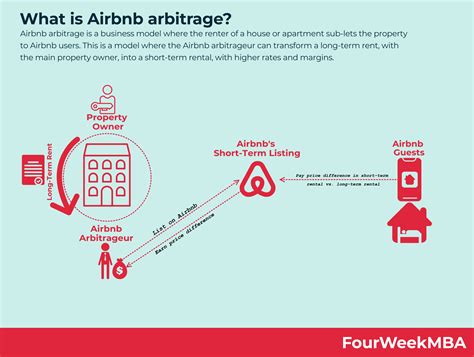
Steps to Start a Rental Arbitrage Business on Airbnb
- Research the market and the competition: Before starting your rental arbitrage business on Airbnb, you need to research the market and the competition. This includes understanding the demand for short-term rentals in your area and identifying your target market.
- Identify the right property for rental arbitrage: Once you have researched the market and the competition, the next step is to identify the right property for your rental arbitrage business.
- Furnish and design the property to attract guests and earn positive reviews: you need to furnish and design your rental property strategically. This includes selecting furniture and decor that are both stylish and functional, and that appeal to your target market.
- Set the rental price: Setting the right rental price is critical to the success of your rental arbitrage business.
- Create an Airbnb listing to list your rental property on Airbnb: you need to create an account and create a listing that highlights the features and benefits of your property.
- Manage guest communication and bookings: as a rental arbitrage host you are responsible for managing guest communication and bookings.
- Hire a cleaning and maintenance team: to ensure that your rental property is always clean and well-maintained, you should hire a professional cleaning and maintenance team.
- Monitor and analyze the business performance: to ensure the success of your rental arbitrage business on Airbnb, you need to monitor and analyze your business performance continuously.
Finding Suitable Properties and Negotiating Lease Agreements
When starting an Airbnb rental arbitrage business, finding suitable properties and negotiating lease agreements is crucial.
- Identify your target market: Before you start looking for properties, it’s important to identify your target market.
- Look for suitable properties: Once you have identified your target market, start looking for suitable properties. You can search online property portals, classifieds, or work with a real estate agent.
- Contact landlords: After identifying potential properties, reach out to the landlords or property owners to negotiate a lease agreement. It’s important to be upfront about your intentions to sublease the property for Airbnb rentals.
A key factor about AirBnB occupants/guests is that they tend to look after units much better than traditional long term tenants. This is something that actually appeals to landlords.
When negotiating lease terms, consider factors such as rental rates, length of lease, renewal options, and responsibilities for maintenance and repairs. Analyzing an Airbnb arbitrage opportunity is a critical step in determining the viability and potential profitability of a rental property.
Let’s say you want to lease a 2-bedroom apartment in Johannesburg for ZAR 8,000 ($444) per month. However, it’s important to note that this analysis doesn’t factor in other potential costs such as marketing expenses, taxes, and insurance. To analyze Airbnb arbitrage opportunities more efficiently and accurately, there are several online tools and software that you can use.
The 5 Tips BEFORE You Start Your Airbnb - Tips for New Airbnb Hosts
Factors to Consider Before Starting Rental Arbitrage
Starting a rental arbitrage business on Airbnb can be a lucrative venture, but there are several factors to consider before diving in.
- Location: The success of your rental arbitrage business largely depends on the location of your property.
- Property Management: As a rental arbitrage business owner, you’ll be responsible for managing the property and guest experience.
- Finances: Starting a rental arbitrage business can require significant upfront investment.
- Legal and Regulatory Compliance: Short-term rentals are subject to local by-laws and regulations, which vary by jurisdiction.
- Marketing and Customer Service: In order to attract and retain guests, you’ll need to have effective marketing strategies in place and provide excellent customer service.
- Risk Management: There are inherent risks associated with renting out a property on Airbnb, such as property damage, theft, or legal liability.
Pros and Cons of Rental Arbitrage on Airbnb
Like any business model, rental arbitrage on Airbnb has both pros and cons.
Flexibility and Control: As a rental arbitrage business owner, you have control over the property and the ability to set your own rental rates and booking policies.
Successful rental arbitrage on Airbnb requires careful planning, execution, and ongoing management.
Enhancing Your Airbnb Listing
High Quality Pictures: Try your best to always use a professional, but affordable photographer for your AirBnB listings.
Access Devices and Locks for Self-Check-In
There are several popular access devices and locks that enable guests to access the unit without the host being present:
- August Smart Lock: This smart lock provides keyless entry and can be controlled via a mobile app or voice commands through Alexa, Siri, or Google Assistant.
- Schlage Encode Smart WiFi Deadbolt: This smart lock provides keyless entry, can be controlled remotely via a mobile app, and integrates with Alexa for voice control.
| Access Device | Description | Features |
|---|---|---|
| August Smart Lock | Keyless entry via mobile app or voice commands | Mobile app control, voice command integration |
| Schlage Encode Smart WiFi Deadbolt | Keyless entry with remote control via mobile app | Remote control, Alexa integration |
| Master Lock Key Safe (Wall Mounted) | Secure storage for up to five keys | Resettable combination lock |
| Kidde AccessPoint KeySafe | Secure storage for up to two keys | Push-button combination lock |
| Supra C500 KeySafe | Secure storage for up to six keys | Tamper-resistant cover, push-button combination lock |
Remote Check-In Services
Remote check-in services enable guests to access the property and check-in independently, without the need for the host to be present.
- KeyNest: This service provides secure key exchange at local stores and allows guests to access the property independently.
- Igloo: This service provides automated check-in and check-out for Airbnb properties, including keyless entry and remote support.
- August Access: This service provides keyless entry and remote access for Airbnb properties, allowing guests to access the property independently.
Popular articles:
tags: #Africa
