Walking into a home with African wall decor is like stepping into a story-one that unfolds with every glance. The walls of a home should speak, and African art has a way of doing just that. From the intricate weave of handwoven baskets to the bold energy of masks and paintings, these pieces trigger a soothing feeling. They are invitations to explore and connect. Here are ways to bring that sense of wonder into your own home.
African-inspired home decor is a great way to add some vibrance and personality to your space. Whether you’re looking to create an authentic African inspired living room, or just add a touch of Africa to one corner of your home, there are plenty of ways to get creative. From colorful prints and patterns, to natural materials like wood and woven fabrics, there are endless possibilities when it comes to bringing the beauty of Africa into your home.
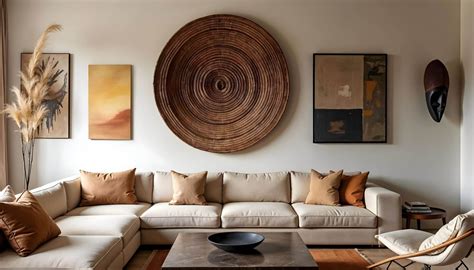
Captivating African Paintings: A Splash of Culture
There’s something magical about the way African paintings bring a room to life. Whether you’re drawn to the earthy tones of traditional styles or the bold splashes of contemporary abstract art, these works offer a unique visual appeal.
Traditional African painting techniques, often rooted in storytelling and symbolism, have been evolving through generations. For instance, Artists like Nigeria’s Ben Enwonwu, known for his mastery of form and representation of African identity, captured the essence of his culture with every brushstroke.
On the other hand, contemporary African abstract painters such Ghana’s Amoako Boafo are pushing boundaries, creating thought-provoking pieces that challenge perceptions and embrace bold, vibrant colors. Their work feels like a conversation between the past and the present, offering a modern twist on traditional forms.
Read also: Experience Fad's Fine African Cuisine
To explore further, seek out the unique semi-abstract paintings which use techniques that create a photograph-like result. These trompe-l’œil pieces have an effortless ability to captivate. Traditional or contemporary, neutrals or bold: the choice of African wall decor is entirely yours. When you hang an African painting in your home, you’re inviting a piece of the artist’s story into your life.
Striking African Photography: Bold Perspectives
Much like a painting, there’s something powerful about a photograph. Indeed, these scenic snapshots are able to capture a moment, but also an experience. African photography, with its range of subjects and styles, is a perfect example of the art. Whether it’s a striking portrait or a vivid landscape, photographers bring out the raw, authentic beauty of the continent and its people.
Take Zanele Muholi, for example, a South African photographer whose work redefines portraiture. Muholi’s striking black-and-white portraits documents the lives of South Africa’s LGBTQ+ community while challenging the viewer to reflect on identity, representation, and visibility. Then there’s Sanlé Sory, a master of studio photography from Burkina Faso, whose iconic 1960s portraits reveal the energy and joy of West Africa’s post-colonial youth culture.
From carefully staged shots to candid street photography, African photographers use lighting, composition, and raw emotion to depict something that goes beyond the surface. This one-of-a-kind characteristic makes for an exceptional African wall decor.
Explore the elegant emotion of a black and white photograph or feel the soothing power of the Sahara desert. Whether you’re drawn to the boldness of portraiture or prefer the subtleties of landscape, your walls will be turned into windows to another world.
Read also: The Story Behind Cachapas

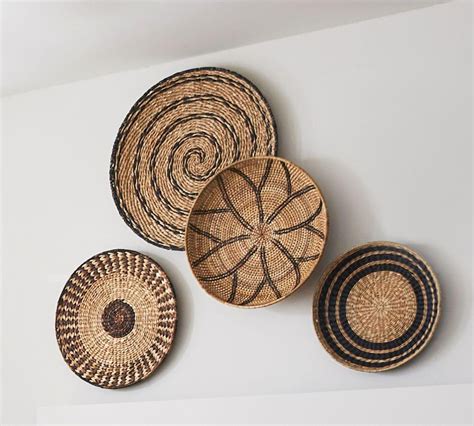
Handwoven Wall Baskets: A Touch of Artisan Craftsmanship
Basketry is one of the most evenly spread crafts across Africa. With so many skilled artisans mastering the art, you can imagine there is a perfectly woven treasure for every inch of your house. Your walls are no exception: these gorgeous expressions of craftsmanship come from the four corners of the continent to adorn your home’s precious partitions.
In places like Uganda, where raffia baskets are a hallmark of local artistry, the weaving techniques are almost as old as the culture itself. These baskets, with their delicate and precise patterns, showcase delightful designs.
Moving south, you’ll find the Tonga baskets of Zambia. Known for their geometric designs and strong patterns, they are made by women of the Tonga tribe-not to be confused with the Tonga archipelago-using ilala palm leaves.
From Ghana to Eswatini, you’ll find other unique pieces that embody this beautiful African wall decor craft. Whether you hang a single piece or create a dynamic assortment of baskets on your wall, the textures, colors, and the craftsmanship infuse life in a way that no mass-produced item ever could.
Authentic African Masks: History Meets Art
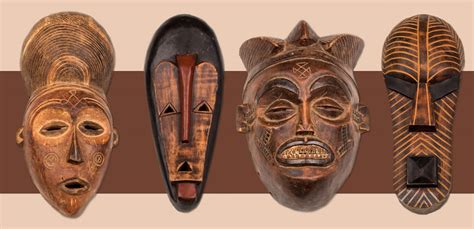
African masks hold deep spiritual and ceremonial significance carried across centuries. Each mask, from the Yoruba of Nigeria to the Dogon of Mali, reflects the traditions and beliefs of its people.
Read also: Techniques of African Jewellery
While the Baule masks of Côte d’Ivoire are known for their refined features, the Punu masks of Gabon captivate with their striking white complexions and elegant forms. Often made from wood, copper, or bronze, these masks reflect a variety of cultural themes, from ancestry to the spirits of nature.
Placing one of these remarkable pieces in your home means paying homage to a timeless tradition in the midst of your modern life. It’s a bold statement-one that speaks of craftsmanship, culture, and connection to the past.
Wallpaper and Wall Hangings: Setting the Tone
If you want your space to truly stand out, consider African-inspired wallpaper and wall hangings. Motifs such as bold geometric shapes, intricate patterns, and earthy colors work wonders on these canvases.
Through these vessels, you’ll admire the complex simplicity of Mudcloth patterns from Mali, or enjoy the vibrancy of kente cloth from Ghana. No matter your interior style, these designs are sure to give your home a bold and dynamic touch.
The beauty of these wallpapers and hangings is their versatility, which guarantees a tailored African wall decor. They can be as subtle or as bold as you want them to be, blending seamlessly with modern schemes or standing out as the star of the room.
If you’re feeling audacious, go for a full accent wall. For a more adaptable option, opt for carefully chosen tapestry. Either way, the chosen patterns will set a tone that is both grounded and distinctive. It’s about bringing the liveliness of Africa into your home, in a way that feels modern and inspiring.

When it comes to tapestries, function meets style! A handmade tapestry can be a great way to brighten up any living space while providing insulation against the cold. While factory-produced tapestries are increasingly available to consumers, traditional, authentic tapestries are handmade by artisans who often learn the artform from older generations.
Skilled makers from the Andes, India, Mexico and Thailand make use of foot-treadle or backstrap looms, where they interweave warp and weft threads and then tamp them down into a tight stitch. Traditional tapestries depict scenes and images which are drawn from the lives and natural environments of the artisans who craft them. Some include geometric designs, like the mandala, which is thought to represent wholeness and symmetry.
Others make use of paisley, floral, or leafy patterns, particularly in tapestries from India. Central American tapestries may incorporate geometric motifs, animals, and people, while Mexican tapestries are often colorful with Greca patterns and designs. Thai artisans use symbols that are popular within Thai culture, religious characters, animal scenes, or depictions of human forms.
The methods for making tapestries vary as widely as the regions from which they come. Because many traditional artisans adopt the methods of their ancestors, they have kept those ancient artforms alive and well. In the Andes, weavers often work on a wooden treadle loom in which they use foot pedals, called treadles, to control the weave of the tapestry. In Central America, the treadle loom and the backstrap loom are both integral to tapestry art.
The backstrap loom is one of the oldest techniques which dates back thousands of years, in which one part of the loom is attached to the weaver and the other part is attached to a fixed object (historically, a tree). To create vibrant color, artisans embroider and dye their tapestries with natural plants and pigments.
Caring for Your Tapestries
As with any work of art, direct sunlight will fade colors over time, especially for tapestries with natural dyes. We recommend hanging your tapestry in an area that avoids direct sun exposure to maintain vibrancy. To clean your woven tapestry, use a vacuum with an upholstery attachment or dry clean if necessary. Spot treatment can also be used with a gentle fabric cleaner, but we recommend testing it on a small area first.
Alternatively, you may hand wash your tapestry using cold water, then hang it to dry in the shade. Some tapestries made from cotton fabric may be machine washed on cold. When it comes to handcrafted traditional tapestries, the most common materials include wool, cotton, silk, and natural dyes.
Certain regions incorporate unique materials or designs into their tapestries. In the Andes, alpaca fiber is commonly used. In India, one finds batik printed cotton. In Mexico and Central America sheep wool and natural cotton threads are frequently used.
To craft an eco-friendly tapestry, traditional artisans hold themselves to high standards, both in terms of materials and processes. Natural fibers, textiles, and dyes are derived from plants and trees. Some artisans even incorporate recycled or upcycled materials in their commitment to eco-friendly processes.
Traditional art forms that are passed down through the generations are often painstakingly made by hand. They are naturally eco-friendly, as they avoid mass production, factory runoff, and industrial waste. This also means that each tapestry is truly one of a kind.
Table: Common Materials Used in Traditional Tapestries
| Region | Common Materials |
|---|---|
| Andes | Alpaca fiber |
| India | Batik printed cotton |
| Mexico and Central America | Sheep wool and natural cotton threads |
To sum it up, African wall decor has the power to ignite your home. It’s a way of connecting to a rich history of art, culture, and craftsmanship. The poignant paintings, moving photography, woven baskets, masks, or wallpaper, create a space that feels alive and full of meaning. With every glance, you’ll find yourself drawn deeper into the stories these pieces recount, making your home a true reflection of global beauty and artistry.
