For many thousands of years, body art has held significant cultural importance in African tribes. Many of today’s body arts have their roots in African tribal body art. From scarification to body paints, body decoration has long been held in high regard in many African tribes. In many tribes, little clothing was worn as the body was seen as a canvas for decoration.
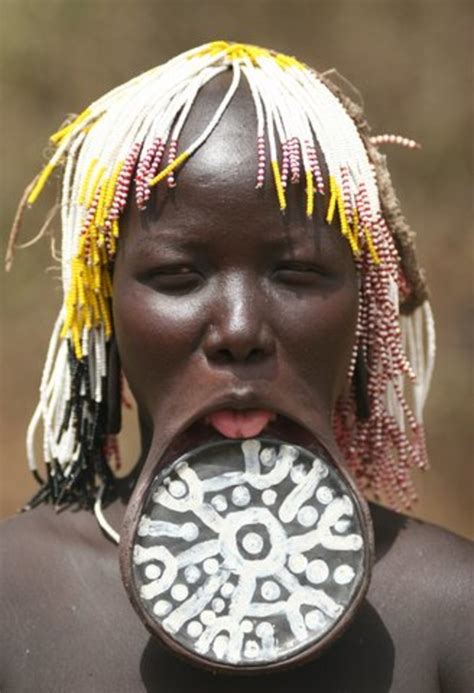
Mursi woman with lip plate
Piercing Traditions
Piercing of the lip, ears or nose is a common form of African tribal body art. The piercing may be adorned with bone, ivory plugs, bronze or other metal jewelry as well as shells and fish vertebrae. The more rare a type of jewelry was, the more it was prized, being used for trade or even money in some cases.
Ancient Egyptians and Piercings
The Ancient Egyptians are of the oldest bodies found with stretched ear lobes. They also loved to adorn themselves elaborately and even restricted certain types of body piercings to the royal family. An interesting fact is that only the pharaoh was allowed to have his navel pierced and anyone else who did so would be executed.
Lip Plates: A Symbol of Status and Dowry
In some parts of Africa women start to stretch their lips six months before marriage. The lip plate, also known as a lip plug or lip disc, is a form of body modification. Increasingly large discs (usually circular, and made from clay or wood) are inserted into a pierced hole in either the upper or lower lip, or both, thereby stretching it. The term labret denotes all kinds of pierced-lip ornaments, including plates and plugs.
Read also: Experience Fad's Fine African Cuisine
The size of the lip plate indicates the number of cattle the husband will have to pay for her dowry.
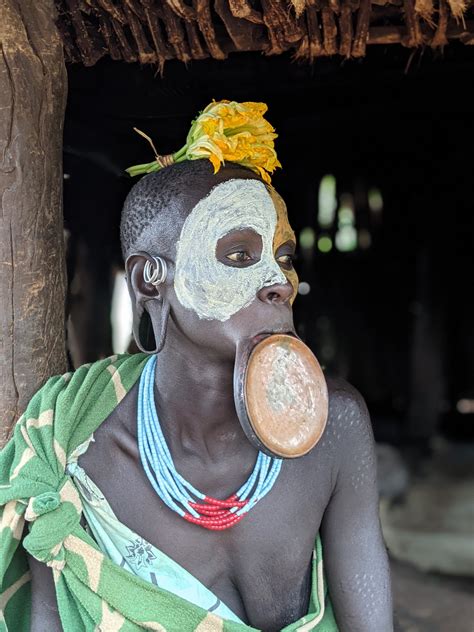
Examples of lip plates
Teeth Sharpening: A Rite of Passage
MENTAWAI TEETH SHARPENING RITUAL
The teeth sharpening ritual is most popular among the Makonde people in southeast Tanzania and northern Mozambique, the majority of ethnic groups in the Democratic Republic of Congo including the Bopoto and the Zappo Zap people. Some tribes in the Central African Republic, the Bemba of Zambia, and even the Yao of Malawi and parts of Zambia also practised the teeth sharpening ritual. Teeth sharpening was done for various reasons among these tribes. For some, the ritual was done to initiate young boys and girls who had reached puberty into adulthood.
Scarification: Creating Permanent Art
The process of scarification involved using a sharp instrument to cut the skin deeply enough for a scar to form over the area. Sections of skin were sliced into shapes and patterns so that when the skin healed and scarred, the shape/pattern would remain forever. This was considered a dangerous practice many years ago due to the lack of suitable healing methods in these times.
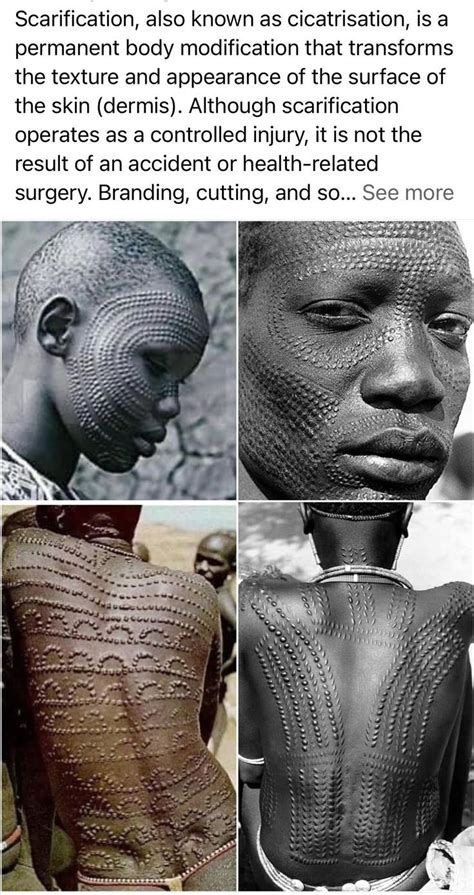
Example of scarification
Read also: The Story Behind Cachapas
Read also: Techniques of African Jewellery
