In 1951, Katharine Hepburn and Humphrey Bogart, followed director John Huston to the jungle around the Ruki River, in the Belgian Congo (today known as the Democratic Republic of the Congo).
There, they spent seven weeks filming a WWI-era romantic-comedy-adventure film about a hard-drinking riverboat captain, Charlie Allnut (Bogart), and his burgeoning love affair with a prim Christian missionary, Rose Sayer (Hepburn).
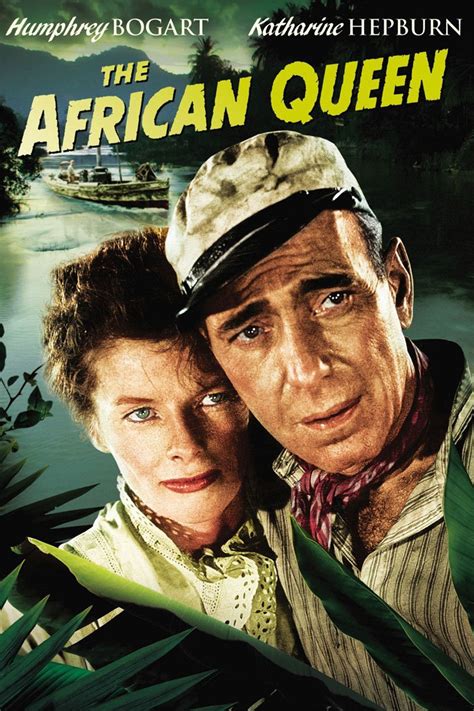
The African Queen US theatrical release poster
Behind the Scenes: A Grueling Shoot
The shoot was often a grueling experience for the crew, particularly Hepburn, who suffered from dysentery caused by contaminated water.
She refused to let it affect her work and never missed a day of filming, despite the punishing schedule of what LIFE magazine called “dawn-to-dusk labor.”
Read also: Experience Fad's Fine African Cuisine
For his part, Bogart - like his character, Captain Allnut - liked to drink, and he tossed ’em back throughout the production.
Hepburn later affectionately referred to Bogie and hard-partying director John Huston as “two drunks.”
Unlike Hepburn and much of the crew, both Bogart and Huston remained healthy throughout the shoot - probably because they drank far more booze than water.
In the end, the movie proved to be one of Bogart’s and Huston’s most enduring and fruitful collaborations.
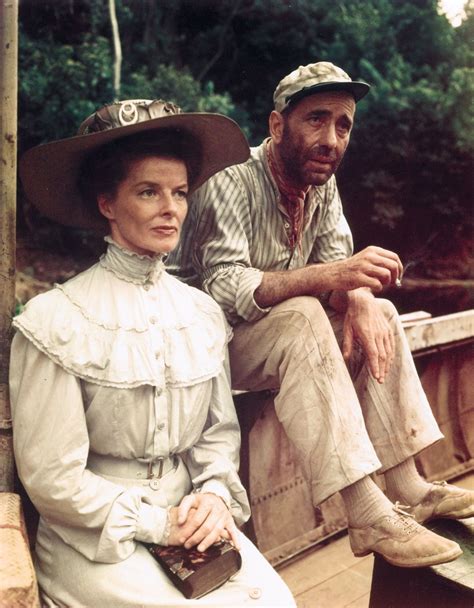
Humphrey Bogart and Katharine Hepburn on the set of The African Queen
Read also: The Story Behind Cachapas
Hepburn received a Best Actress Oscar nomination - her fifth - while Bogart’s utterly engaging performance as the cynical drunkard with a heart of gold earned him the only Academy Award of his storied career.
Photographer Eliot Elisofon was there, too, capturing the stars and crew between takes on the arduous shoot.
Much of the film was shot in Lake Albert, Uganda, and in the Belgian Congo in Africa.
This was rather novel for the time, especially for a Technicolor picture that used large, cumbersome "Three-Strip" cameras.
The cast and crew endured sickness and spartan living conditions during their time on location.
Read also: Techniques of African Jewellery
In the early scene in which Hepburn plays an organ in the church, a bucket was placed off-camera in which she could vomit between takes because she was sick.
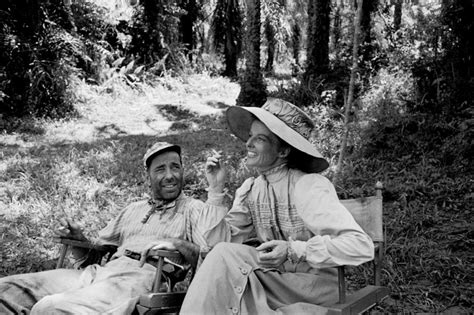
Katharine Hepburn on location in Africa for the filming of The African Queen
About half of the film was shot in the UK. The scenes in which Bogart and Hepburn are seen in the water were all shot in studio tanks at Worton Hall Studios in Isleworth, near London. These scenes were considered too dangerous to shoot in Africa.
All of the foreground plates for the process shots were also filmed in studio.
A myth has grown that the scenes in the reed-filled riverbank were filmed in Dalyan, Turkey, but in her book about the filming, Hepburn stated: "We were about to head... back to Entebbe but John [Huston] wanted to get shots of Bogie and me in the miles of high reeds before we come out into the lake...". The sequence was shot on location in Africa and at the London studios.
Scenes on the boat were filmed using a large raft with a mockup of the boat on top. Sections of the boat set could be removed to make room for the large Technicolor camera.
This proved hazardous on one occasion when the boat's boiler, a heavy copper replica, almost fell on Hepburn. It was not secured to the deck because it also had to be moved to accommodate the camera.
The small steamboat used to depict the African Queen was built in 1912 in Britain for service in Africa.
Because of the dangers involved with shooting the rapids scenes, a small-scale model was used in the studio tank in London.
The vessel used to portray the German gunboat Königin Luise was the steam tug Buganda, owned and operated on Lake Victoria by the East African Railways and Harbours Corporation.
The African Queen - True WW1 Story Behind The Film
Although fictional, the Königin Luise was inspired by the World War I vessel Graf Goetzen (also known as Graf von Goetzen), which operated on Lake Tanganyika until she was scuttled in 1916 during the Battle for Lake Tanganyika.
The name Königin Luise was taken from a German steam ferry SS Königin Luise (1913) that operated from Hamburg before being taken over by the Kaiserliche Marine on the outbreak of World War I.
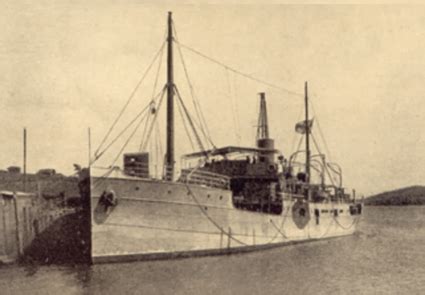
The World War I vessel Graf Goetzen, which inspired the Königin Luise
One of the two boats used as the African Queen is actually the 35-foot (10 m) L.S. Livingston, which had been a working diesel boat for 40 years; the steam engine was a prop and the real diesel engine was hidden under stacked crates of gin and other cargo.
Florida attorney and Humphrey Bogart enthusiast Jim Hendricks Sr. purchased the boat in 1982 in Key Largo, Florida.
After falling into a state of disrepair following Hendricks' 2001 death, the ship was discovered rusting in a Florida marina in 2012 by Suzanne Holmquist and her engineer husband Lance.