Headwraps are a vital part of many cultures, especially in parts of the African region. This hair fashion is still very much in vogue. Headwraps indeed have some African roots linked to it.
Headwraps, traditional attire, are known or called different names depending on the specific area. For instance, the Yorubas in Nigeria, a country located in West Africa, call their folded wraps 'geles'. However, it is essential to know that the headwraps, which are known to be called many names in various African countries, do mean many things when worn.
Spiritual and Practical Significance
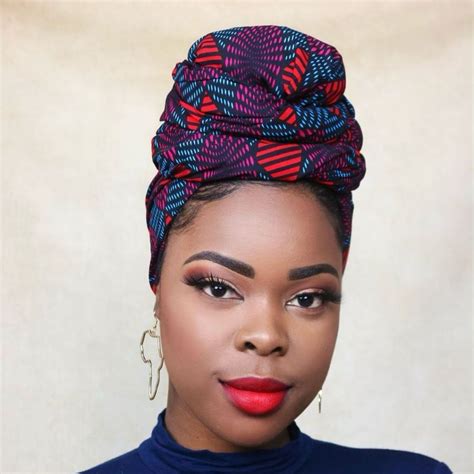
Spiritually, African women and Black women have adopted head coverings as a religious aesthetic. From hijabs in the Islamic tradition to White lace coverings in the Catholic and Ethiopian Orthodox Church, Black women have known that covering one’s head is an act of faith. In traditional African religions, a new initiate (Iyawó) is easily identified by wearing White from head to toe, including a headscarf that must be worn at all times.
This is true in Ifá, Santería, Candomblé, Lucumí, and many other derivative and contemporary faiths. Sangomas, South African healers, cover their heads with wigs and scarves, often with ornate beads and threads. Some women wear headwraps before going to sleep to prevent them from getting all kinky or relatively dry due to cotton pillowcases. Headwraps have been more or less a remedy for most women who couldn't style their hair.
Read also: Experience Fad's Fine African Cuisine
A Glimpse into History
Headwraps have been around for quite a considerable amount of years or rather centuries. During the slave era, many of the slave owners enforced a rule to ensure black women had head coverings. Headscarves aimed to protect the head from lice, the sun, and even sweat. However, they were more or less symbolic markers.
Despite being forced to do things contrary to their beliefs, what black women did was create several ways to resist. Some of them wore their wraps or coverings in a way that would send signals among themselves, which was indeed void of their master's knowledge. In 1865, black American women continued creatively wearing headwraps, even after abolishing slavery. However, while rocking the style, it became more associated with homeliness.
For black women to become more socially recognized, they began to teach or, better yet, embrace Eurocentric standards for acceptance as well as to be seen as a professional in society back then. During slavery era, slave owners were responsible or preferably in charge of blacks' dress code. These women were responsible for catering to their masters' children, their mistress, and their masters.
The 'mammies,' as they were well known as back then, were more or less a mother figure. However, these women weren't going to be put down easily or let their inferior status tarnish them. Also, black men embraced headwraps, and it was highly popular with the durag and the conk, which helped maintain hairstyles.
The durag, a pressing cap, was often worn to protect chemically treated hair that was one way or the other turned into soft waves. Even though the chemically processes hair saw a decline in the sixties and seventies, it didn't make the head tie-less popular among black women. In 2019 the state of California ruled that it was illegal to discriminate in workplaces and schools on the basis of natural hair with the CROWN Act.
Read also: The Story Behind Cachapas
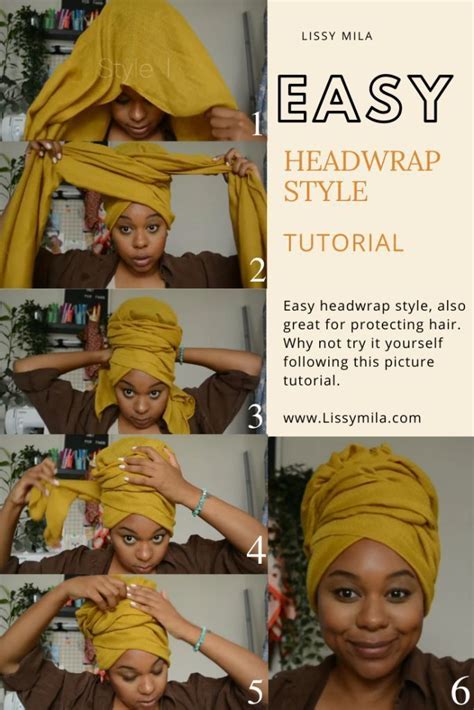
How To Tie Nigeria Asoke Gele Headwrap Tutorial
Reclaiming pride in traditions and claiming the undeniable beauty of Blackness requires constant effort. Headscarves have been allies in the work place for blacks - keeping them protected from harm, acting as a canary in the coal mine to communicate with our people, and as an unabashedly boisterous crown of pride - worn high and bright. It is a reminder of that which is already within (strength, royalty, and the legacy of an unbreakable people).
No matter where you travel throughout the African diaspora, whether it be throughout the United States, South America, or Africa, the head scarf has stood the test of time and remains an important part of Black culture - pre-colonial, colonial, and present day. Using headwraps as protection is still a very valid act of self-care. As Maya Angelou said “Your crown has been bought and paid for.
African Wax Prints (Ankara)
African wax prints, Dutch wax prints or Ankara, are a type of common material for clothing in West Africa. They were introduced to West Africans by Dutch merchants during the 19th century, who took inspiration from native Indonesian batik designs. They began to adapt their designs and colours to suit the tastes of the African market.
Read also: Techniques of African Jewellery
They are industrially produced colourful cotton cloths with batik-inspired printing. One feature of these materials is the lack of difference in the colour intensity of the front and back sides. The wax fabric can be sorted into categories of quality due to the processes of manufacturing. The term "Ankara" originates from the Hausa name for Accra, the capital of what is now Ghana.
Normally, the fabrics are sold in lengths of 12 yards (11 m) as "full piece" or 6 yards (5.5 m) as "half piece". The colours comply with local preferences of the customers. Wax prints are a type of nonverbal communication among African women, and thereby carry their messages out into the world. Some wax prints are named after personalities, cities, buildings, sayings, or occasions. The producer, name of the product, and registration number of the design is printed on the selvage, thus protecting the design and attesting to the quality of the fabric.
Wax fabrics constitute capital goods for African women. Ghana has an annual consumption of textiles of about 130 million yards (120 million metres). The Vlisco Group, owner of the Vlisco, Uniwax, Woodin, and GTP brands, produced 58.8 million yards (53.8 million meters) of fabric in 2011.
The Production Process
The process to make wax print is originally influenced by batik, an Indonesian (Javanese) method of dyeing cloth by using wax-resist techniques. For batik, wax is melted and then patterned across the blank cloth. From there, the cloth is soaked in dye, which is prevented from covering the entire cloth by the wax.
During the Dutch colonization of Indonesia, Dutch merchants and administrators became familiar with the batik technique. Thanks to this contact, the owners of textile factories in the Netherlands, such as Jean Baptiste Theodore Prévinaire and Pieter Fentener van Vlissingen, received examples of batik textiles by the 1850s if not before, and started developing machine printing processes which could imitate batik. Prévinaire's attempt, part of a broader movement of industrial textile innovation in Haarlem, was the most successful.
Unfortunately for the Dutch, these imitation wax-resist fabrics did not successfully penetrate the batik market. Starting in the 1880s, they did, however, experience a strong reception in West Africa when Dutch and Scottish trading vessels began introducing the fabrics in those ports. Initial demand may have been driven by the taste for batik developed by the Belanda Hitam, West Africans recruited between 1831 and 1872 from the Dutch Gold Coast to serve in the Dutch colonializing army in Indonesia.
The Dutch wax prints quickly integrated themselves into African apparel, sometimes under names such as "Veritable Dutch Hollandais", and "Wax Hollandais". Women used the fabrics as a method of communication and expression, with certain patterns being used as a shared language, with widely understood meanings. Many patterns began receiving catchy names. Over time, the prints became more African-inspired, and African-owned by the mid-20th century.
Prévinaire's method for the production of imitation batik cloth proceeds as follows. A block-printing machine applies resin to both sides of the fabric. It is then submerged into the dye, in order to allow the dye to be repelled by the resin covered parts of the fabric. This process is repeated, to build up a coloured design on the fabric. Multiple wooden stamp blocks are needed for each colour within the design. Sometimes the resin on the cloth can be crinkled in order to form cracks or lines that are known as "crackles". After a merger in 1875, the company founded by Prévinaire became Haarlemsche Katoenmaatschappij (Haarlem Cotton Company).
Fancy Fabrics: Imitations and Alternatives
Before the 1960s most of the African wax fabric sold in West and Central Africa was manufactured in Europe. The costly produced wax fabrics are increasingly imitated by alternative ways of manufacturing. The so-called "fancy fabrics" are produced in a printing procedure.
Fancy fabrics in general are cheap, industrially produced imitations of the wax prints and are based on industry print. Fancy fabrics are also called imiwax, Java print, roller print, le fancy or le légos. These fabrics are produced for mass consumption and stand for ephemerality and caducity.
Fancy Fabrics are more intense and rich in colours than wax prints and are printed on only one side. As for wax prints, producer, product name and registration number of the design are printed on the selvage. Even the fancy fabrics vary with a certain fashion. The production of these imitation wax-print fabrics, allow those who cannot afford the European imported wax prints to be able to purchase them.
African Headwrap Styles and Occasions
An African Headwrap or African Head Wrap (two words) is a piece of cloth tied around the head in an intricate style. A headwrap can be worn for a casual day at home or the most special occasion. The African Headwrap or head scarf as it is sometimes called, has stood the test of time and history. Women have been wearing them for centuries-throughout many regions.
Head scarves often told a story of who a woman was. They let everyone know about a woman’s age, marital status or wealth at a glance. Today, headwraps are a favorite accessory worn by women for practically every occasion.
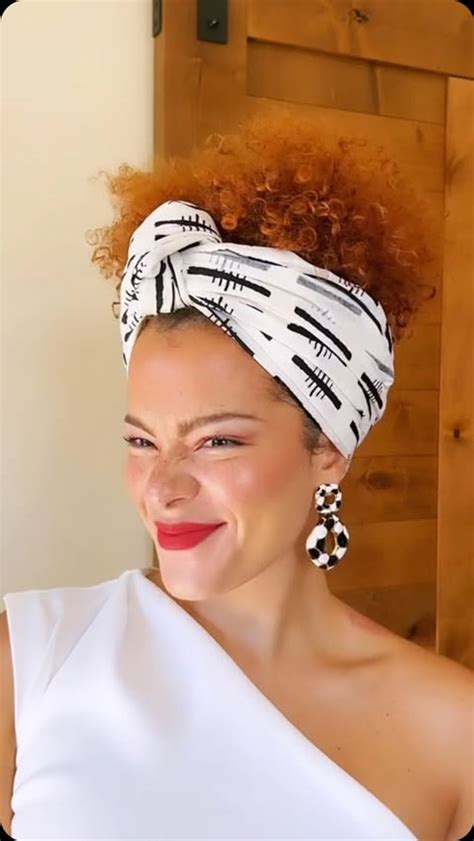
Here are some reasons to wear African Headwraps:
- To protect the hair at night: Many women use silk or satin head scarves instead of a bonnet at night, keeping their hairstyles in place and safe from drying fabrics.
- To avoid styling your hair during the day: If you don’t feel like doing your hair in the morning (or the night before!), large headwraps are a great way to keep your coils in check.
- To take part in a ceremony: Many African immigrants, inspired by their native culture, wear a tribal head scarf for weddings or other ceremonial events.
- To express your style: Today, many African American women wear headwraps for style and simplicity. Pre-tied African headwraps are a convenient way to look nice and cover your hair, while the untied versions can be shaped in many unique and attention-grabbing ways.
- Celebrate African heritage: As more women come to love their natural hair, many have started incorporating fashion headwraps into their daily look as a point of pride.
Styling Tips and Considerations
Before we dive into style suggestions for wrapping your beautiful crown, let’s get prepared. Headwraps can be worn at all times. In the humid summer months and definitely in the dry freeze of winter, our hair needs extra loving care. Protective styles for natural hair are the rage, and many women choose twists, braids and sister locs to tuck away the hair.
Headwraps can be an affordable way to keep hair feeling nourished, while you go about your life in style. You can rock your personal style with an amazing accessory that’s easy to find. Without question, protecting the edges of your natural hair is of the utmost importance. Breakage around the hairline is one of the downsides to the range of hair style trends these days.
While all of the reasons above are key, African-American hair is particularly sensitive to the friction from tight protective styles. A silkier, more strand-friendly fabric tied semi-loosely is the answer to many concerns about wearing headwraps to help fight breakage. Tucking your ends away helps the oldest and weaker strands stay healthy.
If you deal with hair loss due to illness, knowing how to wear a scarf or headwrap is so much more than a style option. In these situations, the use of breathable fabrics in great colors can be the exact boost a woman keep an uplifted spirit. Try some of the many fabrics available in an array of colors and patterns that will fit any woman’s style and circumstance. Create the look you love!
African headwraps are for women with short hair too! Just because your natural hair is styled in a super short cut doesn’t mean you have to be left out. Women who wear TWAs (teeny weeny afros) and bald heads can get in on the look by using square cut scarves and smaller headwraps to create gorgeous looks.
Use non-slip fabrics! At the end of the day, you want a head wrap that will stay in place all day without slippage. Some headband scarves are made with elastic to softly stay in place.You can also find stretchier fabrics that will stay in place BECAUSE you have less hair weighing down the fabric. Lock that gorgeous look in place ladies!
Try to find moisture-absorbing fabrics. Depending on the flow of your day, headwraps and hairbands with features designed for exercise do a great job at keeping your head dry. Women with longer hair or those who are already wearing a protective style such as braids or faux locs can also rock gorgeous headwrap styles.
There are popular options that allow you to simply gather your hair, place a ponytail on top, then twist and style your wrap into a look you love. For longer hair styles, some research suggestions include: front-knotted wraps, big bow style, and the ever popular top bun to name a few. One of the most beautiful looks is an afro hairstyle adorned with an African-style headwrap.
Often, women who wear their hair in afro styles feel the same sense of hesitation that women with short naturals feel. The larger the afro, the larger the fabric size you need to work with; always adjust for the size of your head and hair. It doesn’t matter what kind of hairstyle you have. If you want to learn how to tie an African headwrap, don’t worry, there are no complicated knots to learn.
Tying African headwraps is often just tucking in the ends. Hold the cloth behind your head with its ends in each of your hands. No matter what type of headwrap you try, a good tip is to leave your forehead and neck exposed. Head scarves often come in Afrocentric colors and patterns which can be tricky to mix.
To keep things simple, many women will choose to wear headwraps and caftans made out of the same fabric. This creates a fabulous, stunning look, but don’t dismiss mixing headwraps with other clothing you already have. Adding your favorite jewelry to a head scarf brings in another creative element. Try fashioning your favorite brooch into a headwrap accessory by pinning it above your eyebrows. This is a timeless, gorgeous combination.
You can also try wearing a headwrap with a long scarf of a contrasting color. If you already own a pashmina scarf, you can also wear that as a headwrap-getting two uses out of one accessory. If you want to celebrate African culture, a headwrap is a beautiful, practical way to do just that. Finding a headwrap with traditional African print or color can be a fun discovery journey.
With more women turning to head scarves for elegance and style, it’s safe to say these accessories aren’t going away anytime soon. In fact, their popularity means there are now many places where you can buy African headwraps, including your favorite Afrocentric clothing stores.
The Global Impact and Influence
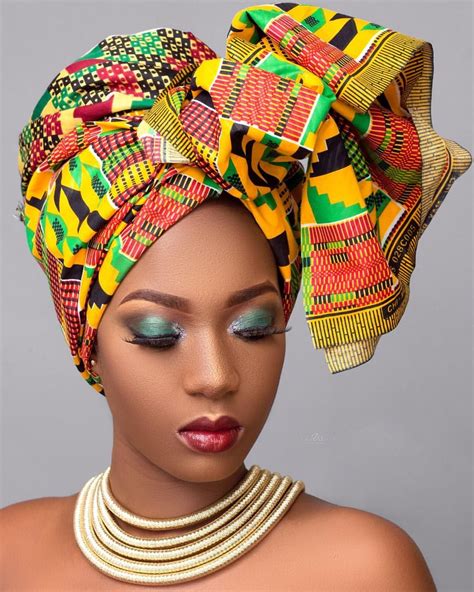
Over the years, African fashion has gained global recognition, and its influence can be seen in the fashion industry worldwide. Many fashion trends that we see today can trace their origins to African culture. Take, for example, the use of bold and bright colors in fashion. This colorful style is a direct reflection of the vibrant and colorful African landscape. Various patterns and prints such as Ankara and Kente have also become popular worldwide.
The African influence can also be seen in the use of beads and other adornments which are now widely used in jewelry-making. African fashion is more than just an aesthetic, it represents a rich culture and heritage that has influenced fashion trends around the world. It is a reminder of the incredible beauty and diversity of African culture.
African fashion has a rich and diverse history that has been shaped by various cultures and traditions. African culture is known for its vibrant colors, bold prints, and intricate designs. The brief history of African fashion dates back to the early civilization of African people, who used natural materials derived from their environment to create clothing.
The westerner influence can be seen in the introduction of robes and gowns from the Middle East, known as "boubou". In the Yoruba culture, traditional garments are made with a variety of fabrics, including aso-oke, adire and ankara.
African women have always played a crucial role in shaping fashion, as they use clothing to tell stories about their lives and experiences. Traditional African clothing embodies the rich cultural heritage of Africa. The materials used to create traditional African clothing vary from region to region, depending on the climate, culture, and available resources of each area.
Some common materials used in African clothing include cotton, silk, wool, and leather. Additionally, beads, shells, and animal prints are commonly added to African clothing to lend it a distinct and vibrant appearance. African clothing is often characterized by vibrant colors and bold patterns, which not only indicate the cultural background and lineage of the wearer but also serve as a source of joy and pride for its people. African clothing plays a significant role in showcasing the diverse culture of the continent.
With over 54 countries, African clothing varies regionally, with each tribe and country having its unique style. However, the most popular African clothing found across the continent is made with the Ankara fabric. Ankara is a wax-printed fabric that comes in various colors, patterns, and designs. It is versatile and can be made into different outfits such as skirts, dresses, shirts, pants, and even accessories like bags and earrings.
