Pixie Frogs are known for their territorial nature and potential aggression, but they are also large, captivating, and unique amphibians that can make interesting pets. Despite their name, derived from *Pyxicephalus adspersus*, there is nothing pixie-like about these frogs. If you're considering one, here’s what you need to know to provide the best care.
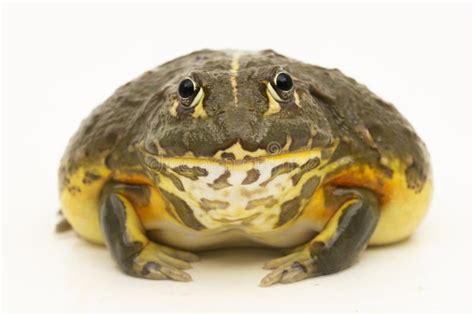
A Pixie Frog
Natural History
African Giant Bullfrogs, also called “pixies”, are found throughout southern Africa in sub-Saharan regions. These areas are extremely dry most of the year which forces the frogs to aestivate in order to conserve water. Pyxies tend to live in areas that during the rainy season flood and retain water.
These remarkable animals have a fascinating survival strategy. In the wild, they occupy habitats that alternated between desperately dry and inundated. When the conditions are unfavorable, they burrow into drying mud, build themselves a mucus lined chamber and estivate until the rains come again. When their chamber is moistened by the rains penetrating the soil, they emerge to resume their above ground life with a voracious hunger.
Description
The Giant African Bullfrog, *Pyxicephalus adspersus*, is the second largest frog in the world, the largest being the Goliath Frog, *Conraua goliath*. Vendors in the pet trade often use distortions of the African Bullfrog's scientific name, such as "pixie frog" and "pyxie", to refer to the young froglets that often surprise new pet owners by growing into monsters.
Read also: Experience Fad's Fine African Cuisine
This is the world’s second largest species of frog with males reaching up to10 inches in length! Females generally reach 3.5-5.5 inches long while males range from 6-10 inches long. Pyxies generally live 15-25 years with proper care and males have been known to way up to two pounds. Powerful limbs and large skulls make these frogs appear thick and stocky. Both genders have teeth like projections called odontoids in their mouth which help them capture prey as they are ambush predators.
Adult frogs are generally green to dark green above, and pale cream or white below, with grayish blotches/spots. Where the limbs meet the body there is a bright orange coloration. Males tend have yellow around the orange coloring often extending down their sides and up the sides of their throat. Males also have more powerful limbs and larger skulls.
Size and Appearance:
- Males: 4.5-10 inches (11.5-25 cm)
- Females: 3.5-5.5 inches (9.0-14 cm)
- Color: Olive green with white undersides and orange markings where limbs meet the body. Males often have yellow coloration along the flanks and throat.
Both genders have teeth like projections called odontoids in their mouth which help them capture prey. When startled, they do not hesitate to puff up in a threat display and will some times bite their handlers. Typically, these amphibians prefer minimal human interaction. For these reasons, Pixie Frogs are best enjoyed through the glass of their aquarium. Although not warm and cuddly, for those who want an interesting pet who is a real conversation starter, Giant African frogs may be for you.
Adult males have proportionally larger heads, particularly where the head meets the body. Sexing of these frogs is most difficult before their gonads develop but sex differences are usually quite apparent by a length of 10 cm (4 inches). If you hear an unsexed frog call, it's 100% male.
Read also: The Story Behind Cachapas
The size and coloration differences are generally reliable once the frogs reach approximately 4 inches. Males also have a proportionally larger head and have a low rumbling call. Females do not call.
Housing
These aggressive and carnivorous frogs should always be housed alone due to their tendency towards cannibalism. If you acquire a male, plan ahead on his large size and provide him with a 20 gallon aquarium or larger. Adult females are half the size of the males and can be kept comfortably in a 10 gallon aquarium.
The set up for these large frogs is very simple. They are fairly inactive, so a single frog can be kept in a 15 gallon or larger tank. Moist coco fiber is an ideal substrate; there should be enough substrate to allow the frog to completely bury itself. Pixie frogs will also utilize a large, easy to enter water dish for soaking.
Although some keepers find that using a non-conventional enclosure such as plastic storage boxes is less stressful for the animal due to the opaque nature of the sides, an opaque container will deprive the keeper of visual access to their pet and also hide conditions inside the habitat that may need attention. A multitude of sins can go unnoticed when viewing an enclosure from the top only.
Enclosure Size:
Read also: Techniques of African Jewellery
- Young frogs (less than 3 inches): 4-5 US gal (15-20 liter) vivarium
- Adult females: 10 US gal (40 liter) vivarium
- Adult males: Minimum 15 US gal (60 liter) vivarium
A ventilated lid should be used. Lack of ventilation can encourage undesirable bacteria and fungi, and may foster the build-up of unfavorable chemicals such as ammonia from waste products.
Substrate:
The ideal substrate for your frog is one that can be kept very damp (not sopping) without falling apart, mashing down, or growing molds and fungi swiftly. Some keepers do use paper towels, but they are unattractive, must be changed daily and deteriorate swiftly under extremely humid conditions, plus they give the frog nowhere to burrow. Many keepers prefer a high humus content topsoil. When baked in the oven at 350 degrees F for ½ hour, a sterile soil can be achieved. Cook 2 batches at once for efficiency. Top soil will provide a naturalistic look to the enclosure as well as offering the frog a chance to burrow under leaving only their eyes exposed in some cases. Soil must be spot cleaned daily.
Most hobbyists use coconut fiber substrate which is sold under various brand names including "Eco-Earth". This is relatively cheap and is sold in dried bricks which, when placed in water, expand to many times the original volume. There are two main advantages to cocunut fiber as a substrate: it will pass through the digestive tract of the frogs without causing obstructions/impaction, and it is free of additives, parasites and other nasties.
The main alternative to coconut fiber is additive-free top soil (or your own garden soil, provided it is free of pesticides and fertilizers). If you use one of the additive-free top soil products available at hardware stores rather than your own soil, ensure that it contains little or no large pieces of mulch, which is a common additive in these commercial products. The reason for this is that these frogs can accidentally ingest the substrate when they lunge for their prey and this can cause intestinal blockages/impaction. This is one of the most common causes of premature death in these frogs. Top soil doesn't sour/spoil as easily as coconut fiber due to the presence of helpful bacteria and fungi, and as a result it generally requires less frequent renewal. It is also cheap (or free if you use your own).
Whichever substrate you use, there should be enough so that the frog can bury itself completely if it desires. Some hobbyists use the terrarium moss products sold in many stores. There is a risk of intestinal problems if the frog ingests a significant piece of this material so use moss like this at your own risk.
If this much preparation is not to your liking and you wish a simpler routine, then moistened strips of terry cloth towels can be used. Always have sterile replacement towels on hand and the towels must be washed and dried WITHOUT fabric softener. Many keepers feel that fabric substrates are stressful for Giant African frogs, since in the wild they would spend the majority of their time buried up to the eyes in sand or leaf litter. For this reason, towels and even sphagnum moss may be too bumpy and clumpy. While holding moisture well, these may not give your frog the sense of complete immersion that he/she requires.
If you diligently spot cleaned daily, a deep bedding of 5-7 inches should last a month at least. Regardless of the choice of substrate selected, it needs to be moistened at all times with dechlorinated water. Tap water that has been dechlorinated chemically or “aged” is perfectly fine. To age water, allow chlorinated water to sit in an open container for 24-48 hours so chlorine can dissipate. Alternatively you can use bottled spring water.
Please note that with most amphibians, lizards, and many snakes, sand is not necessarily the best substrate. For instance, in the case of the Pixie, the tongue is folded over inside the mouth. To capture a potential meal, the frog will drop its lower jaw with considerable force, causing the tongue to flip over and out of the animal's mouth, seizing the prey.
Water Container:
These frogs spend a large part of their time in water. A water container large enough for the frog to immerse itself, should it choose to do so, should be provided. It is important that the container can be easily entered and exited. The water should be free of the chlorine, chloramine and ammonia found in many municipal water supplies. This can be accomplished by using any aquarium dechlorinator product sold by most pet stores (and even Walmart in the US). These products have the added bonus of removing trace amounts of heavy metals (such as copper from water pipes).
Duo Habitat:
There is another approach to designing a Pixie habitat that is very popular and interesting, but is much more expensive and time consuming as well. This is to create a habitat that is partially terrarium, partially aquarium. Many keepers have found great success with their Pixies in habitats that are comprised of 1/3 dry space and 2/3 pond. However, the wet side must be treated just like any other aquarium, especially if there are little fish in that side (which your Pixie will eat, eventually). These setups are much more interesting for you and comfortable and natural for your Pixie, but the water must be kept clean, something your Pixie will make challenging for you.
Careful design of the habitat will save a redo later. When considering the frog’s need to go in and out of the water frequently, it makes sense that a threshold of some sort will help to keep the water cleaner. A bridge of (not sharp) rocks, or a space filled with gravel in between your two ‘eco-zones’ will serve as a welcome mat to water entry. There should be nothing sharp about this transitional zone, either with the materials or with any support structures such as plexiglass separators. The effort to do this right is worth it, because even lightweight coconut fiber will get into the pond side constantly if a threshold is not provided.
If you wish to include live plants for aesthetics, many keepers recommend attaching epiphytes to the sides of the habitat. For the dry side, very little is needed. A nice round hide will give your Pixie a place to haul out and disappear into the dark for a while. Your Pixie will probably create a smaller burrow under the hide. As in the wild, they will bury themselves completely except for their eyes.
For the wet side, you can use your ingenuity to build something completely custom, or buy something pre-fabricated. For a large habitat, an insert such as a Carolina Biological Supply 1.5 gallon plastic tank ($7.00) will provide the clear, water proof tank within the tank that you can use as a see through swimming pool.
As mentioned earlier, very little in the way of elaborate furniture is needed for your Pixie. Features not already mentioned include flat rocks somewhere in the habitat. This can be a slab bridge your frog must cross from the dry side to the wet side, or just a corner piece that you use to lay insects on. The hide should be a half round of cork or a reptile log. While your Pixie is growing, cork is a nice choice. Although these cannot be sanitized more than about 8 times without falling apart, that’s OK, because your young Pixie is going to outgrow it yearly anyway. Your frog is going to need no more than two inches clearance on each side of his/her body and no less than ½ inch per side. Hides that are too large or too small won’t be used because the space will seem either to spacious for genuine refuge or too small to get in and out of without getting stuck.
Again, this hide should be replaced as needed, because depending upon diet and calories, your frog may gain a good deal of mass every year (true for humans as well, unfortunately).
Temperature and Lighting
Being indigenous to southern Africa, these frogs thrive best in temperatures above room temperature. The mid to high 70s and even low 80s suits them well. This can be achieved through use of a low wattage red heat bulb lamp on top of the screen on the dry side, or through an under tank heating pad. This pad should be placed under the dry side of the habitat as well, to help reduce algal buildup in a swimming area’s water.
Daytime temperatures for these frogs during above-ground activity (i.e. when they are not aestivating) should be maintained at 25-32 °C (77-90 °F), ideally with a drop of a few degrees at night, though the temperature drop is not absolutely necessary. Heating can most easily be achieved by using a heat mat or an incandescent light. Heat mats are unobstrusive and best suited to glass vivariums. They are typically placed under one end of the vivarium or on one pane of glass. These frogs have been known to burrow down to a heat mat and then dehydrate and die. If a heat mat is used for them, it is wise to place it on a side pane of glass rather than underneath.
For a 40-60 liter (10-15 US gal) vivarium, a 50 watt incandescent spot light commonly sold in pet stores is ideal. This should be placed over one end of the water container so that the frog can find its preferred temperature by moving closer to or further away from the light. It is strongly advised the you purchase a ceramic light fixture sold for this purpose in order to minimize the risk of fire (these bulbs get very hot).
Provided that the ambient room temperature is not lower than about 20 °C (68 °F), a timer can be used to automatically turn the light or heat mat off in the evening to simulate night time. Photoperiod (how long the day lasts, even artificial day from a light bulb) may play a role in stimulating feeding and breeding behavior and a light period of 12 to 15 hours per day should simulate summer time well for these frogs. If the ambient room temperature does drop below 20 °C (68 °F), a side panel-fitted heat mat can be set on its own timer to come on a...
African bullfrogs do not have many lighting requirements. They require a light cycle of 10 hours of light and 14 of darkness. An ultraviolet (UVB) light such as a ReptiGlo or a ReptiSun 5.0 can be utilized and is recommended.
Humidity
Pixies need plenty of humidity. Humidity levels should be between 70 - 80%. If there is no swimming/total immersion area within the habitat, then monitoring the levels daily is essential. The best way to monitor humidity in the habitat is with a hygrometer. Digital hygrometers work best and are most convenient. In addition to a nice wide water bowl, the required humidity can be achieved by misting the frog’s enclosure thoroughly twice daily; once in the morning and once again in the afternoon (for this species once a day is not enough). If the hygrometer shows that levels are still not being reached, just mist a few more times throughout the day. Consistency in misting and frequent monitoring is everything here, just as it would be with any other amphibian or even arboreal geckos.
The humidity, especially during the day for this diurnal species, must be within the comfort range mentioned above without creating standing water at the bottom of the habitat (anywhere not within a bowl or swimming area). So, while keeping the relative humidity high, you must also be very careful not to over saturate the substrate with water. This will cause the substrate to rot with the resultant bad effects on your frog’s skin and overall health.
Humidity is extremely important to the health of African bullfrogs. The humidity in the enclosure should be maintained around 80-90%. This is easily checked with a hygrometer and maintained with a hydrostat. Frequent misting, moistening of the substrate, large water bowls, and foggers can all be used to maintain higher levels of humidity.
Feeding
How to Take Care of a Pet Pixie Frog 🐸 - A TDI General Care Guide
African bullfrogs have excellent eye sight. They will ambush and consume anything that fits in their mouths. In the wild, these animals are known to eat other amphibians, small reptiles and even birds. Pixies will consume earth worms, crickets, super worms, waxworms, silkworms, hornworms, roaches, night crawlers, black soldier fly larva, and mice. It is recommended to feed rodents to adult Pixies only once every 2 or 3 weeks.
Captive adults are frequently fed earth worms, crickets, super worms, roaches, and mice (feed sparingly). In the wild, these animals are known to eat other amphibians and small reptiles. Bullfrogs are prone to obesity especially those fed large amounts of rodents. It is recommended to feed rodents to Pyxies only once every 2 or 3 weeks.
Pyxies smaller than 3 inches in length should be fed daily whatever they can consume in under 30 minutes, generally 3-4 crickets or the equivalent. Sub-adults and adults should be fed 2-3 times a week in the same manner. When supplying prey items, it is best to leave large insects and worms on the rocks for them. Dead mice are best offered by using forceps to avoid being bit. Again, it is not recommended to feed bullfrogs from your hand as they have a powerful and painful bite.
Some owners advocate the use of trout and salmon pellets in place of live prey and have success. It is not recommended to feed bullfrogs from your hand as they have a powerful, painful bite. Placing the food in a dish or on a flat rock is a better option. Feeding with forceps is a very popular method as well.
Feeding Frequency:
- Froglets and juveniles: 3-4 appropriately sized feeders every 2-3 days.
- Sub-adults and adults: 2-3 times a week
As with feeding any reptile or amphibian a mostly insect based diet, thought must be given to nutritional supplements. Regular dusting of prey items with a supplement such a ReptiCal is most important for young, fast growing frogs - older animals that are closer to adult size need supplements less frequently. Instead of dusting, many keepers gut load their prey items. “Gut loading” means placing the feeder insects on an enriched diet for at least 24 hours prior to being offered to your Pixie. This enhances the nutritional value of the insects substantially. A purchased supplement such as those offered by reptile hobby stores is easily available and affordable. The convenience of a dry gut load diet, purchased from a pet supply house, is undeniable.
Calcium supplementation should be added to the food weekly and a multivitamin supplement every 2 weeks.
Enrichment
Water bowls should be deep enough for the frog to submerge itself if desired. Water should be changed at least daily and only clean, dechlorinated water should be used. A hide box created from things as simple as a half a plastic flower pot should be offered to provide a secure place for the frog. Live plants can be easily uprooted by these powerful diggers and should be potted separately if placed in the enclosure. Fake foliage such as silk leaves can be used without problems and pose the benefit of being easily cleaned.
Cleaning and Maintenance
Bullfrogs are messy creatures, necessitating frequent tank cleaning. Daily removal of poop on the substrate is highly recommended. The dry side of a duo habitat will need to be re-surfaced monthly. This means removing the lighter material that sits on top of the heavier base (such as aquarium gravel or large pea gravel). The fibrous substrate will need to be disposed of monthly if your Pixie is a mature adult. The reason for this is that their weight and size mashes the fecal matter thoroughly down into the substrate. Eventually it becomes impossible to clean satisfactorily. For juveniles and young adult females, you may be able to wait a little longer, if you diligently spot clean daily.
When the time comes to perform this maintenance and the substrate is out, before replacing it with fresh, be sure to remove the gravel base and sanitize. A one inch gravel base provides many useful functions, from preventing the frog from burrowing right down onto the glass adjacent to the heating pad, to providing an air space against compaction of the bedding. If there are any moisture issues due to over-misting, then this air space can help prevent rot. It will, however, need to be removed entirely on a monthly basis and soaked in a 10% bleach solution for ½ hour, then rinsed thoroughly and allowed to air dry for 2 hours. Allow the drying to take place outside of the habitat.
