African paintings are renowned for their vibrant colors, intricate designs, and powerful symbolism. These works of art reflect the rich cultural heritage and diverse artistic traditions of the African continent. Spanning thousands of years, these ancient murals showcase the ingenuity and creativity of various African communities.
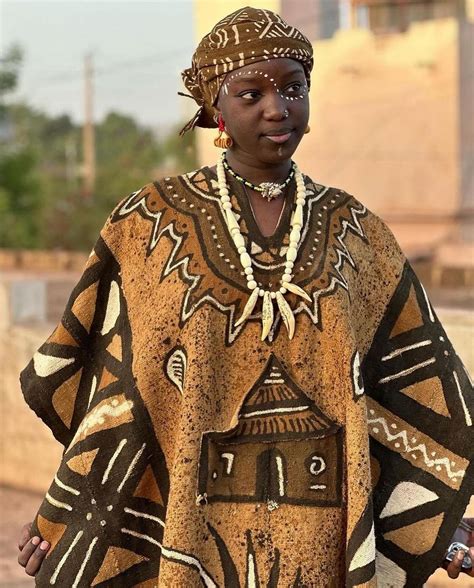
Traditional mud cloth from Mali showcases intricate designs and cultural significance.
Ancient Roots: Rock Art
The earliest examples of African painting can be found in rock art dating back thousands of years. The rock art of southern Africa, such as the San people’s paintings in the Drakensberg Mountains, is particularly famous for its intricate designs and use of color. These ancient artworks are not merely depictions of life as it was, but also serve as a form of communication, passing down stories and traditions from one generation to the next.
One remarkable aspect of African rock art is its diverse subject matter, which encompasses a wide array of themes. Animals, rendered with remarkable detail and precision, come to life on the rocky canvases, providing invaluable insights into the fauna that once roamed the landscapes of prehistoric Africa.
Moreover, the rock art of southern Africa offers a fascinating glimpse into the spiritual and ritualistic aspects of ancient African cultures. Intricately painted scenes depicting religious ceremonies and shamanistic rituals reveal a profound connection between the artists and their spiritual beliefs. Beyond their artistic merits, these rock paintings also serve as invaluable historical documents, chronicling the evolution of societies and the transmission of cultural practices from generation to generation.
Read also: Unlock Radiant Skin
In East Africa, the rock art of Tanzania’s Kondoa Irangi region stands out. This UNESCO World Heritage Site is home to over 150 rock shelters adorned with paintings that span thousands of years. Rock art stands as a testament to the enduring artistic legacy of Africa, providing a captivating window into the distant past.
Traditional African Painting: A Cultural Expression
Traditional African painting is characterized by its use of bold colors, stylized forms, and abstract patterns. These paintings often depict scenes from daily life, such as village scenes, hunting, and farming. The richness and diversity of traditional African painting extend beyond its visual appeal, delving into the very essence of cultural expression and storytelling.
One of the distinctive features of traditional African painting is its profound connection to spirituality and ancestral reverence. Many artworks are imbued with symbols that hold sacred significance, acting as a visual language that communicates with both the earthly and spiritual realms. The bold colors employed in traditional African paintings are not arbitrary choices; they are deliberate expressions of emotion, energy, and identity. The hues pulsate with the vibrancy of life, reflecting the dynamism inherent in African cultures.
Beyond the depiction of daily life, traditional African paintings often serve as visual archives of historical events, folklore, and mythologies. Artists, acting as custodians of their cultural heritage, employ their brushes to preserve and transmit stories from one generation to the next. In addition to their role as narrative tools, traditional African paintings often serve as a means of social cohesion and identity affirmation. The act of creating art is a communal endeavor, with artists collaborating within the cultural framework to produce works that celebrate shared values and beliefs.
Specific Techniques and Styles
Ndebele Painting
Ndebele painting is a distinctive and vibrant style of art that has deep cultural significance within the Ndebele community, primarily found in South Africa and Zimbabwe. This art form is known for its bold use of geometric patterns, vibrant colors, and intricate designs, which have evolved over time while maintaining their cultural importance. Traditionally, Ndebele women were responsible for creating these designs, often painting the exterior walls of their homes as a form of communication and expression.
Read also: History of Bogolan
The use of color was equally significant, with bright shades like red, blue, green, yellow, and white dominating the visual palette. Historically, these designs served a functional purpose as well-communicating social and cultural messages, often relating to marriage, status, and rites of passage. The Ndebele people believed that these paintings could ward off evil spirits, protect the inhabitants, and invite prosperity.
In modern times, Ndebele painting has transcended its traditional boundaries and become a globally recognized form of art. The bold, graphic nature of Ndebele designs, with their rich historical background and connection to cultural identity, continues to captivate audiences worldwide.
Shona Sculpture
Shona sculpture, a captivating and revered form of artistic expression, traces its roots to the heart of Zimbabwe, where the adept hands of Shona artists transform stone and wood into powerful narratives of human experience, wildlife, and abstract symbolism. Central to the essence of Shona sculpture is the use of natural materials, primarily stone and wood, chosen for their inherent textures and characteristics.
Human figures, animals, and abstract designs take center stage in Shona sculptures, each piece serving as a testament to the artist's ability to breathe life into inert materials. One of the hallmark features of Shona sculpture is the "direct carving" technique, a method that distinguishes it from other sculptural traditions. Beyond their aesthetic appeal, Shona sculptures often carry layers of meaning and symbolism deeply rooted in the cultural and spiritual context of Zimbabwe.
Adire Fabric Painting
Adire fabric painting, an exquisite and culturally significant style originating in Nigeria, exemplifies the mastery of resist-dyeing techniques, creating a visual symphony that resonates with the nation's rich history and artistic traditions. At the heart of this vibrant artistic expression is the ingenious use of indigo-dyed fabrics, setting the stage for a captivating interplay of color, pattern, and profound symbolism.
Read also: Using an African Shower Cloth
The process of Adire fabric painting begins with the careful selection and preparation of the fabric, often cotton, which serves as the canvas for this intricate art form. The artist skillfully applies a resist substance, commonly wax or starch, to specific areas of the fabric, creating a barrier that prevents the indigo dye from permeating those regions. Indigo dye, a hallmark of Adire fabric painting, imparts a deep, rich blue hue to the fabric, creating a visually stunning backdrop for the intricate patterns to unfold.
What distinguishes Adire fabric painting is not only its visually striking aesthetics but also the profound cultural significance embedded within each design. The patterns tell stories of heritage, spirituality, and societal values, with symbols representing everything from familial connections to tales of historical events. Beyond being a form of artistic expression, Adire fabric paintings often hold significant cultural and social roles. These textiles are frequently used in traditional ceremonies, celebrations, and rites of passage, serving as garments or decorative elements that reinforce cultural identity and connection to heritage.
Kuba Cloth
Kuba cloth, an extraordinary manifestation of African artistic brilliance, stands as a testament to the ingenuity and cultural richness of the Democratic Republic of Congo. Originating from this vibrant region, Kuba cloth is a unique style of textile art distinguished by its exceptional use of raffia fibers, a natural material that not only reflects the resourcefulness of its creators but also contributes to the distinctive tactile and visual qualities of the artwork.
The process of crafting Kuba cloth is an intricate dance of skill and tradition, starting with the harvesting and preparation of raffia palm fibers. Local artisans expertly transform these fibers into thread, employing age-old techniques that have been passed down through generations. The geometric patterns found in Kuba cloth are not merely aesthetic expressions; they hold profound cultural significance. Each design serves as a unique identifier, representing specific clans, social groups, or individuals.
Beyond its cultural symbolism, Kuba cloth has gained international acclaim for its extraordinary level of craftsmanship. The geometric precision and complexity not only showcase the technical proficiency of the weavers but also exemplify the deeply rooted artistic traditions that have flourished within the Democratic Republic of Congo for centuries.
Mud Cloth (Bògòlanfini)
Mud cloth, also known as "bògòlanfini" in the Bambara language, stands as a captivating testament to the cultural richness and artistic ingenuity rooted in the heart of Mali. Bògòlanfini, or bogolan (“mud cloth”), is a handmade Malian cotton fabric traditionally dyed with fermented mud. It has an important place in traditional Malian culture, and, more recently, it has become a symbol of Malian cultural identity.
In traditional bògòlanfini production, men weave the cloth and women dye it. The dyeing process begins with the cloth being soaked in a dye bath made from mashed and boiled, or soaked, leaves of the n’gallama tree (Anogeissus leiocarpa). Once it has taken on a yellow hue, the cloth is sun-dried and then painted with designs using a piece of metal or wood. The paint, carefully and repeatedly applied to outline the intricate motifs, is made of a special mud, collected from riverbeds and fermented for up to a year in a clay jar.
Bògòlanfini patterns are rich in cultural significance, referring to historical events, crocodiles, mythological concepts, and proverbs. In Mali, the cloth is now worn by people of all ethnicities, including prominently in Malian cinema and by Malian musicians, either as an expression of national or ethnic identity or as a fashion style. The Malian fashion designer Chris Seydou has been credited with popularizing bògòlanfini in international fashion.
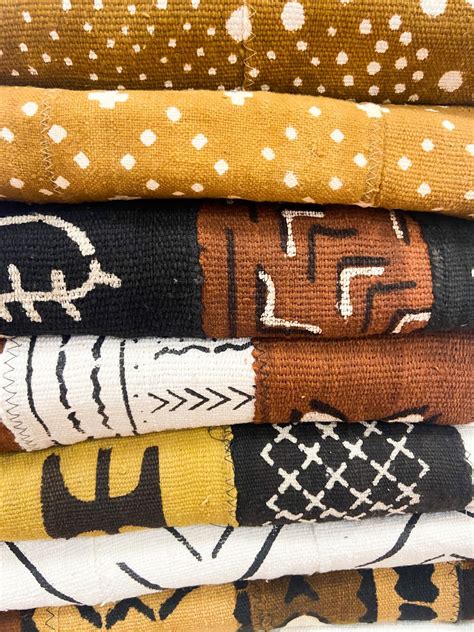
Bogolan cloth for sale in a market in Mali.
Bamum Art
The Bamum people are a Bantu ethnic group of Cameroon with around 215,000 members. The Bamum developed an extensive artistic culture at their capital of Fumban at the beginning of the 20th century. During the reign of Njoya, six dye pits containing various colors were maintained. The Bamum also imported indigo-dyed raffia-sewn cloth from the Hausa to be used as royal cloth. This royal cloth was called Ntieya, and Hausa craftsmen were kept at palace workshops to supply nobles and teach the art of dyeing. At the same time, during the 19th and early 20th century, Bamum artists created splendid beaded sculptures for the royal court.
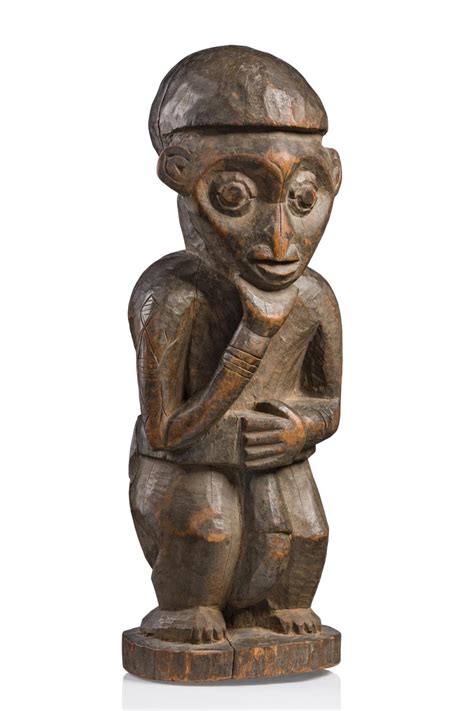
A Bamum male figure showcasing the artistic skills of the Bamum people.
Asante Kente Cloth
Kente cloth (known as Nwentom in the Asante language), is an Asante type of silk and cotton fabric made of interwoven cloth strips that is native to the Asante people. The cloth was traditionally a royal and sacred cloth worn only at times of high importance, most often by Asante kings. Kente cloth is made in Kumasi, the capital of Asante, and in the Asanteland Peninsula. A variety of Kente patterns have been invented, each of which has a certain concept or concepts traditionally associated with it.
According to legend, Kente was first made by two Asante friends who went hunting in a forest and found a spider making its web. The friends stood and watched the spider for two days before returning home to implement what they had seen. The icon of African cultural heritage around the world, Kente cloth is identified by its dazzling, multicolored patterns of bright colors, geometric shapes, and bold designs. A Kente cloth is typically sewn together from many narrow (about 3.9 inches wide) Kente stripes.
The Asante people choose Kente cloths as much for their names as for their colors and patterns; although the cloths are identified primarily by the patterns found in the lengthwise (warp) threads, there is often little correlation between appearance and name.
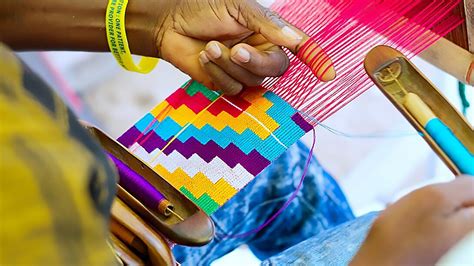
A close-up of Kente weave, showcasing its intricate patterns and vibrant colors.
Table: Key African Textiles and Their Characteristics
| Textile | Origin | Materials | Techniques | Cultural Significance |
|---|---|---|---|---|
| Ndebele Painting | South Africa, Zimbabwe | Paints on walls | Geometric patterns, bold colors | Communication, expression of values |
| Shona Sculpture | Zimbabwe | Stone, wood | Direct carving | Narratives of human experience, symbolism |
| Adire Fabric | Nigeria | Cotton, indigo dye | Resist-dyeing | Cultural stories, ceremonial use |
| Kuba Cloth | Democratic Republic of Congo | Raffia fibers | Weaving | Clan identification, social status |
| Mud Cloth (Bògòlanfini) | Mali | Cotton, mud dye | Mud-dyeing | Historical events, mythology |
| Asante Kente | Ghana | Silk, cotton | Interwoven cloth strips | Royal and sacred cloth, high status |
Visiting The Kente Weaving Workshop In Bonwire, Ghana
Contemporary African Textile Art
Contemporary African painting has evolved over the years, with artists using a range of techniques and styles to express their creativity. Many contemporary African artists combine traditional elements with modern styles, resulting in unique and vibrant works of art.
As Contemporary African Textile Art continues to evolve, a new generation of artists has emerged, each pushing the boundaries of what is possible within the medium. Among these artists are the likes of El Anatsui, Abdoulaye Konaté, Yinka Shonibare, Billie Zangewa, and Nnenna Okore. These contemporary artists demonstrate that Contemporary African Textile Art has undergone a remarkable transformation in recent years, as artists continue to experiment with new techniques, materials, and themes.
- El Anatsui, a Ghanaian artist based in Nigeria, has gained international acclaim for his monumental textile-like sculptures, which he creates using discarded aluminum bottle caps and copper wire.
- Malian artist Abdoulaye Konaté is renowned for his large-scale textile installations, which he creates using dyed and woven fabric.
- Yinka Shonibare, a British-Nigerian artist, is best known for his use of Dutch wax prints in his sculptures, installations, and photographs.
- South African artist Billie Zangewa creates intricate, hand-stitched silk collages that depict scenes from her everyday life.
- Nigerian artist Nnenna Okore is known for her intricate, three-dimensional textile sculptures, which she creates using found and recycled materials, such as newspapers, ropes, and fabric.
In addition to traditional weaving, dyeing, and embroidery, today’s artists are also incorporating unconventional materials such as plastic, metal, and found objects into their work, challenging conventional notions of what textile art can be.
As Contemporary African Textile Art gains increasing recognition and appreciation, the works of African textile artists are being featured in prestigious exhibitions and galleries around the world. The growing demand for Contemporary African Textile Art in the global art market has had both positive and negative implications. On the one hand, the increased visibility and appreciation of African textile art has provided artists with new opportunities and resources, enabling them to further develop their practice and reach new audiences.
Despite the challenges posed by the global art market, Contemporary African Textile Art continues to make a valuable contribution to the international art scene.
