From an ancient tool to a modern way of improving oral health, miswak (chewing stick) has proven to be an effective tool for oral health. Can toothbrushes grow on trees? Yes, they can, and they’ve grown on trees for thousands of years.
In Saudi Arabia and many other Muslim countries, the chewing stick is known as a miswak, meaning “tooth-cleaning stick” or a “stick used on teeth and gums to clean them” in Arabic. The indigenous peoples of Africa, the Middle East, and India (tribes or other groups that share ancestral ties to the lands and natural resources where they live) typically use a form of miswak made from either the arak or other similar tree.
Miswak is a traditional chewing stick prepared from the roots, twigs, and stem of Salvadora persica and has been used as a natural method for tooth cleaning in many parts of the world for thousands of years. The use of miswak becomes very popular in the Muslim world including several African and Arab countries. The use of miswak was promoted centuries ago by Prophet Muhammad (Peace be Upon Him).
Historical Use and Cultural Significance
The advancement of the modern tooth brushes can be traced back to chewing sticks used by the Babylonians (the Greek and Romans) 7000 years ago. The use of a miswak began thousands of years before Islam but was incorporated into Islam in 610 AD as part of religious practice. The Islamic Prophet Mohammad strongly recommended the use of a miswak.
The ancient Arabs used chewing sticks to keep their teeth shiny and white to instill attractiveness. Many African tribes value the appearance of white teeth that they achieve by using a miswak. In The Gambia, the longer branches of the arak tree used for miswak carry varying spiritual meanings within the African indigenous faith. The authoritative codes of Hinduism (the laws of Manu) stipulate that the teeth be cleaned as part of a daily oral hygiene ritual.
Read also: Experience Fad's Fine African Cuisine
Islam has given an elevated status to the miswak, and its importance has been stressed in many Prophetic narratives by Muslim commentators. According to Muslim commentators of Prophetic narration, the use of miswak was a constant practice of Prophet Mohammad (Peace Be Upon Him) prior to sleeping, after rising, after entering the house, before and after meals, during fasting, and before recitation of prayers and reading of the holy texts.
Since then, the miswak has been featured prominently in Islamic hygienic jurisprudence. Today, both the traditional miswak and the modern toothbrush are used commonly in Muslim countries. The religious and spiritual impact of the miswak probably is the principal reason why it is extensively used by Muslims all over the globe.
Hassan is leaning against the wall of Masjid Noor, a local mosque in Mombasa. He is chewing on a stick as the muezzin's call for evening prayers echoes in the distance. "I use this stick about three to four times a day. It cleanses my mouth. I have used it for many years - in fact, since I was a child," says Hassan. The stick is called siwaak. In Kenya's coastal city of Mombasa, it's a popular dental accessory, especially among the elderly. They call it "mswaki" in Swahili.
As men file past the mosque one by one, most seem to have some variant of the stick in their mouths. Siwaak comes in different types. Some look like twigs, others appear to be strands of roots. Hassan is convinced that the one he uses has medicinal benefits. "This siwaak is called Msija. It helps remove bad breath and staves off infections," he explains.
Dressed in traditional Maasai attire, he is chewing on a stick. "Since childhood, we have been using our siwaak without any toothpaste," he says. But for many Africans, it is more of a cultural practice passed down generations. "We were taught by our parents and grandparents to use siwaak since we were young. We teach our children the same," says Tanzanian Paulo.
Read also: The Story Behind Cachapas
Miswak has its own unique aspects that must be adapted prior to use for the best results. The functional end of a thin bark piece is striped off followed by chewing. Chewing of miswak separates fibers and giving it a brush like appearance that helps in cleaning the teeth easily. The aim of both techniques is to make sure that all surfaces of the teeth are accessible and cleaned with convenience and controlled movements of the stick in the oral cavity.
How to Brush Your Teeth With a Miswak ? Dr Muhammad Salah
When the brush-like edge is shredded after being used several times, the stick becomes ineffective. The edge is subsequently cut off and further chewed to expose a fresh end. In this way, the stick can be used for several weeks.
Types of Chewing Sticks
Siwaak can be sourced from a variety of plants, depending on which part of the world one lives in. It can also vary in colour, shape and taste. In India, the siwaak that is widely used comes from neem (Azadirachta indica). In West Africa, the plant source is either lime tree (Citrus aurantafolia) or orange tree citrus (Citrus sinensis).
In other parts of Africa, the tall shrub senna (Cassia vennea) is a popular choice. In the Middle East and East Africa, siwaak is made of arak, a plant species that grows in the wild. Arak (S. persica) is the most commonly used miswak in Saudi Arabia while litmus and orange tree are common in West Africa. The most commonly used plant for miswak is Salvadora persica.
Read also: Techniques of African Jewellery
There are more than 180 plant species that can be used as a natural toothbrush. These species differ from each other on the basis of appearance, scent, texture and taste. Some of the most commonly practiced species are S. persica (Peelu), Azadirachta indica (Neem), Olea europaea (Zaitoon), Acacia arabica (Kikar), Glycosmis pentaphylla (Ban), Capparis aphylla (Khiran). Most of these sticks are easily available in different parts of Pakistan, Middle East and African countries.
The use of miswak dates back to ancient times however its importance was highlighted by Prophet Muhammad (Peace be Upon Him [PBUH]) during the early days of Islam. The religion Islam has stressed on the importance of maintaining good overall body as well as oral hygiene. It has been advised to the followers to keep in practice the use of chewing stick (miswak) for keeping the oral cavity clean and minimizing halitosis. The Prophet Muhammad (PBUH) preached Islam not just by his words but also through his actions by showing and observing practically.
Distribution of Salvadora persica.
Benefits of Miswak
The miswak removes the bacterial plaque by mechanical and chemical actions. In the modern era, the beneficial role of using miswak such as antiseptic, antimicrobial, anticariogenic and analgesic effects have been proven scientifically. Considering the therapeutic benefits, miswak is commonly being used by populations of many developing countries. It is also helpful to counteract an increased level of resistance developed by pathogenic microorganisms to commercially available antimicrobial drugs being advised in every community.
Different evidences and researchers have suggested that miswak contains more than 10 natural occurring constituents essential for maintaining good oral and general health. S. persica (miswak) has a number of numerous oral health benefits. Its antimicrobial action lowers the proportion of oral candidiasis in patients with renal transplant. The main cause of gingivitis and other periodontal conditions is the accumulation of bacterial plaque; hence it is of great importance to avoid plaque accumulation and maintaining good oral hygiene.
Miswak is practiced by rubbing it on the surface of the teeth and thus is an effective mechanical tool for reducing the level of daily plaque accumulation. Numerous studies have identified that silica in miswak possesses plaque inhibiting properties, plays vital role in caries prevention and helps maintaining normal pH after acidogenic attacks chemically. The presence of calcium and chlorides in miswak inhibit the bacterial attachment on to the enamel surface hence providing a protective medium.
In addition, miswak has an ability to remove plaque from the interproximal sites as well. Irrigation is considered to be of prime importance in root canal therapy as it aids in flushing, debridement, cleaning and dissolution of necrotic tissues in the root canal. Miswak, besides being used in practices such as (mouthwashes and toothpastes), is also used as a root canal irrigant.
Recent studies and evidences have suggested that S. persica has good antimicrobial activity with a low level of cytotoxicity and causing no significant damage to the host cells at an optimal therapeutic concentration. S. persica (15%) exhibited an effective antimicrobial activity against aerobic and an-aerobic organisms. Further, a recent study by Almas compared cytotoxicity of chlorhexidine gluconate and miswak extracts on mouse fibroblasts. Miswak has been endowed with the property of ceasing growth potential of bacteria causing periodontal disease and dental caries.
The main etiological factor for gingival recession and bone loss is bacterial plaque. The calcified mass deposits are mechanical irritants and act as potential retentive areas for the accumulation of bacterial plaque. The frequent use of miswak helps in reduction of plaque accumulation thus leading to a better oral hygiene. According to a study conducted in Kenya, miswak users (50 or over) had a very low incidence of periodontal diseases.
Active miswak users reported better periodontal health, less gingival bleeding and interproximal bone loss compared to toothbrush users. Comparatively reduced gingival bleeding and low gingival indices score were observed in miswak users. A significant reduction in plaque score, gingival inflammation and bleeding of gums was observed in miswak users. Recent studies have endorsed the fact that S. persica has antifungal properties.
Current literature has proved antioxidant properties are present in the miswak. Thus, synergistic effect of antioxidant compounds and enzymes makes miswak a good oral hygiene maintaining tool. Since the roots of S. persica contain antimicrobial, antifungal and antioxidant properties, it can be used as a potential food preservative with no side effects. The aqueous extract showed the strongest inhibitory effects against (Streptococcus mitis, Streptococcus salivarius, S. mutans, Staphylococcus aureus, Bacillus subtilis, Pseudomonas aeruginosa, Escherichia coli, Salmonella typhimurium, and C. albicans) after 48 h.
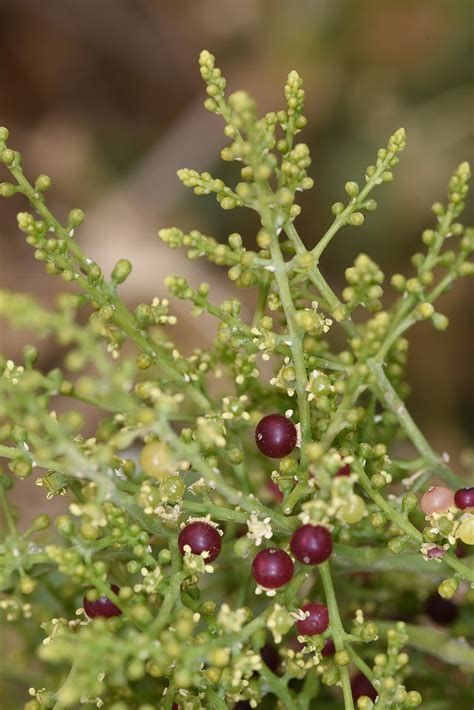
Miswak has analgesic, astringent and anti-inflammatory properties, making it an effective treatment for primary periodontal diseases. Miswak is derived from a plant species of Salvadora persica belonging to the family Salvadoraceae. Salvadora persica, or the Arak tree, is known in English as the “tooth brush tree.” It is an upright evergreen that grows as a small tree or shrub with a crooked trunk.
A variety of natural bioactive components have been identified in Salvadora persica extracts by researchers. These constituents are considered to be essential for good oral and dental hygiene. Several studies have shown that miswak (Salvadora persica) has significant antimicrobial activity against both aerobic and anaerobic bacteria.
Miswak vs. Toothbrush
Is using miswak as effective as the tooth brush? It is a very common question and discussed frequently among health professionals and general public. Miswak and tooth brush both serve the same function, i.e. plaque removal. A recent study by Malik et al. proposed that miswak (S. persica) is as effective as tooth brush in maintaining the oral hygiene.
WHO recommended the use of the siwaak or miswak in 1986. At the turn of the millennium, an international consensus report on oral hygiene concluded that further research was needed to document the effects of siwaak or miswak on dental health. According to WHO, using a toothbrush with toothpaste would be the top choice when it comes to caring for teeth. A chew stick can do the job just as well in terms of fighting plaque, gum disease and preventing any existing teeth decay from getting worse.
