African basketry is an ancient skill and tradition that has survived over centuries. From wall décor, accessories, and functional purposes, High-Street and luxury retailers across the globe now offer a variety of African-inspired baskets. However, African baskets do not only serve functional and decorative purposes, but they also tell a story. Each basket is unique as it represents the handprint or signature of the artisan that produces it as they use their very own “rhythm and flow”.

The Cultural and Historical Context of African Storage Baskets
African storage baskets are celebrated for their intricate designs, vibrant patterns, and rich cultural heritage. These baskets are more than just functional storage solutions; they are vibrant expressions of African craftsmanship, creativity, and tradition. From the iconic Bolga baskets of Ghana to the delicately woven sisal baskets of Kenya, African storage baskets are a testament to the artistry and skill of the communities that produce them.
The Role of Gender in African Basketry
Basket weaving in Africa is traditionally structured along gender lines, with distinct roles for men and women depending on the region and type of basket. This gendered division reflects the broader societal roles assigned to men and women within different communities. While women are typically associated with coiling techniques, men are more likely to be involved in weaving. However, this rule is not absolute.
For example, the Tsonga people of southern Mozambique in the early 20th century stored their prized possessions in coiled boxes made by men, and in the Cameroon Grassfields, men coiled small, handheld battle shields. Conversely, women in Cabinda, Angola, weave exquisite mats celebrated for their unique designs. In Kenya, Kikuyu and Kamba women twine the world-famous kiondo bag-a basket that combines functionality with artistic flair.
The Tonga women of Zambia are known for their multifunctional cisuo baskets, which are traditionally used for a variety of domestic purposes. In regions where both men and women create baskets, each gender often specializes in producing the kind of objects needed for daily tasks. Women might focus on household items like storage baskets, while men may make fishing nets, hunting traps, or large agricultural baskets. Among the Ambo, Ngoni, Makonde, and Tsonga, women’s baskets are actually the work of men, for only they are considered skilled enough to weave such complex items.
Read also: Experience Fad's Fine African Cuisine
The only category of basketry consistently made and used by men across Africa are traps for fishing and hunting. These utilitarian items require a combination of strength and precision, traits often associated with male craftsmanship. However, many other baskets, especially those designed for carrying, storing, or even decorating, are often the domain of women. This dynamic gives each piece a unique identity that reflects the cultural and social fabric of the society from which it originates.
Symbolism and Spirituality in Basket Weaving
In many African cultures, baskets are more than functional objects; they are symbols of identity, status, and even spirituality. For example, among the Aghem-Fungom people of Cameroon, a woman’s large farming basket is a symbol of her role as a cultivator and nurturer. When she dies, this basket is smashed and buried with her, signifying the end of her life’s work and responsibilities. The act of destroying the basket is not merely practical; it is a ritual that marks the transition of the woman’s spirit to the ancestral realm.
The Tonga people of southern Zambia believe that basket makers are chosen and inspired by ancestral spirits. These artisans are considered to possess a special gift that sets them apart from ordinary weavers. Their baskets are not just utilitarian items but sacred objects that carry the spirit and energy of their creators. This spiritual connection elevates basketry to a respected art form that is intertwined with cultural and ancestral heritage.
In contrast, in most other African contexts, the art of basket making is open to all, provided they are of the appropriate gender and have the willingness to learn. Skills are typically passed down from one generation to the next, with young children observing and imitating the work of older relatives. The informal nature of this training ensures that basketry remains a living tradition, constantly adapting to new needs and preferences while preserving its core techniques and designs.
Basketry as an Economic Activity
While basketry has deep cultural and spiritual significance, it is also an important economic activity in many parts of Africa. Most accomplished basket makers are in their late middle ages or older, and they often juggle basket making with other economic activities like farming, fishing, or hunting. Weaving is typically done during the less busy periods of the year, providing an additional source of income that allows artisans to purchase essentials like paraffin, soap, oil, or sugar.
Read also: The Story Behind Cachapas
The economic value of basketry has increased significantly in recent decades, thanks to growing international interest in handmade and fair trade products. Younger artisans, particularly in regions where the craft is supported by NGOs or other development organizations, are able to devote more time to weaving and produce baskets of higher quality. This shift has transformed basketry from a seasonal activity to a viable source of income for many families, contributing to both economic stability and the preservation of traditional crafts.
Types of African Storage Baskets
African storage baskets come in a dazzling variety of styles, shapes, and sizes, each with its own unique characteristics and uses. Understanding these differences can help buyers appreciate the diversity of African basketry and choose the right pieces for their needs.
Bolga Baskets (Ghana)
Bolga baskets are among the most recognizable African storage baskets, named after the town of Bolgatanga in northern Ghana where they are made. These baskets are crafted by the Frafra people using elephant grass, a durable and flexible material that can withstand heavy use. Bolga baskets are known for their vibrant colors, geometric patterns, and sturdy handles, making them both functional and aesthetically pleasing.
The main reason for basket weaving in this region is due to the poor fertility of the soil around Bolgatanga, making it unsuitable for extensive agricultural activities. The region also suffers from erratic rainfall patterns and harsh weather conditions, meaning they can only grow enough to sustain their families, leaving nothing to take to market.
Traditionally, it is believed that bolga baskets were created by a man from the Zaare community in the Bolgatanga Municipality. The man popularly known as Ahinbinge was a disabled person who created the basket after observing birds making their nests. He created his basket with no idea what it would be used for, but it transpired that bolga baskets were very useful as colanders to separate millet and water from the millet waste.
Read also: Techniques of African Jewellery
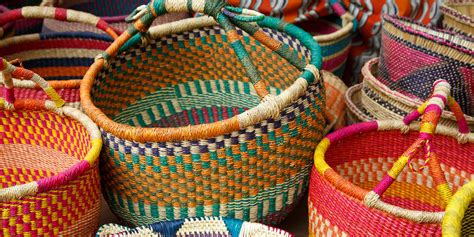
- Bright colors and bold patterns
- Sturdy handles for easy carrying
- Made from elephant grass, which is naturally resilient
- Market baskets for shopping
- Home storage for laundry, toys, or kitchen items
- Decorative pieces for living rooms or entryways
How to Shape Your Bolga Basket
Zulu Baskets (South Africa)
The Zulu people of South Africa are renowned for their skill in creating tightly woven, watertight baskets. Historically, these baskets were used to hold water, milk, or traditional beer, and they remain highly valued for their intricate designs and high-quality craftsmanship. Zulu baskets are typically made from Ilala palm leaves, which are stripped, dried, and dyed to create the vibrant patterns that characterize these baskets.
Key Characteristics:- Tight weave and watertight construction
- Complex geometric patterns
- Use of natural and dyed fibers for rich color contrasts
- Storage for dry goods like grains or spices
- Decorative baskets for display
- Gifts and ceremonial items
Kiondo Baskets (Kenya)
Kiondo baskets are traditional Kenyan woven bags made by the Kikuyu and Kamba women. These baskets are typically crafted from sisal and leather, combining durability with elegance. While originally used for carrying goods to and from the market, kiondo baskets have become popular as fashion accessories, thanks to their distinctive designs and eco-friendly appeal.
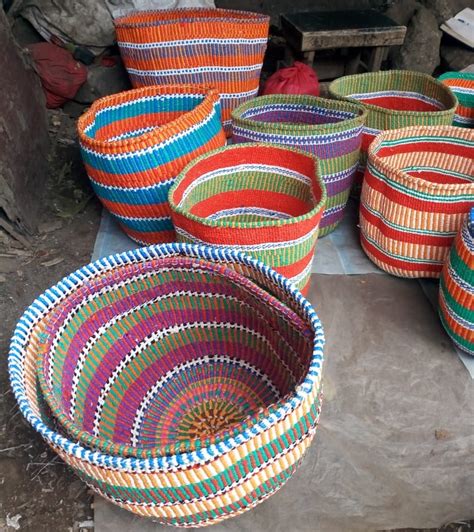
The Kiondo basket is indigenous to the Kamba, Kikuyu and Taita communities of Kenya. For Agikuyu people, the origin and symbolism of the Kiondo has deep and powerful meanings. In the Makueni region of Kenya, the tradition of weaving baskets started in the early 1930's. The women weaved baskets for shopping, carrying goods in the markets, storing food, spices and water, and giving as gifts at weddings. However, the main use for baskets was during the harvesting season to carry fruits and vegetables.
Key Characteristics:- Soft, flexible weave that allows for easy storage
- Leather handles or accents for added durability
- Earthy tones and simple, elegant patterns
- Storage for household items like towels or blankets
- Fashion accessory as a handbag or tote
- Decorative baskets for modern interiors
Tonga Baskets (Zambia)
The Tonga people of southern Zambia are known for their expertly twined baskets, which are made using a combination of palm leaves and wild grasses. These baskets are often decorated with symbolic patterns that reflect the cultural identity of the Tonga people, and they are traditionally used for a variety of purposes, from storing grains to serving food.
Key Characteristics:- Symmetrical patterns with symbolic meanings
- Twined construction for added strength
- Use of locally sourced palm leaves and grasses
- Grain storage and food serving
Rwandan Peace Baskets (Rwanda)
Rwandan peace baskets, also known as Agaseke baskets, are a symbol of unity, peace, and reconciliation in Rwanda. Historically, these baskets were given as gifts to mark important events, such as weddings and births, and today they are recognized as both functional storage items and decorative art pieces. Each Agaseke basket is handwoven by skilled women using local materials like sisal and sweetgrass.
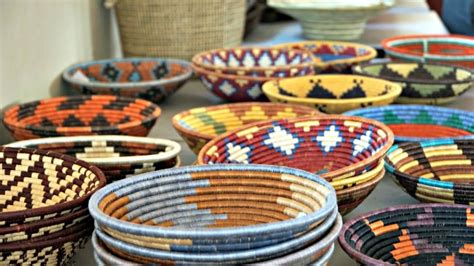
- Cone-shaped design with intricate geometric patterns
- Use of sisal fibers and natural dyes for a minimalist yet striking aesthetic
- Made using age-old techniques passed down through generations
- Storage for small household items or jewelry
- Decorative centerpiece for tables or shelves
- Symbolic gifts for celebrations or commemorative events
Makenge Baskets (Zambia)
Makenge baskets, produced by the Lozi and Mbunda people of Zambia, are prized for their fine craftsmanship and artistic complexity. They are made from the roots of the Makenge bush, which are boiled, dyed, and then woven into beautiful circular patterns. These baskets were traditionally used by brides to carry gifts to their new homes, and they continue to be valued for their cultural significance and beauty.
Key Characteristics:- Made from durable Makenge roots
- Intricate, circular designs with deep cultural meanings
- Often created as bridal gifts or ceremonial items
- Decorative wall hangings
- Gifts for special occasions
- Storage for small personal items
Binga Baskets (Zimbabwe)
Binga baskets, also known as Tonga baskets, originate from the remote Binga district in Zimbabwe. Crafted by the Batonga people, these baskets are made using ilala palm leaves, which are dyed using natural materials to create earthy tones and intricate geometric patterns. Binga baskets are usually flat, round, and shallow, making them perfect as wall decor or serving trays.
Key Characteristics:- Flat, circular design with symmetrical patterns
- Neutral color palette with occasional dark accents
- Made using natural palm fibers and traditional twining techniques
- Decorative wall hangings for a touch of African style
- Serving trays for fruit, bread, or snacks
- Accent pieces for rustic or bohemian interiors
Wounaan Baskets (Central Africa)
Wounaan baskets, although more often associated with the indigenous people of Panama, also share stylistic similarities with some Central African basketry traditions. These baskets are intricately woven using a combination of palm fibers and brightly dyed natural materials. Their tight weave and detailed patterns make them highly decorative and collectible.
Key Characteristics:- Fine, tight weave for precision and durability
- Bright, colorful patterns made with natural dyes
- Lightweight yet sturdy construction
- Collectible art pieces
- Functional storage for small items like keys or jewelry
- Statement decor for walls or tabletops
Maasai Beaded Baskets (Kenya and Tanzania)
The Maasai people of Kenya and Tanzania are renowned for their beaded jewelry, but they also incorporate beadwork into basket making. These baskets are usually small and decorative, featuring intricate bead patterns that represent the vibrant culture and traditions of the Maasai. Made from sisal, leather, and colorful beads, Maasai beaded baskets are striking art pieces that add a pop of color and texture to any space.
Key Characteristics:- Use of bright beads to create elaborate designs
- Small, decorative shapes ideal for trinket storage
- Combination of sisal, leather, and beadwork for a tactile, textured finish
- Storage for small items like keys, jewelry, or cosmetics
- Accent pieces for bookshelves or coffee tables
- Unique gifts or souvenirs that reflect Maasai culture
The Basics of Basketry
The basic process involves weaving strands of fibres over and under each other to create the basket. Different techniques are used, such as coiling, plaiting, and twining. It all depends on the region, the locally available materials, and the way it has always been done. Basketry is a skill that is passed down from generation to generation, from mother to daughter. Women are the future of this industry in Africa, by the way, but we'll get back to that.
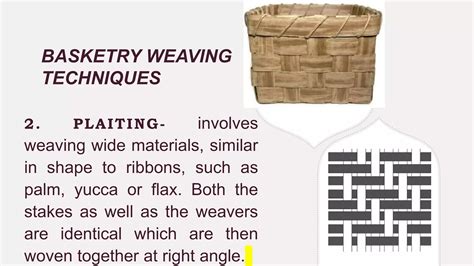
The women gather the materials in season - palm and banana leaves and sisal fibres, among others. Many types of grasses and leaves can be used. And these are sustainable sources. Every season, the raw material grows again. And by the seasons, the women weave their baskets. When the material is ready, they harvest what they need and dry it. It’s the natural cycle and the respect for nature, the respect for heritage and ancestry, that gives these baskets their depth.
Transparency and Authenticity
Do be careful that you are getting a real, hand-crafted African basket. Purchase from organizations and companies that engage in fair trade and transparency. You should know where your basket comes from and who made it. And you should be confident that the artisans are compensated fairly before you reach for your wallet.
Practical Uses of African Storage Baskets in Modern Homes
African storage baskets are not just beautiful-they are highly versatile and functional. Whether used for practical storage solutions or decorative purposes, these baskets can enhance the aesthetic of any space while offering unique utility.
Home Organization and Storage
One of the primary uses of African baskets is home organization. Their durability and variety of sizes make them perfect for storing everything from laundry to toys, blankets, and other household essentials. Bolga baskets, for example, are ideal for keeping larger items neatly tucked away, while smaller Zulu or Rwandan baskets can be used for organizing spices, toiletries, or jewelry.
Fashion and Functional Bags
Certain African baskets, such as the kiondo from Kenya, have crossed over into the world of fashion. These durable and eco-friendly baskets are not just functional but also make stylish accessories. Whether used as market bags, beach totes, or even handbags, African baskets can serve both practical and aesthetic purposes.
