The African American Museum and Library at Oakland (AAMLO) is a museum and non-circulating library within the Oakland Public Library system. It is dedicated to preserving African American history, experiences, and culture.

The mission of the African American Museum & Library at Oakland is to discover, preserve, interpret, and share the historical and cultural experiences of African Americans in Northern California for present and future generations. AAMLO’s archival collections are a unique resource on the history of African Americans in Northern California and the Bay Area.
The Origins and Evolution of AAMLO
In 1946, Eugene and Ruth Lasartemay and Jesse and Dr. Marcella Ford began collecting the oral histories and artifacts that documented the activities of African Americans in and around Oakland, the Bay Area, and California. This private collection became the foundation of what would later become AAMLO. Initially housed in a small shop front on Grove Street (now Martin Luther King Jr. Way), the collection grew quickly.
On July 2, 1965, the organization officially became the East Bay Negro Historical Society (EBNHS). As their efforts continued, the founders needed to find a larger space for the growing collection. In 1976, it moved to 4519 Grove, where it operated a museum and library.
In 1982, the EBNHS was invited into the Golden Gate Branch of the Oakland Public Library, making it the first Oakland city library with a predominantly African American focused collection. The assistance of Mayor Lionel Wilson, Assemblyman Elihu Harris, and others helped the organization establish a solid foundation in their new home.
Read also: Experience Fad's Fine African Cuisine
Following the appointment of Dr. In 1994, the City of Oakland and the NCCAAHL merged to create the African American Museum & Library at Oakland (AAMLO). This unique public/private partnership entered a historic juncture with the opening of AAMLO in February 2002.
Location and Architecture
Located at 659 14th Street, AAMLO is housed in the former Charles S. Greene building which previously was the Carnegie library. The building was spear-headed by Charles S. Greene, Oakland’s City Librarian from 1889 to 1926, who realized the city was outgrowing its first public library (a wooden structure erected in 1878 where City Hall now stands). He initiated a campaign to build a new one and, along with others including a women’s organization called The Ebell Society, found funding assistance from Andrew Carnegie’s Foundation, which offered $50,000 for the construction of the building.
“The elegant exterior of tan brick and terra cotta is incised with names of authors and disciplines and “Oakland Public Library.” “Free to All” is inscribed above the main entrance. The interior exhibits elaborate oak paneling, classical columns, and ornamented plaster ceilings.
Once the new main library (at 14th and Oak streets) was opened in 1951, this building served as a branch library, at which point it was renamed the Charles S. Greene Library. It later became city offices, and was eventually abandoned after the Loma Prieta earthquake in 1989.
Collections and Exhibits
Among more than 160 collections in the library are archives relating to Martin Luther King Jr., Malcolm X, the Black Panthers, Africa, and genealogy. The library is housed downstairs and consists of unique archives and reference materials on the history of African Americans in Northern California.
Read also: The Story Behind Cachapas
AAMLO’s archival collections are a unique resource on the history of African Americans in Northern California and the Bay Area. The California Native Daughters Club Collection consists of correspondence, records, printed materials, founding documents, and artifacts related to club activities and member activities. The records included within this collection trace the histories of three different associations of colored women's clubs: the National Association of Colored Women's Clubs; the California State Association of Colored Women's Clubs; and the National Council of Negro Women.
Here are some other collections:
- The Commemorator newspaper was a newspaper printed in South Berkeley from 1990-2013 by the Commemoration Committee for the Black Panther Party.
- The De Shield Family Papers document three generations from the De Shields family.
- The C.L. Dellums papers provide insight into Dellums' career as a civil rights activist and labor leader. They encompass files he maintained as both the International Vice-President of the Brotherhood of Sleeping Car Porters and as a member of the Fair Employment Practices Commission.
- The Flatlands newspaper collection consists of 34 issues of The Flatlands newspaper printed from 1966-1968.
- The Flood family was one of the earliest and most prominent African American families to settle in Oakland, California.
- Jesse Fuller (1896-1976) was born on Jonesboro, Georgia in March 12, 1896. In 1954 Fuller recorded his most notable song, "San Francisco Bay Blues", and by 1960 Fuller booked a European tour, and devoted himself full time to music.
There is also a permanent multi-media installation titled Visions Toward Tomorrow: The African American Community in Oakland, 1890-1990.
Oakland’s Black community has a long history of working for equal rights. This iconic photo of Black Panther Party co-founder Huey P. Newton draws on African imagery to communicate Black strength. The Panthers worked to uplift all black Americans through principles outlined in the Ten Point Platform.
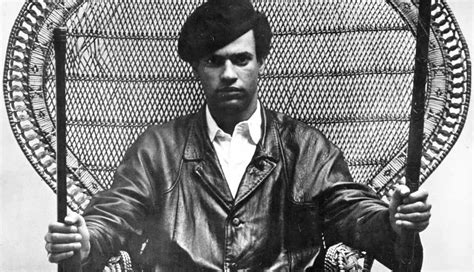
Image: Untitled (Huey Newton), 1967. All Of Us Or None Archive.
Read also: Techniques of African Jewellery
Uncover the history of the Black Power movements in California with a compelling addition to the Gallery of California History. government. Focusing on the example of the Black Panther Party, Black Power brings to light the tensions between a culturally and socially progressive California and examples of economic racism and oppression in the state. This moment in California history is represented through historic photographs, provocative objects, iconic posters, paintings and interactive prompts that encourage visitors to take action out in the world.
California Revealed is a State Library initiative to help California’s public libraries, in partnership with other local heritage groups, digitize, preserve, and provide online access to archival materials - books, newspapers, photographs, audiovisual recordings, and more - that tell the incredible stories of the Golden State. We also provide free access and preservation services for existing digital collections for partner organizations with in-house digitization programs.
If you’ve never visited this wonderful institution, might I suggest that there is no time like the present.
