Nigerian Yoruba Engagement Ceremonies (also known as the Traditional Wedding) are a colorful celebration of love, culture, and community. Nigerian Yoruba weddings are known for their lively and festive atmosphere.
Pre-Engagement Rituals and Traditions
Before the grand Engagement Ceremony takes place, there are key rituals and traditions that must happen. These pre-engagement events are a crucial part of the wedding journey, reflecting the deep cultural roots and strong familial ties.
The Introduction Ceremony
The Introduction Ceremony marks the initial step in the journey towards matrimony. Often held at the bride’s family home, this event brings both families together for the first time. During this intimate gathering, gifts are exchanged between the families, symbolizing mutual respect and goodwill. The exchange of gifts serves as a gesture of appreciation and a show of commitment to the union.
Engagement Rites
As the wedding preparations progress, the Engagement Rites take center stage. Another notable custom during the Engagement Rites is the “Exchange of Dowry.” The groom’s family presents gifts and monetary offerings to the bride’s family as a symbol of appreciation and acknowledgment of all of the hard work, guidance, love and education that the parents and bride’s family invested in her to become the woman the groom wants to marry.
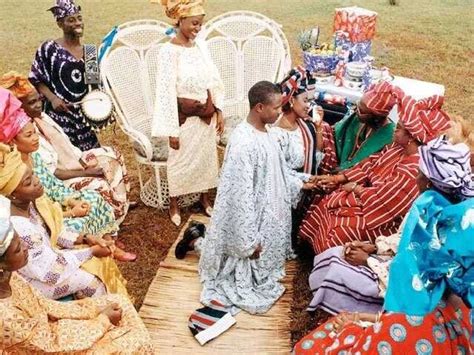
Furthermore, negotiations take place during this event, often led by designated representatives from each family.
Read also: Decoding "Oloribu Omo Ofo Yoruba"
The Traditional Yoruba Engagement Ceremony
The Traditional Yoruba Engagement Ceremony is the main event which includes various rituals and blessings moderated by 2 female MC’s called an Alaga iduro (who represents the groom’s family) and Alaga Ijoko (who represents the bride’s family). For weddings where both of the celebrants are Nigerian but have different subcultures for example, the bride is Yoruba but the groom is Igbo, the Traditional Wedding aligns with the bride’s culture.
In terms of how much time is allotted, 2 full hours is usually enough time for a traditional wedding that occurs in the United States. It’s important to reiterate and agree on a time for the ceremony because things can be easily drawn out for much longer if there is not a consensus that timing should be adhered to.
A Traditional Nigerian Engagement Ceremony is a harmonious symphony of roles that come together to create a celebration that is as vibrant as it is meaningful. At the heart of the engagement ceremony stands the Alaga Iduro who is always a woman. The Alaga Iduro serves as the official representative of the groom’s family; guiding the proceedings with a deep understanding of the cultural intricacies. Complementing the Alaga Iduro is the Alaga Ijoko, a role that represents the bride’s family. This role is always a woman.
The engagement ceremony also incorporates talking drummers. With drums that seem to converse through beats, they infuse the air with an irresistible energy, heightening the emotions of the moment. These skilled musicians do more than create music; they tell stories through their rhythms, evoking the spirits of ancestors and breathing life into age-old customs.
Elevating the festivities to a crescendo is the Live Nigerian Band, a dynamic force that fills the air with melodies that enthrall and enchant. The band captures the essence of celebration in every note. The band typically begins playing after the ceremony and dinner is complete. If you are not having a DJ, the band can play for the entire night.
Read also: "Ire": A Deep Dive into Yoruba Meaning
Yoruba Traditional Full Weding Video | Yemisi + Muyiwa | Hearts Of Olu
Key Elements of a Yoruba Wedding
Several key elements make a Yoruba wedding unique and memorable:
- The Groom Prostrating: In a Yoruba wedding, the groom’s prostration is a poignant moment. He shows deep respect to the bride’s family by kneeling and touching his forehead to the ground.
- Eru Iyawo: The Eru Iyawo is a cherished tradition where the groom’s family presents valuable gifts and items to the bride.
- The Dowry: The dowry involves gifts and money provided from the groom’s family to the bride’s family.
- Bride and Groom Dancing in with Their Friends (Separately): For their entrances, the bride and groom dance with their friends separately into the venue.
- Spraying: While there is no strict gift-giving tradition, it is customary to give monetary gifts to the couple by “spraying” them. The spraying tradition involves guests showering the couple with money during dances and celebrations.
Traditional Attire
The attire worn by the bride, groom, and guests is a significant aspect of Yoruba weddings:
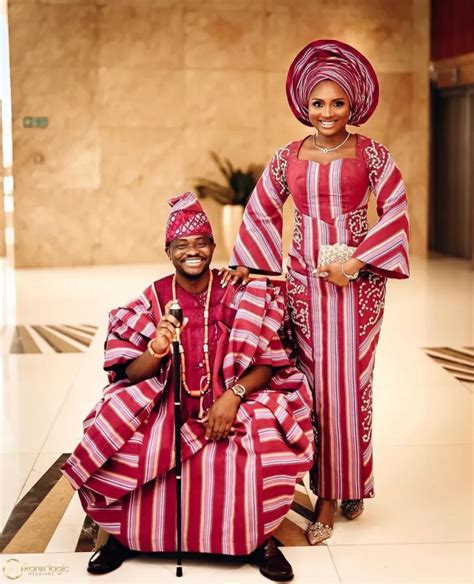
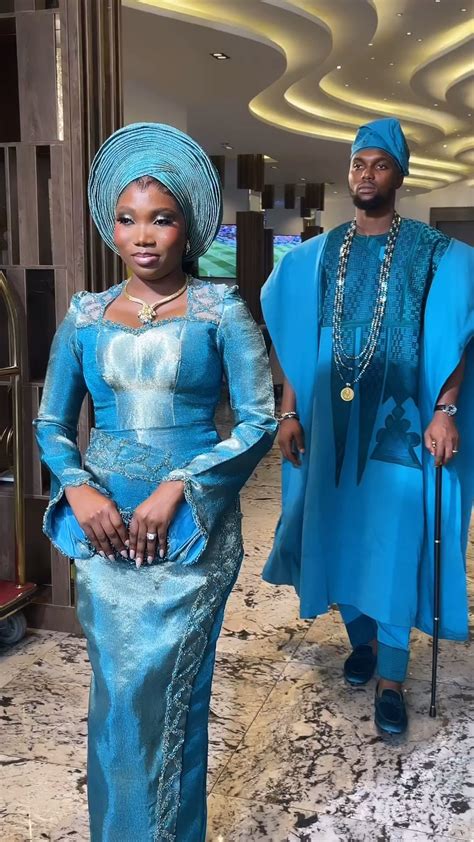
- Attire: The bride and groom wear traditional Yoruba attire, which is usually bright and elaborately adorned with beads and embroidery. Men typically wear “agbadas” or “buba and sokoto,” (translated in english to “shirt and pants”) which are traditional Nigerian clothing styles.
- Aso Oke: Aso Oke is a prominent fabric in Nigerian Yoruba weddings, used to create various elements of the bride and groom’s attire. It is a handwoven textile that comes in rich and vibrant colors, often with intricate patterns and designs.
For the groom, Aso Oke is commonly used to craft his Agbada, cap (Fila), and other accessories. The bride’s Aso Oke is used for her headwrap (Gele), shawl, and sometimes incorporated into her blouse or skirt.
- Agbada: Agbada is a traditional Nigerian outfit worn by men during special occasions like weddings. It consists of three main pieces: a long-sleeved shirt, a matching pair of trousers, and a large, intricately embroidered “robe” worn over the gown. The Agbada is often made from luxurious fabrics like silk, brocade, or damask, and the embroidery work is meticulously crafted to display exquisite patterns and designs.
- Gele: Gele is a head wrap worn by both the bride and other female guests. It is an artful display of fabric manipulation, skillfully wrapped around the head to form an elegant and elaborate headpiece. Geles are available in various colors, patterns, and fabrics, including Aso Oke.
- Coral Beads: Coral beads are an integral part of the bride and groom’s jewelry in a Yoruba wedding. These vibrant, deep coral colored beads are believed to bring good luck, protection, and fertility to the bride. The beads are intricately strung together to create beautiful necklaces, bracelets, earrings, head pieces, etc. Yoruba brides typically wear a gele but can also wear coral beads in their hair for their second outfit change if desired.
Food and Refreshments
Small chops are served before and during the traditional wedding. For dinner, many couples decide to have a buffet dinner to give guests more options and the ability for seconds. For more formal weddings, some couples choose to have a plated meal. In this case, 2-3 meal options are provided to guests to select as part of their RSVP. For plated meals, it is recommended no more than 5 items on a plate.
Guest Involvement
Nigerian weddings are known for their inclusivity and community involvement.
Read also: Best Yoruba Gospel Songs
Respecting Cultural Norms
Be aware of and respect the customs and traditions of the wedding. It’s a cultural norm for Nigerian weddings that do not have a wedding planner to start late. Try not to get frustrated.
Nigerian wedding traditions at Yoruba Engagement Ceremonies are a beautiful blend of tradition, love, and community. From the vibrant attire to the delectable cuisine and the rich cultural rituals, these weddings are a testament to the richness of Nigerian heritage.
Popular articles:
tags: #Dress
