The terms we use to describe the religion, history, and artifacts of Ancient Egypt are a strange mishmash of words that have French, Greek, English, Arabic - and yes, sometimes even Egyptian - origins. As you delve deeper into the fascinating world of Ancient Egypt, familiarizing yourself with frequently used terms is essential. This article serves as a reference to help you understand and appreciate the language and culture of ancient Egypt.
Key Vocabulary and Their Meanings
Here are some essential Ancient Egyptian terms, their meanings, and context.
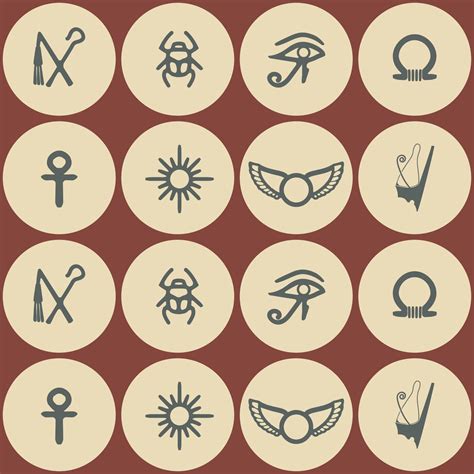
- Ankh: The hieroglyphic symbol for life, similar to a cross but with a loop in place of the upper arm.
- Atef: The atef crown was made up of the White Crown of Upper Egypt with red ostrich feathers on either side.
- Ba: The ba is, essentially, the concept of the soul.
- Barque: These thin boats that curve up at either end were the transports of the gods, especially during festival processions. In temple sanctuaries, models of barques held statues of a deity.
- Book of the Dead: This is the modern name ascribed to a collection of 200 hymns, rituals and spells that allowed the deceased to travel safely through the underworld and enter the afterlife.
- Canopic jars: Four containers used to store the preserved internal organs of the deceased (the lungs, stomach, liver and intestines) extracted during the mummification process.
- Djed: A representation of the spine, it symbolized stability. A djed amulet was often placed in coffins, where the backbone of the deceased would lay, to ensure eternal life.
- Duat: The underworld, home of the gods Osiris, Anubis and Ma’at, as well as many grotesque monsters. The sun deity Ra travels through the Duat every night, where he battles the serpent Apep, or Apophis.
- Eye of Horus (aka udjat eye or wedjat eye): A falcon’s eye that acts as a protective talisman and symbolizes rebirth after death.
- Faience: A powdered quartz paste that ranges in color from turquoise to teal.
- Hieroglyphs: Think of them as the emojis of their day. Often mistakenly called hieroglyphics, they make up the system of pictorial writing used in Ancient Egypt.
- Horus name: Beginning in the Predynastic Period, pharaohs would take on an additional name, cementing their relationship with the falcon-headed god Horus.
- Hypostyle hall: The reception area of a temple.
- Ka: The best way to describe this is as a soul - it’s someone’s other self, what makes them unique. It’s with a person throughout their life, but upon death the ka and the body become separate. The body has to be preserved, and the ka nourished, or it will starve and cease to exist.
- Lower Egypt: The Ancient Egyptian worldview was upside-down compared to ours. Lower Egypt was the northern half of Egypt, so called because the Nile flows north before entering the Mediterranean Sea.
- Ma’at (aka maat): The principle of balance and cosmic order, personified by a goddess of the same name.
- Mammisi: A birth house, where a woman would go to deliver a child and recover for two weeks or so.
- Mastaba: A type of tomb first created in the Old Kingdom. From the Arabic word for “bench,” they were rectangular and flat-roofed, with a substructure belowground.
- Nemes: A striped head covering worn by pharoahs. It covered the brow and skull, hung down on the side to rest on the shoulders, and was drawn together in the back in a sort of ponytail.
- Opet: A festival held during the inundation, or flooding of the Nile.
- Papyrus: The writing surface used by Egyptian scribes.
- Pharaoh: The supreme ruler of Ancient Egypt.
- Pylon: A massive gateway leading into a temple.
- Pyramid Texts: The earliest religious texts of Ancient Egypt. These spells, religious beliefs and myths were inscribed on the walls of Fifth and Sixth Dynasty pyramids (2465-2150 BCE). They were used to magically transform the deceased into the god of the afterlife, Osiris.
- Rekhyt: A stylized lapwing bird with wings spread and human arms raised in adoration, representing the general populace or the pharaoh's subjects.
- Sarcophagus: A large stone container that held a mummy's coffin.
- Senet: A game played in Ancient Egypt. No one knows the rules, but they think it was a bit like chess.
- Sistrum: A sacred rattle made of a wood, metal or clay frame set loosely with crossbars strung with small metal discs.
- Sphinx: A mythological beast with the body of a lion that usually had the head of a pharaoh or god.
- Upper Egypt: The southern half of the kingdom of Ancient Egypt. It’s called Upper Egypt because the Nile River flows northward, from Upper to Lower Egypt.
- Uraeus: A rearing cobra in a threatening pose that represented divine authority, worn as a crown or head ornament by Ancient Egyptian divinities and rulers.
- Vizier: The second in command after the pharaoh.
- Was scepter: A staff that’s often forked at the bottom and topped with the head of a creature, possibly the Bennu bird, a mythological heron who wears the atef crown. Carried by gods and pharaohs, the was scepter stood for power and dominion.
Ancient Egyptian Words in Modern Egyptian Dialect
Believe it or not, some Ancient Egyptian words are still used in the Egyptian dialect today! After thousands of years, some words survived through the generations and did not change. Here are a few examples:
7 ancient Egyptian words still used now
- ’Emboo’: Derived from ‘ebmoo = eb (I want) + mo (water)’. This word is still used extensively in Egypt, especially by children when they want to drink.
- Tata: Coupled with motion, Egyptians say ‘tata’ to kids to help them walk alone. The origin of this word came from Ancient Egyptians. The word ‘titi’ means in Ancient Egypt ‘slowly or step by step’. The name of the ultra-famous Egyptian queen ‘Nefertiti’ means ‘the beauty walking slowly’.
- El-bo3bo3: In Egypt, we used to name it ‘el-bo3bo3’, which came from the Ancient Egyptian god ‘baba’ and refers to a creepy ghost that can emerge from dark spots.
- Shabboorah: Egyptian say ‘shabboorah’ in translation for ‘fog’. Shabboorah came from the ancient Egyptian word phrase ‘shab rah = shab (changed) + ra (light).
- Nunu/Nonna: We say ‘nunu’ or ‘nonna’ to refer to babies. This word comes from the ancient Egyptian word ‘nu’, which means ‘fragile’.
These words demonstrate the rich cultural heritage of Egypt. Speaking the Egyptian dialect provides a deeper connection to the culture and enables richer communication with Egyptians.
Middle Egyptian: The Classical Language
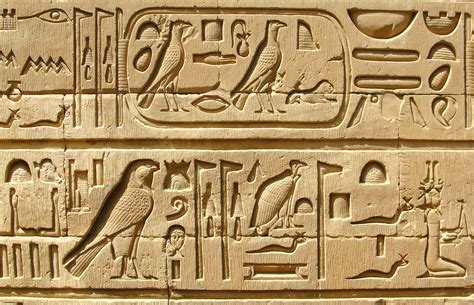
Middle Egyptian, sometimes referred to as Classical Egyptian, was spoken in Egypt from the beginning of the second millennium BCE to roughly 1300 BCE, midway through the New Kingdom. It is also the written, hieroglyphic language of this period and so the medium in which the classical Egyptian literature of this period is transmitted. Funerary inscriptions, wisdom texts, heroic narratives like the “Tale of Sinuhe” or the “Shipwrecked Sailor,” and religious hymns have all come down to us in Middle Egyptian hieroglyphic. We also have papyri from this period written in a cursive script known as hieratic.
Read also: The Vital Grasslands of Eastern Africa
Resources for Learning Middle Egyptian
For those interested in learning Middle Egyptian, several resources are available.
- J. P. Allen’s Middle Egyptian: An Introduction to the Language and Culture of Hieroglyphs: Recommended for newcomers, this book includes grammar lessons, sign and vocabulary lists, exercises, and essays offering linguistic, cultural, historical, and religious context for the material.
- A. H. Gardiner’s Egyptian Grammar: Being an Introduction to the Study of Hieroglyphs: A complete descriptive grammar of Middle Egyptian, the book also includes vocabularies, exercises, and Gardiner’s “List of Hieroglyphic Signs.”
- R. O. Faulkner’s A Concise Dictionary of Middle Egyptian: A hand-drawn/lettered English-to-Middle Egyptian lexicon that has been cross-referenced to textual or bibliographical sources.
Additionally, there are several readers and anthologies for more advanced study, including K. Sethe’s Ägyptische Lesestücke zum Gebrauch im akademischen Unterricht: Texte der mittleren Reiches and M. Lichtheim’s three-volume Ancient Egyptian Literature: A Book of Readings.
Digital resources such as the Berlin-Brandenburgische Akademie der Wissenschaften’s Thesaurus Linguae Aegyptiae project provide students with a digital lexicon and an extensive corpus of annotated texts and translations.
Key Figures in the Study of Languages
American linguist Morris Swadesh believed that languages changed at measurable rates and that these could be determined even for languages without written precursors. Using vocabulary lists, he sought to understand not only change over time but also the relationships of extant languages. To be able to compare languages from different cultures, he based his lists on meanings he presumed would be available in as many cultures as possible. He then used the fraction of agreeing cognates between any two related languages to compute their divergence time by some (still debated) algorithms. Starting in 1950 with 165 meanings, his list grew to 215 in 1952, which was so expansive that many languages lacked native vocabulary for some terms. Subsequently, it was reduced to 207, and reduced much further to 100 meanings in 1955. A reformulated list was published posthumously in 1971.
Students of Middle Egyptian will undoubtedly want to supplement their language learning with further reading about its historical and cultural context. In this respect, the essays in Allen’s Middle Egyptian already provide the language student with an excellent start. Beginners looking for a historical overview should find I. Shaw’s The Oxford History of Ancient Egypt helpful.
Read also: Deep Dive into Yoruba Verbal Expression
There is a great deal of public-domain Egyptological books online: for example, M. Champollion’s field-defining work-Précis du Système Hiéroglyphique des Anciens Égyptiens from 1824-can be found in the Internet Archive. But, as Lichtheim wrote in her introduction to 1971’s Ancient Egyptian Literature, “Egyptology, being a young science, is in a state of rapid growth and change.” The same remains true today and LeBlanc notes that so much progress has been made in Egyptology and in the decipherment and interpretation of the language, not just in the last century, but in the last decade, that public-domain works found in the Internet Archive or HathiTrust, such as E. A. W.
Read also: English Pronunciation for Amharic Speakers
Popular articles:
tags: #Egypt
