Morocco, a land celebrated for its vibrant culture and history, safeguards a treasure trove of religious diversity. One of the most captivating aspects of this diversity is the presence of Jewish synagogues, which stand as testaments to centuries of peaceful coexistence and cultural exchange.
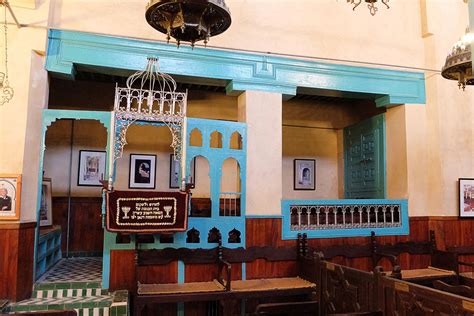
The exquisitely restored sanctuary of the Ibn Danan synagogue in Fez.
A Historical Overview
Morocco's Jewish history dates back as early as 70 CE when Jews immigrated to the region. They continue to co-exist in the Maghreb peacefully today yet in much smaller numbers. From early times the Jewish community in Morocco flourished.
They lived throughout the Imperial Cities in the Jewish Mellahs and in remote rural regions among the Berbers surrounded by dotted landscapes. The Jews of Morocco designed magnificent synagogues adorned with imported and local materials, created a thriving business community whereby they became tailors, jewelry makers and sought after craftsmen. They celebrated births, weddings, and buried their dead in local cemeteries.
The history of the Jewish community in Morocco is steeped in antiquity, with roots stretching back over two thousand years. Jews settled in various regions of Morocco, contributing significantly to the country's cultural mosaic. The synagogues they established became centers of communal life and cultural expression, in addition to being places of worship.
Read also: Tangier's Luxurious Villa Josephine
A significant number of Jews came to Morocco in the 15th Century. Following the 1492 Alhambra Decree, many families fled Spain and arrived as refugees in the Maghreb. This second wave of immigrants gave Morocco it’s strong Sephardic identity and until the 1950s, the North African country became one of the most stable and desired places for Jews to build their homes.
At its peak in the 1940s, there were approximately 350,000 Jews living in Morocco. Morocco was home to the largest Jewish community in the Muslim world and it remained this way until the founding of Israel in 1948. Although the kingdom does not officially recognize Israel as a state, the two nations have quietly maintained diplomatic ties for nearly seven decades. According to a 2011 Israeli government report, nearly 1 million Israeli Jews have at least some Moroccan roots.
While many decided to leave post-colonial French, Morocco due to religious or economic reasons, Morocco has maintained its reputation for being one of the world’s most tolerant countries. In 2011, King Mohammed VI, regarded as the highest religious authority in the country stated that he “protects Moroccan Jews living in Morocco.” In the same year, he also launched a Jewish Heritage program aimed to restore 100 synagogues, cemeteries, and reassign Jewish Mellahs (Jewish quarters) to their original names.
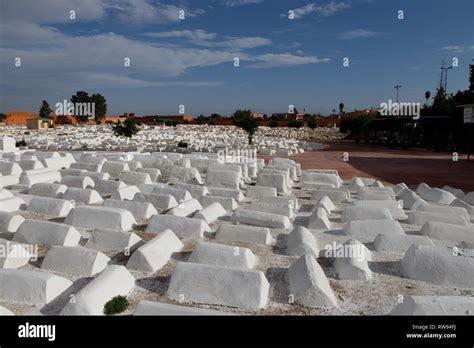
Miara Jewish cemetery in Marrakesh’s mellah.
Architectural Diversity
The synagogues of Morocco exhibit a remarkable diversity in architectural styles, reflecting the amalgamation of influences from Arab, Berber, and Sephardic traditions.
Read also: Argan Oil for Hair
For instance, the Ibn Danan Synagogue in Fes, a UNESCO World Heritage site, showcases Moorish architecture with its horseshoe arches, intricate stucco decoration, and a peaceful inner courtyard.
Morocco’s first official mellah, or Jewish quarter, was established in Fez in 1438 in the shadow of the sultan’s palace. Two synagogues, the Ibn Danan and Slat Al Fassiyine, are further examples of exquisitely restored synagogues. Each sports a green-and-white tile floor with mosaics that border the Ark.
The Ibn Danan Synagogue (Hebrew: בית הכנסת אבן דאנן; Arabic: معبد ابن دنان) is an Orthodox Jewish congregation and synagogue, located in Fes, Fès-Meknès, Morocco. The synagogue is located in the Mellah district within Fes el-Jdid, one of the components of the historic medina of Fes. The first synagogue on the site was completed in the 17th century; and has been destroyed, either in part or completely, and restored on several occasions.
From 1812 until the synagogue's closure in the 1960s, its rabbis all came from the Danan family. This family dynasty of rabbis can be traced back as far as Granada (present-day Spain) in the 15th century. One early restoration of the synagogue is known to have taken place in the 1870s.
More recently, the Jewish community of Fez has also struggled for its preservation, and successfully nominated the building to the 1996 World Monuments Watch of the World Monuments Fund. According to the Fund, the plaster was peeling, the roofs were collapsing, the waterlogged beams were rotting, and windows were broken and missing. The synagogue was once only one of several inside the walls of Fes, and not the most elaborate.
Read also: Morocco-Spain Travel Tips
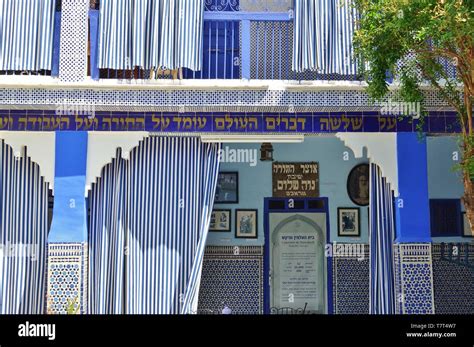
The Slat Al Azama synagogue in Marrakesh.
Synagogues as Centers of Memory
Ironically, the most official recognition that Jews are part of the identity of the country came long after most had departed. That belief, following in the footsteps of his father, King Hassan II, is also reflected in the government’s increasing outreach to local and foreign Jewish communities as well as its involvement in a massive restoration project of synagogues and cemeteries throughout the country.
It is in some of those very synagogues where the dramatic decline of Jewish life is most palpable. In Fez, home to fewer than 50 Jews, the Roben Bensadoun synagogue in the newer part of the city survives only because of the tourists that fill its pews most Shabbats and holidays. Fewer than 10 local Jews show up each week, and even the rabbi doesn’t usually appear, according to Shalom Turjman, the 60-year-old caretaker.
Most of the country’s synagogues are not operational, though some occasionally host a wedding or bar mitzvah for young Jews of Moroccan descent whose families come from abroad. Instead, these synagogues, as well as many cemeteries, serve as part of the culture of Jewish memory-a culture that is being preserved largely by Muslim men and women.
These caretakers-once they are tracked down, not always a simple feat-are eager to unlock the gates and welcome visitors. They are quick to open the Arks to display the Torahs or uncover hidden mikvehs. At the cemeteries, they graciously escort the tourists to see the most elaborate tombstones, ones etched with flowers and books and lengthy epitaphs. At the Miara cemetery in Marrakesh, watchman Otman Kanami, along with his brother Khalid, is the third generation of his family to tend to the sprawling expanse of some 20,000 graves.
The intermingling of synagogue and cemetery is most striking in the newest Jewish development taking shape in Morocco. Visitors who make annual pilgrimages to the gravesites of revered religious leaders are finding newly constructed chapels, mausoleums, kitchens and even toilets. The starkest evidence of this development is in Erfoud and nearby Rissani, desert towns in the Errachidia Province in eastern Morocco.
Synagogues Today
Beyond their architectural allure, these synagogues hold immense spiritual significance for the Moroccan Jewish community. While many Jews emigrated to Israel in the mid-20th century, a notable number chose to remain, and these synagogues continue to serve as spaces for religious ceremonies, festivals, and prayers.
The Moroccan Jewish synagogues offer a unique glimpse into the fusion of religious practices and cultural traditions. Jewish celebrations like Passover and Hanukkah are celebrated alongside Moroccan festivals like Mimouna, where Jewish and Muslim communities share traditional foods.
Beth-El synagogue is the largest and most public of the 16 synagogues still operating in the city (out of more than 30 that once existed). Enter through a large garden courtyard and up a curved staircase to find a grand but typical Sephardic layout with a wooden bimah in the center, bright stained-glass windows and carved ceilings in the Arabic style.
During past decades, visiting Morocco has also become popular among Moroccan-Israeli natives whose families live in Israel. They come to visit family, discover their roots or attend a Hiloula. Morocco’s television networks also feature in-depth shows about historic Jewish life. A new radio program called People of the Mellah was created to provide Jews the opportunity to share memories of their former lives in Morocco.
In April 2019, King Mohammed VI began constructing a state-run Jewish Museum in Fes. There are also plans for two additional Jewish Heritage Museums, one of which will be built on a 1667 square meters area in the “Ville Nouvelle” of Fes. According to Mr. Morocco’s attempts to restore its Jewish past is attracting visitors from around the world. In 2017, an estimated 50,000 Israelis visited Morocco. Regardless of having Jewish roots, many travelers want to discover this part of Morocco’s heritage.
Morocco’s Top 16 Synagogues are well-appointed within the Imperial Cities and Coastal towns yet remain hidden within the rural regions of the Great South. Exploring Moroccan Synagogues in their varied geographical locations and the remnants of Jewish History on a Jewish Heritage Tour will enrich your cultural experience as a traveler.
Notable Synagogues Across Morocco
Across this nation that mixes African, Arabian and European influences, ancient traditions blend seamlessly with modern conveniences and sensibilities. On many a city street, for instance, you’ll find the inevitable Starbucks, Pizza Hut and Zara alongside outdoor cafes where clusters of older men gather while women in jeans and blouses with stylish hijabs stroll by.
Here are some notable synagogues across Morocco:
- Moshe Nahon Synagogue (Tangier): Located on a quiet street in the Beni Idir Jewish Quarter, this 19th-century synagogue is designed in the Andalusian style with elaborate floral arabesques and geometric patterns.
- Isaac Ben Walid Synagogue (Tétouan): Built in 1889, this synagogue reflects Andalusian architecture and includes a prayer room, library, and an oven for baking unleavened bread.
- Ibn Danan Synagogue (Fes): This 17th-century synagogue is laid out in Sephardic tradition and features a peeping hole in the floor that looks into the mikvah bath.
- Slat El Fassiyine (Fes): One of Morocco’s oldest synagogues, it was restored between 2011 and 2013 and is considered an architectural jewel of Fes.
- Em Habanim Synagogue (Sefrou): Located at the foot of the Middle Atlas Mountains, this "orphanage synagogue" features mosaic tiles from floor to ceiling.
- Chalom Zaoui Synagogue (Rabat): Located in the Mellah on Henri Popp Street, this synagogue has a Moorish style with trilobal shapes on the windows and ceramic tiles with geometric forms.
- Simon Attias Synagogue (Essaouira): Built in 1882 in a Sephardic style, it was recently renovated and reopened as a cultural center of reflection and research.
- Chaim Pinto Synagogue (Essaouira): Once the home and synagogue of Rabbi Chaim Pinto, it remains an active synagogue used when pilgrims or Jewish tour groups visit the city.
- Temple Beth El (Casablanca): Considered one of the most beautiful synagogues in Morocco, it features stained glass windows, giant chandeliers, and architecture of white and gilded plaster.
- Ettedgui Synagogue (Casablanca): Located in the Casablanca Medina, it was one of a dozen synagogues that received funding for restoration and that King Mohammed VI personally attended for its celebratory reopening.
- Slat Al Azama (Marrakech): The first synagogue built in Marrakech to accommodate the Jewish community who fled from Spain, it is built around a central courtyard.
Preservation Efforts
Preserving these synagogues is a shared endeavor between the Moroccan government, Jewish communities, and international organizations. Restoration projects have been initiated to ensure that these architectural marvels are maintained for generations to come.
The Council of Moroccan Jewish Communities created the Foundation of Jewish-Moroccan Cultural Heritage to preserve the wide range of Jewish buildings, ritual items and cultural achievements that were at risk of disappearing with the declining Jewish population.
King Hassan II and particularly King Mohammed VI embraced this perspective, providing financial support to historic preservation activities by the Foundation and publicizing its achievements. Governors and local officials also viewed the preservation of Jewish-Moroccan culture as essential parts of their efforts to highlight Moroccan cultural achievements and to help citizens and tourists understand the full range of Moroccan culture.
Morocco Jewish Heritage Tour Highlights
Visiting Morocco has also become popular among Moroccan-Israeli natives whose families live in Israel. They come to visit family, discover their roots or attend a Hiloula.
Here are some highlights of a Jewish Heritage Tour:
- Casablanca: Temple Beth-El & Museum of Moroccan Judaism
- Rabat & Sale: Jewish Mellah & birthplace of 18th-century Kabbalist
- Fes: Shabbat services, kosher dinner, Maimonides' house exterior
- Seffrou: "Little Jerusalem" excursion
- Coastal Essaouira: Historic Jewish port & artist enclave
| City | Jewish Heritage Site | Description |
|---|---|---|
| Casablanca | Temple Beth-El | Renowned synagogue with stunning stained glass windows and a crystal chandelier. |
| Casablanca | Museum of Moroccan Judaism | The only Jewish museum in the Arab world, showcasing 2000 years of Jewish history in Morocco. |
| Rabat | Old Mellah of Rabat | Historic Jewish quarter with narrow streets and distinctive architecture. |
| Meknes | Historic Jewish Quarter | Once boasted 11 synagogues, reflecting the city's significance in Moroccan-Jewish history. |
| Fes | Ibn Danan Synagogue | A 17th-century synagogue showcasing exquisite Moroccan-Jewish craftsmanship. |
| Marrakech | Mellah of Marrakech | One of Morocco's largest historic Jewish quarters with unique architecture. |
| Essaouira | Simon Attias Synagogue | Built in 1882 in a Sephardic style, now a cultural center. |
These sites offer a glimpse into the vibrant tapestry of Jewish life that has shaped Morocco’s cultural landscape.
Exploring Jewish Morocco: Ben Danon Synagogue in Fes is a UNESCO World Heritage site
The Jewish synagogues of Morocco stand as silent witnesses to the interwoven history of diverse communities. They embody the spirit of tolerance, understanding, and coexistence that is deeply ingrained in Moroccan culture.
Popular articles:
tags: #Morocco
