Zimbabwe, a landlocked country in southern Africa, boasts a rich cultural heritage and a diverse linguistic landscape with 16 official languages. Religion plays a significant role in the lives of its people.
Flag of Zimbabwe
Christianity in Zimbabwe
Christianity is the largest religion practiced in Zimbabwe, with more than 85% of the population identifying as Christian, according to the 2022 nationwide Demographic and Health Survey.
The arrival of Christianity dates back to the 16th century with Portuguese missionaries, such as Fr. Gonsalo Da Silveira of the Roman Catholic Church.
Heads of the Christian Denominations in Zimbabwe is an association made up of some of the common church bodies; Evangelical Fellowship of Zimbabwe, the Zimbabwe Catholic Bishops' Conference, and the Zimbabwe Council of Churches.
Read also: Freedom of Religion in Ghana
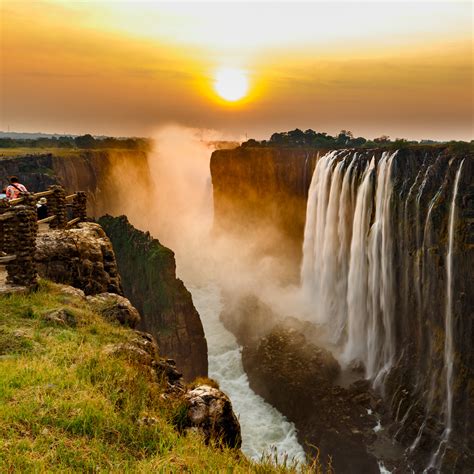
Victoria Falls, one of the largest waterfalls in the world, attracts tourists from all over the world.
Emergence of New Denominations
Recent years have seen a large increase in the number of new denominations, notably "Apostles" or "Mapostori." Most of these denominations derive their teachings from the Bible and attach greater emphasis on prophecy, demonstration of power, and fasting in the wilderness.
Some reputable apostolic churches include Johane Masowe, Johane Marange, Mugodhi, among others. Still, there are some "Apostles who disregard the Bible and believe in Messengers from God". There has been debate over the Western-formed churches including Anglican and Roman Catholic, over the truthfulness of the apostles' doctrine. While some apostles truly follow the Way of Christ, some violate bible principles through false prophecy.
Historical Missions
Roman Catholic missionaries were the first to arrive in Zimbabwe. In 1799 Johannes Van der Kemp helped launch a missionary society called London Missionary Society (LMS). One of the LMS missionaries who helped launch Protestant missions into Zimbabwe was Robert Moffat and his wife Mary.
One of Moffat's greatest accomplishments for missions in Zimbabwe was his friendship with Mzilikazi, king of the Ndebele tribe. Moffat's son-in-law David Livingstone had several expeditions in Zimbabwe around 1859.
Read also: Origins and practices: West African religions
Another LMS missionary named Charles Daniel Helm founded the southern Rhodesia Missionary Conference. His sons Sam Helm and John Helm helped translate the New Testament of the Bible in the Karanga dialect of Shona, along with Andrew and Clini Louw of Dutch Reformed Mission Church.
First Ethiopian Church of Zimbabwe (FEC) - Founded in 1910 and led by Bishops Charichidembo (1910-1942) and Bishop Edson Nheya Gavhure (1943 - 1984). Bishop Ishmael Nheya Gavhure took over the leadership from 1985 till 2016.
Religious Diversity and Other Beliefs
According to the survey, 11 percent of the population reports no religious affiliation, less than 2 percent adheres uniquely to traditional beliefs, and less than 1 percent is Muslim. Muslim leaders describe their community as larger than 1 percent and growing.
Most of the Muslim population lives in rural areas and some high-density suburbs, with smaller numbers living in other suburban neighborhoods. There are also small numbers of Greek Orthodox, Jews, Hindus, Buddhists, Baha’is, The Church of Jesus Christ of Latter-day Saints (Church of Jesus Christ), and humanists.
Government and Religious Freedom
The constitution prohibits discrimination based on religious belief and provides for freedom of religion and the freedom to practice, propagate, and give expression to one’s religion in public or in private and alone or with others. It recognizes the right of prisoners to communicate with and receive visits from their chosen religious counselor.
Read also: Delve into African American religious history
It stipulates these rights may be limited by law during a state of emergency or by a law that considers, among other things, the interests of defense, public safety, order, morality, health, regional or town planning, or the general public interest. Any such law must not impose greater restrictions on these rights than is necessary to achieve the purpose of the law.
Since September, the law has prohibited marriages under the age of 18. The criminal code prohibits statements that are “insulting” or “grossly provocative” and that cause offense to persons of a particular race, tribe, place of origin, color, creed, or religion, or intend to cause such offense.
The government does not require religious groups to register, although religious groups operating schools or medical facilities must register those institutions with the appropriate ministry. Religious groups, as well as schools and medical facilities run by religious groups, may receive tax-exempt status.
Income earned by churches and religious institutions from trade and investments, however, is subject to taxes. Religious groups may apply for tax-exempt status and duty-free privileges with the Zimbabwe Revenue Authority, which generally grants these requests.
To obtain tax-exempt status, a group is required to bring a letter of approval from a church umbrella organization confirming the group’s status as a religious group. Examples of organizations that can approve such letters include the Zimbabwe Catholic Bishops Conference (ZCBC), Zimbabwe Council of Churches (ZCC), the Apostolic Christian Council of Zimbabwe, and the Supreme Council of Islamic Affairs in Zimbabwe (SCIAZ).
The Ministry of Primary and Secondary Education sets curricula for public primary and secondary schools. Many public primary schools require a religious education course focusing on Christianity but mentioning other religious groups. There is no provision for opting out of religious instruction courses at the primary level. Students may opt out at the secondary level at age 14 and older, when they begin to select their courses.
The government does not regulate religious education in private schools but must approve the employment of headmasters and teachers at those schools. It is unconstitutional to recite the national pledge in schools on the grounds that it would violate students’ right to freedom of conscience.
The law requires all international NGOs registered as PVOs, including religiously affiliated NGOs, to sign a memorandum of understanding (MOU) with the government defining the NGO’s activities and zones of geographic coverage. The law stipulates international NGOs “shall not digress into programs that are not specified in the MOU as agreed upon by line ministries and registered by the Registrar.”
Local NGOs, including those that are faith-based, have no legal requirements to sign an MOU with the government but are required by law to notify local authorities of their intended operations prior to their registration.
Religious and civil society groups reported increased government monitoring of public events, prayer rallies, church congregations, and activities of religiously affiliated NGOs perceived to be critical of the government.
NGOs and religious leaders continued to report security services targeted some religious officials who engaged in political discourse perceived as negative toward the government. One religious leader stated while the government respected freedom of worship, it did not respect freedom of speech, which forced some religious leaders to self-censor their speeches.
Another religious leader reported receiving phone calls from unknown persons warning religious leaders to be careful of what they say in sermons and in messages in pastoral letters.
In September, President Mnangagwa encouraged Parliament to prioritize finalizing amendments to the PVO Act. Members of civil society groups, said if passed in the current draft, the amendments would require all trusts, including faith-based organizations, to register as PVOs.
A religious leader stated the government explained the rationale behind the PVO Act was to curb money laundering by some unscrupulous businesses registered as trusts. A different leader stated President Mnangagwa delayed signing the bill in the previous session of parliament because of submissions from civil society and church leaders highlighting its likely negative implications.
In the lead up to the August elections, government and ZANU-PF leaders embarked on an outreach campaign to religious groups to seek their political support. Media sources reported President Mnangagwa changed the election date from a Saturday to a midweek date following lobbying from Apostolic groups who worship on Saturdays.
One Christian leader stated in some cases the Office of the President and Cabinet had coerced religious leaders to invite President Mnangagwa and other senior officials to religious gatherings where they canvassed for votes. The religious leader added when President Mnangagwa and other senior officials attended religious gatherings, they were accompanied by security personnel holding guns, which intimidated worshippers.
According to media, Vice President Constantino Chiwenga addressed Christian worshippers at a Palm Sunday event in Harare’s Highfield suburb where he called for peace and calm ahead of the general elections.
On April 9, President Mnangagwa addressed an Easter church service at the Zion Christian Church in Masvingo where he called for unity among Zimbabweans before, during, and after the elections. “We may speak different languages, but from Zambezi to Limpopo we are one,” he stated.
On April 25, President Mnangagwa addressed various Apostolic leaders at State House (his official residence) where the church leaders, representing a group called Vapostori for ED (the President’s first two initials) promised to deliver 2.3 million votes for President Mnangagwa in the election.
Media outlets reported Vapostori for ED and Pastors for ED openly campaigned for the President and ZANU-PF.
On June 3, President Mnangagwa and Vice President Chiwenga addressed thousands of worshippers from various Apostolic denominations in Harare and called on them to vote for ZANU-PF.
Media sources reported on June 17, President Mnangagwa, accompanied by Vice President Chiwenga and Defense Minister Oppah Muchinguri, asked approximately 20,000 Anglican worshippers gathered at the shrine to missionary Bernard Mizeki to vote for the President and ZANU-PF in the elections. Anglican leaders requested the government’s support to install two solar powered water boreholes at the shrine.
Chiwenga thanked the Anglican leaders for inviting the government officials, stating this demonstrated the strong bond between the church and the government.
A religious leader criticized government leaders’ efforts to divide the religious community by creating a parallel organization, the Zimbabwe Indigenous Inter-Denominational Council of Churches (ZIICC), to counter the influence of the Zimbabwe Heads of Christian Denominations (ZHOCD) and promote the government’s partisan agenda.
The ZHOCD consists of the ZCC, the Zimbabwe Catholic Bishops Conference, the Union for the Development of Apostolic Churches in Zimbabwe Africa, and the Evangelical Fellowship of Zimbabwe.
On July 21, the ZCC published a pastoral letter calling for peace ahead of the elections. The ZCC called “upon all Zimbabweans, as responsible citizens, to prioritize the sanctity of life and respect the exercise of human rights as enshrined in our national constitution. These rights include freedom of association, assembly, and expression, which fosters a multi-party democracy.”
The ZCC criticized political polarization, violence, continued use of hate speech, and a decline in women’s participation. The ZCC encouraged all political actors to refrain from violence and to promote peace and tolerance.
On the same day, the ZHOCD issued a statement encouraging citizens to uphold peace ahead of the elections and calling for transparency and fairness as key tenets of free, fair, and credible elections.
On August 4, the ZHOCD facilitated a national peace pledge signing ceremony in Harare where political parties contesting the elections pledged to keep the peace during the electoral cycle. ZHOCD President Bishop Never Muparutsa spoke at the event, urging political parties to safeguard peace and shun violence. The ZHOCD organized similar signing ceremonies in provinces across the country.
On August 17, leaders of the ZCC presided over a prayer breakfast in Gweru, where ZCC President Ignatius Makumbe urged political parties to refrain from violence. The ZCC deployed observers across the country during the elections under its “I Pray I Vote” campaign.
In a September statement, the ZCC said the elections were characterized by “significant flaws” and “fell significantly short of the elections we wanted and prayed for as they have once again produced a contested presidential result.” The ZCC called for honest and inclusive national dialogue and engagement towards establishing a firm foundation for the country’s transformation.
A ZCC affiliated religious leader stated the organization had engaged political leaders from the ruling party and the opposition to foster inclusive national dialogue and to promote post-election peace.
Most official state and school gatherings and functions continued to include nondenominational Christian prayers, as did political party gatherings and parastatal meetings. According to one religious activist, every school day began with a prayer.
The government continued to enforce a 2018 ban on all radio and state-run television programs advertising prophets and traditional healing, for example selling “tickets to heaven” or a traditional cure for HIV/AIDS.
A representative from the Humanist Society of Zimbabwe said it was difficult to be nonreligious in the country.
According to a leader from Ruvheneko Rwenyenydezi Trust (RRT), an Apostolic organization, while his organization did not receive direct funding from the government, it received land to build new structures. Plans included an orphanage, school, and hospital.
Popular articles:
tags:
