Kenya, like many countries, grapples with evolving social norms and the interpretation of laws concerning nudity, pornography, and related activities. This article delves into the legal landscape, cultural context, and emerging issues surrounding these topics in Kenya.
The Rise of Strip Clubs in Kenya
Relatively new to Kenya, strip clubs are on the rise. Some cite urbanization, Internet advertising and international pressure for their advent. Seven years ago, strip clubs were unheard of in downtown Nairobi, says Chris Hart, a psychologist.
Now, patrons and managers estimate there to be 10 public strip clubs and 20 private clubs, or houses rented for private parties. Not far from Pango F3 is a competing strip club, Liddos. The strippers dance on the pole and give lap dances to the predominantly male crowd.
Bhavesh and other clients say they discovered Kenya’s strip clubs online. "When they come to Kenya to perform, they also look for their own entertainment," he says. Hart says strip clubs attract dancers because of the high income.
Katana says a stripper’s average income in Nairobi is 10,000 shillings ($120 USD) a month-almost double Kenya’s monthly per capita income. "You smile not because you enjoy yourself," she says.
Read also: The Kenya Moore Controversy
Strip clubs are illegal in Kenya. The owners evade that law by registering them as bars. "Our hands are tied," Ngugi says. Police occasionally raid strip clubs, but, without legislation, procedures are unregulated.
Eric Kiraithe, Kenya police spokesperson, says stripping needs clearer regulations, as the Kenyan penal code doesn’t differentiate between strippers and prostitutes. He says the Kenya Tourist Board should work with local authorities to create a red-light district.
On a Saturday, a 6-inch glass heel pierces the air at the Pango F3 club. The disc jockey plays international hits and the spotlight focuses on Norah, a stripper, who climbs the pole and whips her long weave around as she slides down it. She lands on her head and gyrates upside down.
The 10 dancers work six nights a week, plus have daily aerobics sessions and dance rehearsals, says Sabrina, the dancers’ supervisor and trainer, while monitoring them from the back of the club. Yet because it’s a new phenomenon, no clear laws governing stripping are on the books.
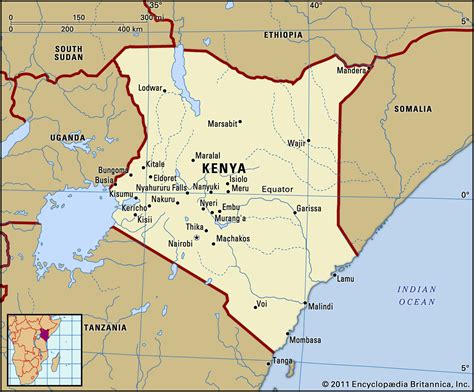
Map of Kenya showing different districts.
Legal Ambiguities and Enforcement
The police whisked the patrons and dancers to the police station. Definitions and restrictions on pornography vary across jurisdictions.
Read also: American Golfer Chad Collins
This is a summary table of laws and their enforcement by governments.
Article 260. Whoever, sells, distributes, possession, imports or prints, or makes for sale or hire or willfully exhibits to public view any obscene writing, book, newspaper, film, gramophone record or similar article, drawing, painting, representation or figure or attempts or offers so to do or has in his or her possession any such obscene book or other thing for the purpose of sale, distribution or public exhibition, commits an offence, and upon conviction, shall be sentenced to imprisonment for a term not exceeding three years or with a fine or with both.
Article 177. Any person who makes, produces or has in his possession any one or more obscene writings, drawings, prints, paintings, printed matter, pictures, posters, emblems, photographs, cinematograph films or any other object tending to corrupt morals is guilty of a misdemeanour and is liable to imprisonment for five years or to a fine of not less than fifteen thousand penalty units nor more than seventy-five thousand penalty units.
The Complex Issue of Revenge Porn
Often on social media, we come across intimate images and videos of individuals who we most probably do not know. At times these intimate images and videos are of prominent personalities; either politicians, journalists, musicians, actors etc.
For many on social media or the internet generally, these intimate images and videos are a source of unending entertainment. Unfortunately, in most cases, the persons depicted in these images and videos have not given consent for the same to be shared with third parties.
Read also: The History of Black African Men in Art
These images and videos go viral causing mental and emotional anguish to the concerned parties.Intimate images and videos are usually shared in a private context.
Often it is a couple in some sort of sexual relationship that take naked photos or videos of themselves and share with each other. The videos may even be of the couple engaging in sexual activities. In this context however, there is a trust relationship between the two persons.
The images and videos are meant for the exclusive consumption of the two. When the images and videos are being taken and shared, it is not contemplated that they will be availed to third parties.
Notwithstanding the context, at times, the intimate images and videos find themselves in the hands of third party audiences. This may happen through hacking or as is often the case, one of the parties in the intimate relationship decides to leak the images and videos out of malice; the aim being to embarrass and cause emotional and mental anguish to the other party.
The rule of thumb should be: ‘DO NOT FILM YOURSELF HAVING SEX’ or ‘DO NOT TAKE NUDES OF YOURSELF AND SHARE THEM’. But, we all know these rules do not apply in a normal setting.
The dictionary definition of revenge porn is - ‘revealing or sexually explicit images or videos of a person posted on the Internet, typically by a former sexual partner, without the consent of the subject and in order to cause them distress or embarrassment.’
Kenya does not have laws that specifically deal with revenge porn. Nonetheless, several provisions of the law may be applied by persons aggrieved by revenge porn.
As I have indicated above, we may use several laws and legal principles to deal with revenge porn in Kenya.
One, where the images are of a public figure with image rights, they may sue the infringing party for use of their intimate images without their consent. But, it is important to note that the concept of image rights is not well defined within Kenyan law.
Two, one may sue for defamation depending on the context the images are shared. A defamation suit is basically to protect the reputation of an individual. Article 33(3) of the Constitution provides that in the exercise of the right to freedom of expression, every person shall respect the rights and reputation of others.
Three, one may sue for breach of privacy. While we do not have any concrete privacy and data protection laws, Article 31 of the Constitution provides -“Every person has the right to privacy, which includes the right not to have-(c) information relating to their family or private affairs unnecessarily required or revealed; or(d) the privacy of their communications infringed.”
Using Article 31, one may argue that their private affairs have been unnecessarily revealed or the privacy of their communications have been infringed.
Four, where intimate images are shared with persons below the age of 18, the Sexual Offences Act comes into play. Section 11 (1) of the Sexual Offences Act provides that any person who commits an indecent act with a child is guilty of the offence of committing an indecent act with a child and is liable upon conviction to imprisonment for a term of not less than ten years.
The Act defines an indecent act to mean an unlawful intentional act which causes exposure or display of any pornographic material to any person against his or her will.
Five, one may explore the provisions of Section 27 of the Computer Misuse and Cybercrimes Act, 2018 provides the following in relation to what it terms as cyber harassment -(1) A person who, individually or with other persons, wilfully communicates, either directly or indirectly, with another person or anyone known to that person, commits an offence, if they know or ought to know that their conduct- (a) is likely to cause those persons apprehension or fear of violence to them or damage or loss on that persons’ property; or (b) detrimentally affects that person; or (c) is in whole or part, of an indecent or grossly offensive nature and affects the person.(2) A person who commits an offence under subsection (1) is liable, on conviction, to a fine not exceeding twenty million shillings or to imprisonment for a term not exceeding ten years, or to both.
In my submission to parliament on the computer misuse and cybercrime law, I proposed the following provision to deal with revenge porn -“A person who, individually or with others intentionally discloses, communicates or distributes the image of an identifiable person in a state of nudity or engaged in sexual activity, when the person has an expectation of privacy, with the intent to harm, harass, intimidate, threaten, or coerce the depicted person commits an offence and is liable, on conviction, to a fine not exceeding seven million shillings or to imprisonment for a term not exceeding four years, or to both.” Unfortunately my proposal was never taken on board.

Cyber crime concept.
It deals with the context of sharing intimate images, the expectations by parties, the intent of sharing the images, the effect of sharing the images, the actual sharing and the sanctions applicable.
Global Perspective on Laws and Customs
One of the biggest mistakes travelers make is assuming that what’s permissible in their home country applies to wherever they travel. “Not so,” said Dan Richards, CEO of The Global Rescue Companies.
International travelers who run afoul of the law may receive a stern warning or the item could be confiscated. Travelers should carefully research the laws around their required medicine in countries they plan to visit and consult medical guidance on substitute medications.
The Department of State’s travel information web page for overseas travel advice explains you are subject to local laws while abroad,” said Harding Bush, a former Navy SEAL and Global Rescue’s senior manager of Security Operations. “You are bound by those laws.
6 Interesting Facts About the Kenyan Culture - Travel Video
Popular articles:
tags: #Kenya
