Ethiopia has a long and fascinating history of arts and culture. The music of Ethiopia is a reflection of all the historical and social episodes. Ethiopian folk music and culture have a long step in the history of civilization. The music is about war as well as patriotism, songs of victory, and songs that incite support for a certain crusade. The music is also about love, with wonderful melodies and poetic lyrics. The spirituality of Ethiopians is expressed in the form of music.
Music in the country can be traced back to the Ethiopian highlands, where the strong oral-literary custom was born. In this area, traditional music is played by mostly itinerant musicians called azmaris, who are regarded with respect in their society. As this form of music slowly spread across the country, it appropriated aspects of the regions it infiltrated, depending on the local customs, culture, and religion. The music and culture of Ethiopia has been influenced by Christianity, Islam, and Judaism among other factors.
Music from the highlands of Ethiopia has a modal system called qenet which consists of four main modes; tezeta, bati, ambassel, and anchihoy. Traditional Ethiopian singing includes a variety of vocal techniques, such as melismatic, ornamentation, vocal slides, and call-and-response structures. Ethiopian music is known for its intricate rhythmic patterns, as with the case for many African music, often featuring irregular meters and syncopation. Music holds deep cultural and social significance in Ethiopia, often accompanying religious ceremonies, cultural festivals, and social gatherings. Stimulating and expressing emotion in the performers, and imparting it to the listeners - this is a key trait of the Ethiopian traditional music.
The various tribes and ethnic groups of Ethiopia have their distinct music, cultures, and traditions. According to some analysts, Ethiopian dances are not divided according to their function but rather according to their uniqueness and individuality. Therefore, there are over 150 unique dance movements across Ethiopia. Oromia region is the largest and their dance styles are different depending on place.
Some of the famous dances are “Shewa Oromo” and “Harar Oromo”. Especially, Shewa Oromo dance has unique costumes as well as steps. Women wear leather-made wild two-piece costumes decorated with shells. Men wear fur skin like a lion’s mane on the head and use sticks for dance. What is most surprising is women’s very fast and sharp neck motion. For example, the Tigrayans to the north have a smooth, circular dance routine characterized by shoulder and neck movements. The Amharas at the center of the country have a dance style dominated by upper body and neck movements. The Oromos at the center and south have a jumping style and full-bodied dance routine. The Gurages have an acrobatic dance that requires high levels of arm, leg, and body coordination. The Welayita, Kenbata, Sidama, Dawro, and others among the peoples of the South Region have very attractive belly dances that are hugely popular throughout the nation. The beats are quite rhythmic and fast.
Read also: Prince of Egypt Musical: A Detailed Look
Eskista is a traditional Ethiopian cultural dance from the Amhara ethnic group performed by men, women, and children. It's known for its unique emphasis on intense shoulder movement which it shares with the shim-shim dance of the Tigrinya people in neighboring Eritrea. The dance is characterized by rolling and bouncing the shoulders, jilting the chest, and thrusting the neck in various directions. Motives and characteristics of the dance often vary according to the performers and the context, for example, war songs, hunting songs, shepherd songs, love songs, and work songs. The best dancer is typically appointed as the leader of the group and/or the best singer. Eskista dance brings the dancer into a role as a storyteller, who then expresses with his or her body the cultural traditions and life of the community.
Religious music is very important and plays significant role to Ethiopian Orthodox society. The term mezmur is instinctively denotes an Ethiopian Orthodox Tewahedo music. There are also wide range of Islamic music. Some Ethiopian religious music has an ancient Christian element, traced to Yared, who lived during the reign of Emperor Gebre Meskel (Son of Kaleb of Aksumite Empire) in the 6th century. Yared was considered the father of Ethiopian-Eritrean traditional music as well as he composed chant or Zema and the use in liturgical music.
Ethiopia is a musically traditional country. Popular music is played, recorded and listened to, but most musicians also sing traditional songs, and most audiences choose to listen to both popular and traditional styles. A long-standing popular musical tradition in Ethiopia was that of brass bands, imported from Jerusalem in the form of forty Armenian orphans (Arba Lijoch) during the reign of Haile Selassie. This band, which arrived in Addis Ababa on 6 September 1924, became the first official orchestra of Ethiopia.
From the 1950s to the 1970s, Ethiopian popular musicians included Mahmoud Ahmed, Alemayehu Eshete, Hirut Bekele, Ali Birra, Ayalew Mesfin, Kiros Alemayehu, Muluken Melesse and Tilahun Gessesse, while popular folk musicians included Alemu Aga, Kassa Tessema, Ketema Makonnen, Asnaketch Worku, and Mary Armede. Perhaps the most influential musician of the period, however, was Ethio-jazz innovator Mulatu Astatke. Amha Records, Kaifa Records, and Philips-Ethiopia were prominent Ethiopian record labels during this era.
During the 1980s, the Derg controlled Ethiopia, and emigration became almost impossible. Musicians during this period included Ethio Stars, Walias Band and Roha Band, though the singer Neway Debebe was most popular. The most prominent internationally acclaimed Ethiopian singers are Aster Aweke, Alemayehu Eshete, Gigi, Teddy Afro, Tilahun Gessesse and Mahmoud Ahmed. Tilahun Gessesse was popular through 20th-century and nicknamed "The Voice" due to his prolong tenor vocal. In 2001, Teddy Afro debut his album Abugida and quickly become famous singer in his generation, nicknamed "Blatenaw" (English: The boy). Some commentators also compare Teddy Afro with Tilahun Gessesse by musical style and patriotic sentiments.
Read also: Discovering Connection through Music: Witness Uganda
Through her performing with prominent Western jazz musicians such as Bill Laswell (who is also her husband) and Herbie Hancock, Gigi has brought Ethiopian music to popular attention, especially in the United States, where she now lives. Another noteworthy singer is Neway Debebe, who was very popular among the youth of the 1980s and early 1990s with such songs as "Yetekemt Abeba," "Metekatun Ateye," "Safsaf," and "Gedam" - among others. In the West, several bands were also created in recent years to play music inspired by the Éthiopiques series and other examples of Ethiopian music of the '60s and '70s.
New genres of music, popular in western countries, such as EDM, rock and hip hop have been introduced in recent years. Musical acts like Jano Band play a new style of music progressive rock, with a mix of Ethiopian music. Hip hop music started influencing Ethiopian music in the early to mid 2000s and culminated with the creation of Ethiopian hip hop, rhymed in the native Amharic language. The electronic dance music in Ethiopia was not fully developed until mid-2010, although some electronic music employment with hip hop element began in the 2000s. Since 2016, the most used record label is Hope Music Entertainment [am], while Minew Shewa Entertainment and Admas Music are used as secondary labels. Hope Music Entertainment, Minew Shewa Entertainment and Dire Tube become the country's online streaming media in recent years. Dire Tube typically recovers older recordings and music videos.
There are various Ethiopian Musical Instruments formed in relation to the geographical economic and cultural aspects of the people. Ethiopian instruments have been used for centuries to accentuate different aspects of the mental, physical, and spiritual realms. While some instruments conjure religious interpretations, others find sanctuary in recreation. Find out what makes this Horn of Africa vibe so unique, and experience the sounds and ceremonies of Ethiopia’s most revered instruments below.
String Instruments
In the highlands, traditional string instruments include the masenqo (also known as masinko), a one-string bowed lute; the krar (also known as kirar), a six-string lyre; and the begena, a large ten-string lyre. The dita (a five-string lyre) and musical bows (including an unusual three-string variant) are among the chordophones found in the south.
Masenqo: The masenqo (mesenko, mesinqo, mesinko, mesenko mesenqo, or chira-wata in Tigrinya) is commonly found throughout Ethiopia and Eritrea and is a favorite of minstrels or "azmaris". It is single stringed spiked bowed lute with a square or diamond shaped resonator. 4 small wooden boards are glued together then covered with raw hide or parchment. The string is usually made from horse hair. Since the instrument is always used to the accompaniment of the singers voice, a tuning peg is used to fit the range of the singer's voice.
Read also: Ghanaian Music
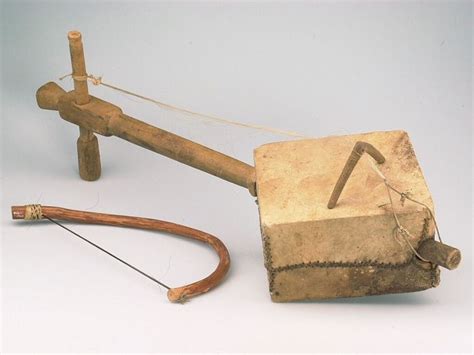
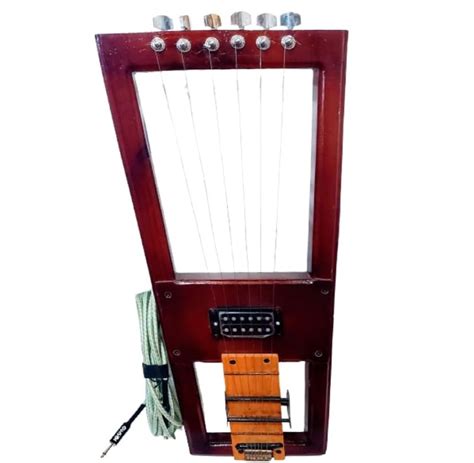
Krar: The Krar, also known as the Kraar, is a 5-6 stringed lyre that is bowl in shape. It is a chordophone which is traditionally tuned to a pentatonic scale, while modern krars can be amplified like electric guitars, etc. Plucking the krar will create a soft tone, while strumming it will produce a pulsed beat. Much like the masenqo, the krar is a favorite of minstrels or "azmaris" who often sing love and secular songs.
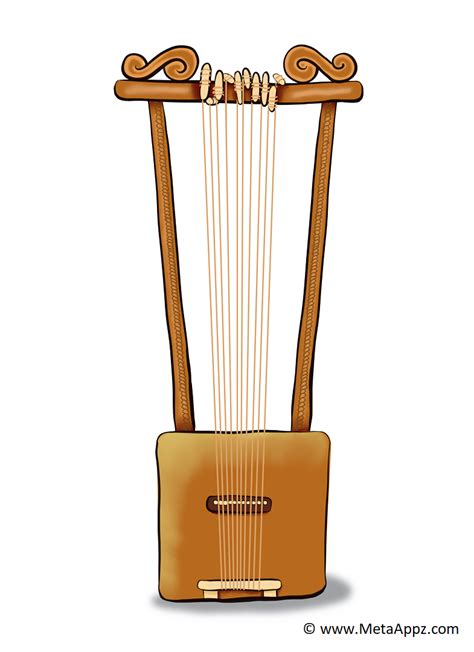
Begena: By oral Ethiopian tradition, the begena was an instrument used in Ancient Israel by David to help King Saul with his sleeplessness. This instrument was later brought to Ethiopia by Menelik I. The begena is considered an instrument for the upper-class and used by both male and female.
Dita: A five string plucked instrument from southern Ethiopia. The dita is most often made from a tortoise shell or part of a hollow tree stump. Most ditas have no bridge or Berkuma.
Wind Instruments
Washint: The washint is a bamboo flute that is common in the highlands. This end blown flute of wooden, bamboo or cane composition known as the washint is traditionally used in Ethiopia as a way musicians would convey oral history. The washint usually has 4 finger holes which enables the player to compose pentatonic scaled sounds.
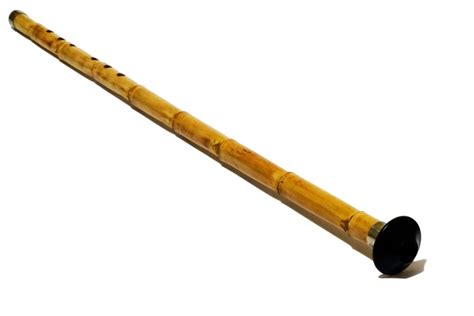
Trumpet-like instruments include the ceremonial malakat used in some regions, and the holdudwa (animal horn; compare shofar) found mainly in the south.
Embilta: Embilta flutes have no finger holes, and produce only two tones, the fundamental and a fourth or fifth interval. These may be metal (generally found in the north) or bamboo (in the south). The Konso and other people in the south play fanta, or pan flutes.
Huldudwa: A horn musical instrument with a very short bamboo used in Southern Ethiopia by the Sidamo people to announce a death or funeral.
Percussion Instruments
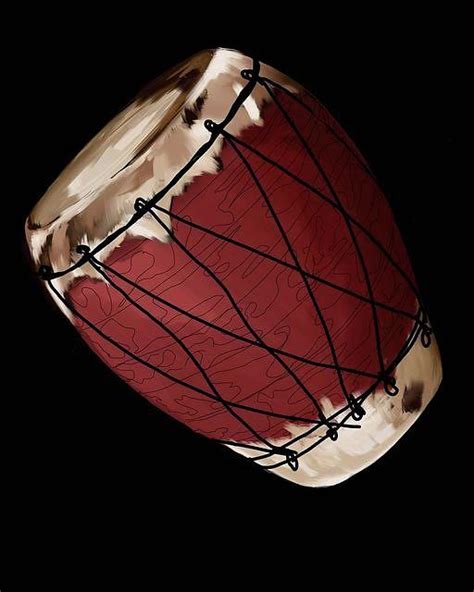
Ethiopian Drums
Kebero: The kebero is a large hand drum used in the Orthodox Christian liturgy. Smaller kebero drums may be used in secular celebrations.
Nagarit: The nagarit, played with a curved stick, is usually found in a secular context such as royal functions or the announcement of proclamations, though it has a liturgical function among the Beta Israel.
Atamo: The Gurage and certain other populations in the lowlands commonly play the atamo, a small hand drum sometimes made of clay. It is a drum small enough to be held in the hand or under the arm. The body is made of wood or metal stretched at the two edges with cow’s hide. It is often used for secular music. There are several kinds of atamo in different parts of Ethiopia in various sizes and shapes.
In Gambela Region, the Anuak specify three different kinds of drums: the anedo (small drum), the odola (medium drum), and the bul (big drum), with different rhythmic patterns attached to certain song genres.
Rural churches historically used a dawal to call the faithful to prayer. In the Ethiopian Orthodox Church, liturgical music employs the senasel (a sistrum). Additionally, the clergy will use walking stick, called mequamia, to maintain rhythm.
Other Instruments
Thoom: There is a special kind of drum referred to as tom-tom that is used in the southwestern part of the country, in Gambella Region. The toom, a lamellophone, is used among the Nuer, Anuak, Majangir, Surma, and other Nilotic groups.
Metal leg rattles are common throughout the south.
These terms all refer to a type of trumpet that is especially popular in southern Ethiopia among several different ethnic groups. Malakat is the term used in Ethiopia, waza in Sudan, and bol (or bal) is the term used by the Berta people (who live in both in West Ethiopia and Sudan. These instruments are made from organic materials such as calabashes and are cut to different lengths to produce different pitches. The longest ones can be quite large, taller than your average human being.
Musical Instruments of Ethiopia
| Instrument Name | Type | Description | Region/Culture |
|---|---|---|---|
| Masenqo | String | One-string bowed lute | Central and Northern Ethiopia |
| Krar | String | Five- or six-string lyre | Ethiopia and Eritrea |
| Begena | String | Large ten-string lyre | Ethiopian Orthodox Church |
| Washint | Wind | Bamboo flute | Highlands of Ethiopia |
| Malakat | Wind | Ceremonial trumpet | Ethiopia |
| Huldudwa | Wind | Horn instrument | Southern Ethiopia |
| Kebero | Percussion | Large hand drum | Ethiopian Orthodox Church |
| Atamo | Percussion | Small hand drum | Lowlands of Ethiopia |
| Thoom | Other | Lamellophone | Gambella Region |
Popular articles:
tags: #Ethiopia
