While some find building relationships easy, others struggle. Asking the right questions can significantly influence this process. A recent survey explored the perspectives of Cameroonian men on relationships, providing valuable insights into their thoughts and feelings. This article delves into the characteristics of Cameroonian men, their views on relationships, and cultural factors influencing mental health.
Perspectives on Relationships
The survey included men from three categories:
- Those currently in a relationship
- Those who have been in relationships
- Those who have never been in a relationship
Here are some key questions and recurring responses:
1. Approaching and Being Approached
Would you say yes if a lady asked you out? Yes or No. Why?
- Yes, if I like her: A man stated that he would respect a lady who asks him out, especially if she is Cameroonian. However, as a guy, he prefers the adrenaline rush that comes with asking a lady out.
- Yes: Another participant believed that a woman should be bold enough to make the first move if the man isn’t and that it doesn't matter who made the first move as long as the interest is reciprocated.
- Yes! If she’s the one I need: It’s common to see men shy away from those they truly desire because they “feel” they might not be qualified for one reason or another.
2. Desired Qualities in a Lady
What qualities are you looking for in a lady?
Read also: Step-by-Step Puff Puff Guide
- Emotional intelligence: Emotional intelligence comes first and morally sound, ambitious, smart, and willing to accept faults.
- Support: She has to be as good as I am, ambitious, and willing to learn.
- Respect and peace: The type that gives me respect and peace.
- Smart, clean, and God-fearing: Smart, clean, and genuinely God-fearing.
3. Views on Employment
Would you date a lady who doesn’t work? Yes or No. Why?
- No: I believe in the saying that *an idle mind is the devil’s workshop “
- Yes: Not having a job is different from not wanting to work. I’d go for the former.
4. Financial Dynamics
Would you date a lady who earns more than you do? Yes or No. Why?
- Yes: The more a lady earns, the more “real” she is. Her financial power influences some aspects of her behavior and/or attitude.
- Yes! Finance is always a challenge, but money is not the focus.
- YES: Because my validation doesn’t come from being the sole provider.
- Yes: Love goes by being material wealth… The most important in a relationship for me are mutual respect and love.
5. Age Differences
Would you date an older woman? Yes or No. Why?
- Yes: Age is not the most important factor when looking for a partner. But there’s certainly a limit for me.
- Maybe: I don’t know what my Faith says about this yet but for the sake of the survey, I’m tempted to say yes because some people can be exceptional and the age gap should be maximum 3.
- YES: I have always dated girls my age and older.
- It depends
6. Preferences on Makeup
Is more makeup or less/no makeup better? Why?
- No makeup: I appreciate natural beauty. I believe that a woman should be confident and appreciate her natural beauty.
- Less makeup is better: I see makeup as a sign of low self-esteem/confidence.
- Less is always better
- Why not: Makeup is not really my thing, but why not if she feels good in her skin with it?
DO NOT DATE/MARRY CAMEROONIAN MEN UNTILL YOU WATCH THIS
Read also: Cameroon's Juju Hats: History and Artistry
7. Opinions on Friends
57.1% are not okay with their girlfriends keeping male friends and male besties.
8. Pet Peeves
What’s the number one thing that ladies do that you don’t like?
- Nagging: The most pitiful thing I have seen in Cameroonian women is that they sell what no one is buying.
- Nagging: A lady that nags. I value peaceful and quiet time and can’t stand any lady that’s nagging.
- Disrespect: Disrespect their man. The ‘disrespect’ has a lot in it.
- Social media copycats
- Makeup
9. Love vs. Money
Would you rather win 10 million francs or fall in love?
Looks like Cameroonian men are lover boys after all lol…
Cultural Context and Mental Health
The security and human rights situation in Cameroon has significantly deteriorated, leading to displacement and migration. The difficult economic situation, declining family incomes, rising education costs, and growing unemployment rates further exacerbate these issues. Many forced migrants need to reorganize relationships within the fragmented family, redefine the roles and relationships within the changed family structure, adjust to a new environment, and reevaluate future perspectives.
Read also: Origins of Cameroon Coffee
Given the vital role of the extended family system in Cameroonian society, explanatory models of PTSD in this group cannot be assessed without reference to the family and its involvement. Furthermore, to fully understand individual psychopathology, culture specific and transnational conceptualizations of family structures and cohesion need to be taken into account.
Trauma and PTSD
Prior to their arrival in Europe, the vast majority of African migrants taking the Mediterranean route have experienced traumatizing events that have altered their lives drastically. During their journey, migrants often depend on human traffickers and are liable to experience physical and sexual violence, torture, and abduction. The concepts of trauma and PTSD have been addressed through the lens of an individualistic Western medical nosology. Past research in asylum-seeking and refugee populations from Africa found PTSD rates of up to 79%.
Many individuals, traumatized by the hardship endured during their migration path, face a situation of radical rupture and separation from their families remaining at home. Accordingly, past research suggests that asylum seekers and forced migrants have the impression of being ripped out of their familial environment, which might provoke feelings of distance, exclusion, loss, and grief.
Critics have blamed the one-sidedness and reductive character of a purely symptom-oriented conception of trauma and post-traumatic stress , and have noted that PTSD may be an overly narrow characterization of traumatic stress across different cultures.
Explanatory Models of PTSD
Taking individuals' sociocultural backgrounds into account, explanatory models describe the way in which individuals perceive, interpret, and respond to illness, and demonstrate how causality and help seeking behavior vary across cultures. Explanatory models are shaped by the underlying socio-cultural contexts and can be understood as fluid and multilayered constructs that reflect the cultural knowledge of each individual.
In the literature on African causal theories for mental disorders, the role of family and spiritual etiology is often emphasized, a finding that also emerged in asylum-seeking populations from Sub-Saharan Africa in Western resettlement countries. Past research has documented attributions to causes such as dead, missing, or separated family members; and spirit possession or curses. Rather than seek help from a clinician, migrants preferred to first use family support, prayer, or traditional therapies. In this regard, scholars have stated that spiritual beliefs and practices are tightly interwoven with sociocultural influences, and vary greatly across and within cultural groups.
Thus, culture-specific conceptualizations of family structures and a relational form of spirituality might influence explanatory models of PTSD of Cameroonian migrants. To date, however, there is no research examining the role of family in explanatory models of PTSD in this group.
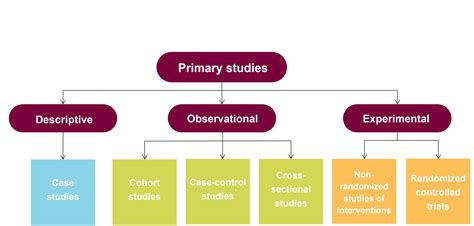
The objective of a study was to explore lay representations and explanatory models of PTSD in Cameroonian migrants with a precarious residency status in Europe, who had migrated via the Mediterranean route. The study involved discussions with 17 young men from the French-speaking part of Cameroon who had taken the Mediterranean route in order to seek refuge in Europe.
The analyses presented here are part of a larger study investigating illness representations for PTSD in asylum seekers from Sub-Saharan Africa. Interviews and focus group discussions were audio-recorded and transcribed verbatim before being subjected to Interpretative Phenomenological Analysis [IPA ]. IPA is concerned with the detailed examination of personal lived experience, the meaning of experience to individuals, and how individuals make sense of that experience.
Cameroonian Culture and Society
Cameroon is a diverse nation with a rich cultural heritage. Here are some key aspects of Cameroonian culture:
- Population: Approximately 25,640,965.
- Languages: Home to 230 languages, including 55 Afro-Asiatic languages, two Nilo-Saharan languages, and 173 Niger-Congo languages. The official languages are English and French.
- Lingua Franca: Kamtok, or Pidgin English, is commonly used for communication.
- Family: The extended family is the focus of the social system, with family obligations taking precedence.
- Associations: Cameroonians often organize themselves into small groups or associations for financial activities and mutual support.
- Greetings: Greetings should never be rushed, and a small gift for the children is always a nice touch.
- Dining: In traditional homes, men eat first, then women, and then children. Guests are often offered prized delicacies as an honor.
- Business Communication: Relatively formal and follows rules of etiquette and protocol. Meetings may be interrupted or shared with others.
Cameroonians are expressive communicators who practice conversational overlap - when they think that they know what you are about to say, they will interrupt you to agree, disagree, or change the subject.
Understanding these cultural nuances is crucial for anyone interacting with Cameroonian men, whether in personal relationships or professional settings.
| Indicator | Value |
|---|---|
| Population (estimated) | 25,640,965 |
| Languages | 230 (including French, English, and numerous African languages) |
| Official Languages | English, French |
| Dominant Social Structure | Extended Family |
Popular articles:
tags: #Cameroon
