Mauritius, strategically located in the Indian Ocean at the crossroads of Africa and Asia, has emerged as a premier international business hub and a desirable destination for those seeking a high quality of life. Known for its beautiful beaches, lush greenery, and tropical climate, Mauritius attracts investors, retirees, and professionals alike. The nation takes pride in its cultural diversity, which has been a cornerstone of its growth since gaining independence from Britain on March 12, 1968.
Out of Mauritius's population of approximately 1.3 million people, roughly 2 per cent are immigrants or expats, and their count of between 21,000 and 25,000 is expected to rise in the years ahead. This expectation has a sound basis, given the various opportunities Mauritius offers.
This article outlines the essential information for Mauritius's most common permit types, along with details about the requirements for each. Factors such as employment status, property ownership, family structure, and intended length of stay influence the various permits available to cater to the needs of different applicants.
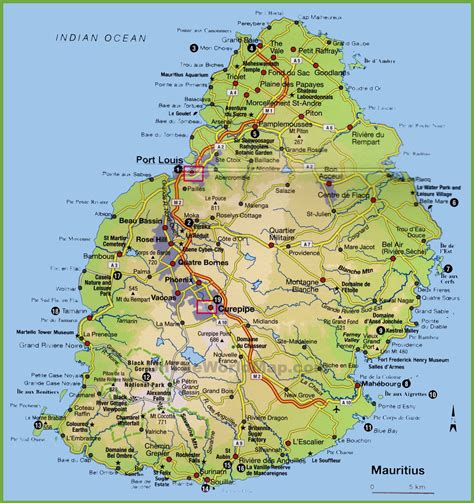
Location of Mauritius
Ways to Obtain a Mauritius Residence Permit
There are several avenues through which non-citizens can obtain a residence permit in Mauritius:
Read also: Honeymoon Packages for Locals
- Residency by Investment
- Mauritian Real Estate Purchase
- Engage in a Mauritian Occupation
- Retirement
1. Residency by Investment
You can get a 20-year Residence Permit through the Economic Development Board (EDB) of Mauritius by investing a minimum of USD375,000.
Upon a minimum investment of USD 500,000, the investor will be eligible for Permanent Residence Status. He will be exempt from work and residence permits.
The Investor who becomes a permanent resident under the Permanent Residence Scheme may apply for Mauritian citizenship after meeting the provisions of the Mauritius Citizenship Act (1968). Investors can obtain citizenship and passport of Mauritius after two years of residence in the country. Moreover, they are not required to renounce their previous citizenship.
Permanent Resident status allows to reside, circulate, work and acquire real estate in Mauritius. Renewable, this license is issued for a period of 10 years.
The investor may be issued with a multiple entry visa valid for a period of up to one year pending the grant of PR Status.
Read also: Your Albion Holiday
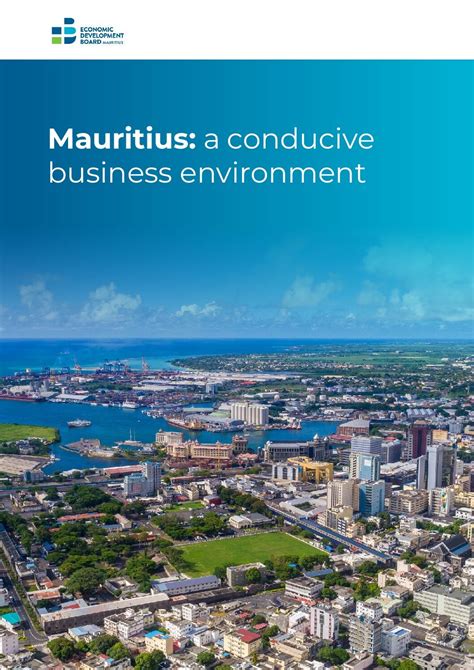
Invest in Mauritius
2. Mauritian Real Estate Purchase
A permanent residence permit in Mauritius is granted if you buy a real estate property in the country under purchase plans approved and managed by the government’s EDB. The PDS replaced two programmes the EDB implemented earlier-the Integrated Resort Schemes and Real Estate Schemes.
Under the PDS, a mix of residences is open for sale to noncitizens, citizens, and members of the Mauritian Diaspora community dispersed globally. Noncitizens buying a property under the PDS valued starting from USD375,000 or its equivalent amount in any freely convertible foreign currency are eligible for a residence permit.
Noncitizens can also acquire high-end residential property under the IRS and RES. These plans cover high-end properties, and the purchases are valued at not less than USD375,000. Properties bought under these schemes are rentable.
This scheme allows non-citizens to buy apartment units in EDB-approved condo developments with at least two above-ground levels. Purchases should be not less than MUR6 million or its equivalent in any hard convertible foreign currency. Buying a condo unit under this scheme makes you eligible for a 10-year Mauritian visa.
Read also: Hotel in Mauritius
It is renewable and valid as long as you hold the residential unit.
Good to know: by purchasing real estate under the IRS (Integrated Resort Scheme), the person acquiring the property automatically gains the status of Permanent Resident and his or her spouse and dependents. On the other hand, a residence purchased under the RES (Real Estate Scheme) does not confer any automatic right of residence (unless the property purchased exceeds USD 500,000).
Recently, a special status which is neither RES or IRS simply because the project falls under the new legislation of the Non-Citizen Act passed on December 20, 2016, allowing foreign investors to acquire an apartment on the island of Mauritius in a residence of more than two floors, for a minimum amount of 150 000 Euros.
This act allows you to own a property on the island without being a resident. The Non-Citizens (Property Restriction) Act has been amended on 20 December 2016 to allow foreigners to purchase apartments in condominium developments of at least two levels above ground (G+2) with the prior approval of the Board of Investment.
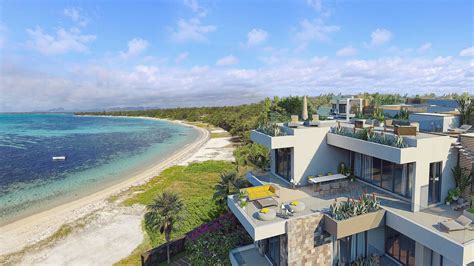
Real Estate Schemes in Mauritius
3. Engage in a Mauritian Occupation
You can also get a residency permit by working as an employee in Mauritius if your monthly basic salary is not less than MUR60,000 . Non-citizens can pursue a career and live in Mauritius as self-employed individuals but in the country’s services sector only. They also have to register with the government agency concerned as a one-person business activity.
As self-employed in the country, they should have a deposit of at least USD35,000 in a Mauritian bank.
The Mauritian Occupation Permits focus on different structures that enable individuals to both live and work in Mauritius. A Professional Occupation Permit is designed for individuals employed under an employment contract with a business entity in Mauritius. This permit can be issued with a maximum duration of 10 years, but the duration is based on the length of the individual's contract of employment.
To be eligible for this permit, applicants must demonstrate sufficient experience and relevant qualifications in the field in which they will be employed. Furthermore, this permit is linked to the current employment and may not be transferred should the applicant decide to change jobs. Currently, the individual is also required to earn a minimum monthly basic salary of MUR 22,500 (approximately USD 500 per month to qualify for a Professional Permit.
The Government of Mauritius does allow individuals holding a Professional Permit to invest in any business, provided they are not employed by or receiving a salary or employment benefits from that company.
This permit is intended for new graduates who have completed their tertiary studies at a tertiary education institution in Mauritius.
For freelancers, consultants, and those looking to start their own business in Mauritius, the Self-employed Occupation Permit is often a perfect fit.
For those wanting to open a domestic or multinational company in Mauritius, or those buying into an existing business, and looking for a residency option, an Investor Occupation Permit may be applied for.
The most popular of all the Investor Occupation Permit types, the normal Investor Permit is aimed at individuals looking to register a new business in Mauritius. On the other hand, the Net Asset Value Investor Occupation Permit applies to individuals who are applying under an existing business or an inherited business.
The last category of Investor Permits is the Innovator Investor Occupation Permit.
4. Retirement
Retirees can earn residency in Mauritius that grants such eligibility to those who are at least 50 years of age. The government, however, does not allow the employment of foreign retirees on the island.
For all the above permits, the main applicant may apply for his or her family to be added to his permit as dependents.
Finally, Mauritius also offers a special Permanent Residence permit for retirees. Retired individuals are eligible for a Retired Non-Citizen visa if they have legally lived in Mauritius for at least three years and have at least USD 54,000 in transferable funds.
Other Important Considerations
Dual Citizenship: Dual citizenship is not allowed in India. When you become citizen of Mauritius you will automatically lose your Indian citizenship.
Tax Residency: You automatically become a tax resident in Mauritius if you are present in the country for more than 183 days.
Visa-Free Travel: As from the 29th May 2009, the citizens of Mauritius may enter and stay without a visa in the territory of the European Union for a period of stay not exceeding three months.
How to get a residence permit in Mauritius
Work Permits in Mauritius
Often misunderstood or incorrectly referred to as work permits, the Mauritian Occupation Permits focus on different structures that enable individuals to both live and work in Mauritius.
There are many types of visas available to internationals who wish to work in Mauritius:
- Work Permit: The majority of employees will need a work permit.
- Occupation Permit: An occupation permit is a combined work and residence permit that allows citizens from other countries to live and work in Mauritius.
- Young Professional Occupation Permit: This is intended for international students who have completed their undergraduate degree in Mauritius.
To be eligible for a work permit in Mauritius, the applicant should be between 20 and 60 years old. Nationals from other countries will need a Residence Permit as well as a Work Permit to be employed in Mauritius legally. Since both permits are necessary, applicants may fill out a common form for both permits. Employers must apply for a Mauritius work permit on behalf of the prospective employee.
A holder of an Occupation Permit or Residence Permit may apply for a Permanent Residence Permit after 3 years of living in Mauritius. Work permit applications from companies outside of Mauritius will only be accepted if they are incorporated in Mauritius.
Here's a table summarizing the key requirements for different types of permits:
| Permit Type | Key Requirements |
|---|---|
| Professional Occupation Permit | Employment contract, relevant qualifications, minimum monthly salary of MUR 22,500 |
| Self-Employed Occupation Permit | Freelancers, consultants, entrepreneurs looking to start a business |
| Investor Occupation Permit | Registering a new business, investing in an existing business |
| Residence Permit (for retirees) | Minimum age of 50, proof of income or funds |
| Permanent Residence Permit | Residency for 3 years, meeting specific income or investment criteria |
| Premium Visa (for digital nomads) | Valid passport, proof of accommodation, health insurance, income of at least USD 1,500 per month |
The Importance of Immigration Compliance in Mauritius
The Mauritian government remains diligent in enforcing existing immigration and labor laws. Because of the country’s relative ease of entry, many remote workers enter Mauritius on a tourist visa and quickly begin working there without vetting their legal status.
Many employers in other countries are often quick to hire these workers without analyzing their visa situation and whether they have proper work authorization. If a non-citizen of Mauritius is found to be working in the country without a proper work visa, they may face a fine of up to 100,000 Mauritian Rupees and imprisonment of up to five years.
Ultimately, it’s vital for your company to proactively ensure compliance with all immigration and labor laws in any country where you are hiring remote workers, even if it is a country as remote-work-friendly as Mauritius.
If your company is not based in Mauritius, or if you do not have any kind of established presence in Mauritius, you may consider using an international employer of record (EOR) to verify your employee’s status in the country.
Popular articles:
tags: #Mauritius
