Matrouh Governorate, located in the northwest of Egypt, presents a unique case study for understanding healthcare infrastructure and stroke management in low- to middle-income countries (LMICs). This article delves into the demographics, geography, health status, and stroke service implementation within Matrouh, highlighting both the challenges and opportunities for improving patient care.
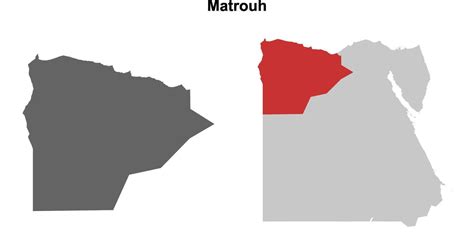
Map of Matrouh Governorate
Background
Stroke remains a significant global cause of both mortality and morbidity, with one-third of stroke cases resulting in death and another third leading to disability. The global incidence of stroke is on the rise, primarily due to an increase in the aging population and the prevalence of vascular risk factors among the elderly.
Stroke units have emerged as a crucial component in stroke management, as many studies and guidelines found that the outcomes of patients managed in stroke units are much better than those managed in conventional care. Despite the availability of stroke guidelines, it is imperative to adapt these guidelines to the unique circumstances of each country.
High-income countries usually face fewer challenges in dealing with stroke with a well-designed stroke service distributed along stroke centers, stroke units, stroke-ready hospitals, and in the presence of the hub and spoke model, along with the availability of emergency medical services (EMS), mobile computed tomography ambulances, as well as air transportation if needed. Conversely, LMICs encounter significant obstacles, including a scarcity of stroke units outside urban areas and inadequate transportation infrastructure.
Read also: Discover the Red Sea
In light of these circumstances, Future Stroke Leaders within the WSO Future Leaders program undertook a study in Matrouh governorate, Egypt, employing it as a model to identify gaps in stroke services and propose an approach to bridge these gaps for effective stroke service implementation.
Methods
An infrastructural model for stroke care, analyzed by a task force of the Future Stroke Leaders as part of the WSO Future Stroke Leaders' Program, is presented as a pathway model for implementing stroke services in various regions. The model took the WSO roadmap as a guide.
Within the WSO roadmap healthcare facilities are divided into minimal, essential, and advanced. The minimal level provides healthcare through uncoordinated local communities with no care for hyperacute stroke, and with limited access to trained physicians or healthcare workers in the field of stroke.
As for the essential level, it has stroke care facilities and training. There is an availability of basic stroke diagnostics including rapid diagnosis protocols and the presence of trained physicians, nurses, and interdisciplinary stroke teams, access to recombinant tissue plasminogen activator (rtPA) yet, limited access to emergency medical services (EMS), and coordinated services along wider geographical areas.
The advanced level is similar to the essential one yet, with additional fully coordinated stroke service, telestroke, data collection, advanced diagnostics, and advanced interventions.
Read also: Exploring Al Maadi
The current model consisted of two levels: level one involved carefully selecting a region for in-depth study, and identifying its gaps including demographics, geography, and health status, which involved both physical facilities and medical human resources. Level two focused on addressing the identified gaps through a tailored approach that took into account the stroke roadmap and relevant stroke guidelines.
After considering various regions and the accessibility of data, Egypt was deemed a suitable model due to its status as a LMIC where stroke services have been implemented over the past decade. Consequently, choosing a region within Egypt as a model holds promise for replication in other LMICs.
Data collection and analysis were done through a site visit to the governorate as well as collecting data from government official agencies. The estimated number of strokes was calculated based on age-specific incidence and replicating the analysis done by Farghaly and colleagues in the Al-Kharga district since demographically wise it resembled Matrouh governorate.
Results: Studying Matrouh Governorate
Matrouh Governorate is situated in the northwest of Egypt, extending approximately 500 km along the Mediterranean coast. The population of the governorate is approximately 500,000 distributed along a few major cities along the coast with the majority in the capital of the governorate which is 500 km from Cairo with a mixture of urban and rural areas.
Matrouh is divided into eight municipal divisions. As a coastal governorate, Matrouh faces an additional challenge which is a seasonal summer migration. From mid-June to early October, the region experiences an influx of approximately 5 million individuals, primarily families from Cairo who own or rent apartments along the entire north coast.
Read also: Explore Gharbia Governorate
In addition to the 5 million holiday migration, the Matrouh population is also likely to increase within the next few years as the government is establishing a major urbanization project in El Alamein division that is supposed to attract an additional 5 million by the year 2030 to make the population close to 7 million.
Health Status: Physical Facilities
The governmental hospitals within Matrouh governorate until 2020 were 5 with a total of 468 beds and 76 intensive care unit beds with 60 ambulance units accounting for 3.9% of the entire Egypt ambulance units. Based on the Task Force research, 7 hospitals were identified with a total of 630 beds accounting for 1.2 beds per 1000 population (the global average of beds per 1000 population is 2.9 and the national average is 1.3) and an additional 3 private hospitals with 107 beds.
Out of the 7 hospitals, only 2 were approaching the classification of essential healthcare stroke providers.
The average length of stay within Matrouh hospitals was 1.4 days and the rotation of the bed was 79.5.
Raising the Capabilities of Hospitals and Turning Some into Stroke Units
2 hospitals namely El Alamein Typical Hospital and Matrouh General Hospital, had the necessary infrastructure to be called essential healthcare stroke providers according to the WSO roadmap after fulfilling some requirements. Both hospitals were well equipped with imaging such as computed tomography machines (CT) and magnetic resonance imaging (MRI), ultrasonic devices for vessel integrity analysis, cardiac investigation techniques such as ECHO, and laboratories. Besides El Alamein Typical Hospital was recently equipped with an Angio suite.
However, neither of these hospitals had a dedicated stroke unit. Furthermore, there was a deficiency in well-trained physicians and nursing staff in stroke management. Despite the government’s endorsement of thrombolysis, it was not readily available in the pharmacies of Matrouh hospitals. Moreover, EMS with code stroke were not well established.
Health Status: Medical Human Resources
Out of 93,012 on-duty physicians within the governmental sector; Matrouh had only 931 and out of them there were only 4 specialized in the field of neurological sciences (neurosurgery or neurology), while there were 34 internists, 18 intensivists, 30 radiologists, 7 physical medicine, and 21 emergency unit specialists.
As for nursing power, Matrouh had 1422 out of 55,217 on duty within the governmental sector. Related paramedical field manpower within Matrouh that is needed in serving and establishing stroke service was distributed as follows: 117 laboratory technicians, 57 radiology technicians, 220 nursing technicians, and 16 physical therapists.
Stroke Service Implementation
Until finalizing this analytical study, there was no official data available regarding the number of stroke cases in Matrouh Governorate, either in general or during the summer season yet, it is estimated that annual stroke cases in Egypt range between 150,000 and 210,000.
Age-specific incidence in Egypt was applied to the population in Matrouh and Cairo to calculate the expected number of cases during the summer months adding to it official estimates that 50 percent of those aged 60+ years travel to Matrouh in summer for vacation, a total of 2019 stroke cases was estimated annually.
According to estimated numbers within the current model, it was assumed that 22 stroke cases are to occur on a daily basis within the Matrouh governorate so at least 11 beds are needed to achieve a successful stroke pathway without any delays.
Additional Stroke Services
Matrouh hospitals were not found to be connected to local or regional telestroke services and database registries for stroke cases were not readily available as well. Awareness campaigns on stroke were not properly established nor followed on a routine basis.
Table 1: Hospitals within Matrouh Governorate and their WSO Roadmap Status
| Hospital Name | WSO Roadmap Status Level |
|---|---|
| El Alamein Typical Hospital | Approaching Essential |
| Matrouh General Hospital | Approaching Essential |
| Other Hospitals | Minimal |
Table 2: Estimated Number of Strokes in Matrouh Governorate in Summer
| Population | Estimated Stroke Cases Annually |
|---|---|
| Regular Population + Summer Travelers | 2019 |
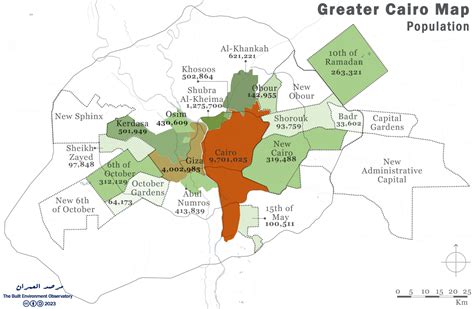
Population of Cairo and Matrouh, the estimated number of ischemic strokes along high season (summer months)
Stroke Prevention: Diet
Discussion
The current model highlighted strength points and detected some gaps by using the WSO roadmap within the Matrouh governorate. Yet, both hospitals are deficient in dedicated stroke beds. According to the estimated numbers in the current model, a total of 11 beds were needed to serve stroke cases within the governorate.
Another gap found in the current model is the deficiency of neuroscience specialty within Matrouh. The main obstacle is the inequality in the distribution of branches of medicine including neurology along different governorates.
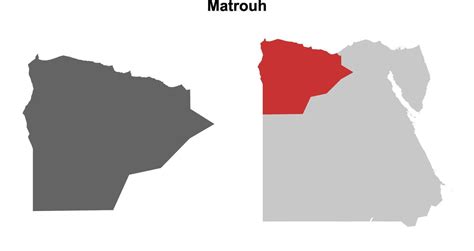
Matrouh governorate gaps
Popular articles:
tags: #Egypt
