The Ethiopian Orthodox Tewahedo Church holds a special place in the religious landscape of Ethiopia, with its deep historical roots and unique traditions. Among the most revered figures in the church is Holy Virgin Mariam, the Mother of God, who is venerated as the interceding mother on behalf of her spiritual children. The Ethiopian church celebrates 33 feasts of Holy Virgin Mariam throughout the year and it is our duty to call her blessed mother.
Ethiopia, the land of Judeo-Christianity, is one of the most ancient predominantly Christian countries of the world. It is marked with a fascinating history, unique civilization, culture and religious life.
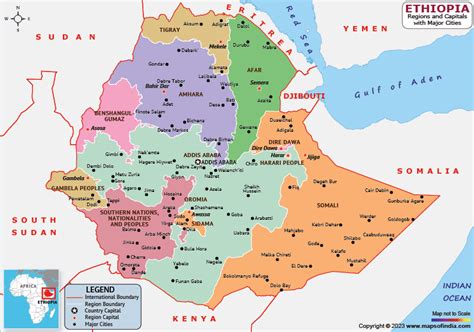
Map of Ethiopia showing its regions.
The Historical Context
Historical documents trace the beginning of an independent Ethiopian monarchy as far back as 4522 B.C. Ethiopia is well known as the Kingdom of Aksum, established by Emperor Menilik I. At present, in Aksum, the ancient capital and birthplace of Ethiopian civilization and Christianity, antiquity is still present along with its standing obelisk and other artistic features.
The beginning of Ethiopian Christianity could possibly be traced to the apostolic era. The Book of Acts gives the account of the Ethiopian Eunuch of Queen Candace, who was first evangelized and then baptized by the apostle Philip (Acts 8:26-36). Eusebius, the great Church historian, refers to the Ethiopian Eunuch as “the first fruit of Christianity in the whole world.” In addition, Rufinus followed by Theodret, Socrates and Sozomen also recorded this remarkable event.
Read also: Debre Tsion Mariam Church
Nevertheless, it was not until the 4th century that Christianity became the official religion of the Aksumite Empire. This period also saw the inauguration of the Bishopric See and administration of the sacraments.
This is because St. Athanasius of Alexandria consecrated St. Frementius as the first Bishop of Ethiopia during the reign of Emperors Ezana and Syzana (also called Abraha and Atsbaha). King Ezana removed from his coins the sign of the moon and replaced it with the sign of the cross. By doing so, he became “the first sovereign in the world to engrave the sign of the cross on coins.”
St. Frementius came to be known by the Ethiopians as Abba Selama, which means, “the Father of Peace” and Kesate Berhan meaning, “the Revealer of Light”. Moreover, as the first bishop of Ethiopia, he was given the title Abune, meaning “our father,” as an appellation carried henceforth by all primates of Ethiopia.
The Ethiopian Orthodox Church accepted the three Ecumenical Councils Nicaea (A.D. 325), Constantinople (A.D. 381) and Ephesus (A.D. 431). Therefore, the Nicene-Constantinople creed has become the symbol of our faith.
Our Creed
We believe in one God, the Lord, the Father Almighty, maker of the heavens and the earth and of all things visible and invisible. We believe in one Lord Jesus Christ, the Only-begotten Son of the Father, who was with him before the creation of the world: Light of Light, true God from true God, begotten not made, equal with the Father in his Godhead: By whom all things were made, but without him was not anything made, neither in heaven nor on earth; who for us human-beings and for our salvation came down from heaven, and was incarnate of the Holy Spirit and Mary, of the holy Virgin Mary. He was made man and was crucified for us in the days of Pontius Pilate; he suffered, died, was buried, and rose from the dead on the third day as it is written in the Holy Scriptures. He ascended with glory into heaven, sat at the right hand of his Father, and will come again with glory to judge the living and the dead; and of his kingdom there shall be no end.
Read also: Diaspora Churches: Kidist Mariam
We believe in the Holy Spirit, the Lord, the giver of life, who proceeds from the Father, we worship and glorify him with the Father and the Son; who spoke by the prophets; and we believe in one holy, universal, apostolic Church. We believe in one baptism for the remission of sin; and await the resurrection of the dead and the life to come, world without end. Amen.
The life of the Ethiopian Church was further strengthened by the coming of the Nine Saints, who came from the Byzantine Empire (479 A.D.). They translated various sacred texts from Greek and Syriac into Ge`ez, spread the Gospel and introduced monastic life.
Just as the monasteries in Europe helped preserve the Western cultural tradition during the Middle Ages, the Ethiopian Orthodox Tewahedo Church and its monasteries became the center for the development of Ethiopian art, hymnody, literature and architecture.
Key Doctrines of the Ethiopian Orthodox Church
The doctrinal teaching of the Ethiopian Orthodox Church is firmly grounded in the five pillars of mystery:
- Mystery of the Holy Trinity
- Mystery of Incarnation
- Mystery of Baptism
- Mystery of Holy Communion
- Mystery of Resurrection
The Mystery of the Holy Trinity
The Mystery of the Holy Trinity is the belief in the Triune God and is the core of Christian faith. The One God in whom we believe, as is one in divinity and three as distinct persons. The Ethiopian Church accepts this teaching as absolutely central to its theology and spirituality.
Read also: Tamale's Mariam Hotel
The Mystery of the Incarnation
The Mystery of the Incarnation is the saving entrance of God into human history. The Creedal confession reads, “For us men and for our salvation the Word of God came down from heaven, and by the power of the Holy Spirit became incarnate of the Virgin Mary and was made man.” The Ethiopian Orthodox Church upholds the miaphysite Christology of St. Cyril of Alexandria: “One United Incarnate Nature of God the Son.”
The Mystery of Baptism
The mystery of baptism is the main entrance into the Church and participation in its sacramental grace. Being the sacrament of initiation into Christian faith, Baptism is performed only once and never repeated.
The Mystery of the Holy Communion
Christ instituted the sacrament of Holy Communion during the Last Supper on Maundy Thursday. Our Lord Jesus Christ commands the disciples to remember His sacrificial death and triumphant resurrection in their Eucharistic celebration.
The Mystery of the Resurrection
The Mystery of the Resurrection is the mystery of the eternal life in the world to come after our bodily resurrection from dead. The Church’s belief in our resurrection is based on the triumphant resurrection of Christ, the first fruit of our resurrection.
The Divine Liturgy is the center of Ethiopic worship. It is the gold mine and indispensable core for the Church’s fundamental theology and spirituality. Therefore, the Church’s liturgical celebration has twofold purposes:
- To praise the Almighty God and give thanks to God for the abundance grace and tremendous gifts, which the gracious Lord has given for us through Jesus Christ.
- The Holy Eucharist is not a new sacrifice, nor a repetition of the sacrifice on Calvary, since the true and innocent lamb of God is sacrificed once only, for all time.
The Ethiopian Orthodox Church in Jerusalem
The Ethiopian Orthodox Tewahedo Church has had monasteries in Jerusalem for more than 1,500 years. The connection of Ethiopia to Jerusalem dates back to 1,000 B.C. when Queen Sheba visited King Solomon. In addition to these landmark events the Ethiopian Orthodox Tewahedo Church has maintained a place of worship in Jerusalem.
Listen to the moving prayer of the Ethiopian Orthodox Priests near the tomb of Jesus in Jerusalem
In the 19th Century the Church expanded its possessions when the Christian Ethiopian Emperor Yohannes IV began the construction of Debre Genet monastery, which was later, completed during the reign of Emperor Menelik II. Since then, increasing number of churches, chapels, convents and the acquisition of church properties evidences the prominence of Ethiopia in Jerusalem.
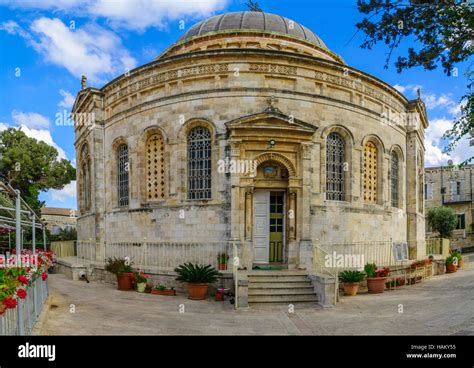
The Ethiopian Orthodox Tewahedo Church in Jerusalem.
Global Expansion
The 1970s saw dramatic increase in the number of Ethiopian Orthodox Tewahedo Churches in the Diaspora following the arrival of large numbers of Ethiopian immigrants in North America, Europe, Australia, Eastern and Southern Africa.
The Church of Our Lady Mary of Zion
The Church of Our Lady, Mary of Zion is an Ethiopian Orthodox Tewahedo Church which is claimed to contain the Ark of the Covenant. The church is located in the town of Axum, Tigray Region in northern Ethiopia, near the grounds of Obelisks of Axum.
The original church is believed to have been built during the reign of Ezana the first Christian ruler of the Kingdom of Axum (present-day Eritrea and Ethiopia), during the 4th century AD, and has been rebuilt several times since then.
Since its founding during the episcopacy of Frumentius, the first Bishop of Axum, the Church of Mary of Zion has been destroyed and rebuilt at least once, or twice as according to tradition. The church of Saint Mary of Zion was the traditional place where Ethiopian Emperors came to be crowned.
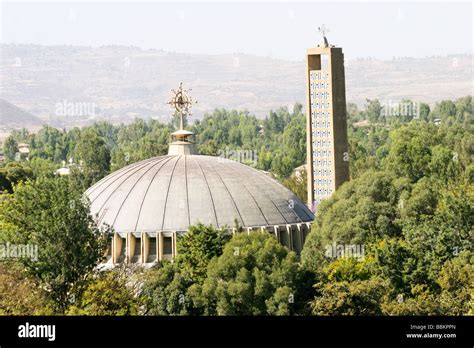
The Church of Our Lady Mary of Zion in Axum.
Tedbabe Mariam Monastery
Tadbaba Maryam, also called Tadbaba Zion in ancient times, is an Ethiopian Orthodox Tewahedo church located in the place of Sayint in South Wollo, Amhara Region, Ethiopia. Tadbaba Maryam was amongst the first four Temples where sacrificial offerings were implemented in Ethiopia before birth of Jesus.
The current church of Tadbaba Maryam is spectacular in its design and was built by Emperor Gelawdewos after he won the war with Ahmad ibn Ibrahim al-Ghazi, the Battle of Wayna Daga. The Ark was carried into the Battle of Wayna Daga, the final battle against Ahmad ibn Ibrahim al-Ghazi, where Gelawdewos cut off the Imam's head.
Tadbaba Maryam possesses a huge collection of treasures, some of them date back to the time of the Old Testament. The collections are now displayed in a museum inside the churches compound.
Veneration of Saints and Angels
Angels are venerated and honored in the Ethiopian Church. From the Homilies of the Angels we learn how God in His goodness sends His Angels and saves from evil the faithful who fear Him and believe in His name, and guards and helps them in the time of affliction.
Our church believes in the ancient customs of honoring the heroic servants of God but it does not offer them the adoration which befits God. We have a prodigious number of saints and martyrs in the Church and every day has a saint.
Feasts and Commemorations
Various feasts of the Blessed Virgin and the angels and Saints and Martyrs are celebrated. They are usually dated in accordance with the secular calendar and are commemorated on a definite date each year.
According to the Ethiopian calendar the feasts of some saints are celebrated as follows:
| Saint | Date (Ethiopian Calendar) |
|---|---|
| St. John | Jan. 4 |
| St. Stephan | Jan. 1 |
| St. George | April 23 |
| Days of Baptism | Jan. 11 |
| 318 Nicean Fathers | September 21 |
| Dioscorus | Sep. 7 |
The Significance of Mary
The Church honors the Blessed Virgin Mary most of all the saints. The Virgin Mother of God has a very special place in the Ethiopian cult, and devotion to our Mother holds the highest place. Ethiopia is known as the country of Mary, her protectress.
Among the saints in heaven she is venerated in a special way. She is loved by her Son so dearly that He will grant her every prayer. Our Lady is commemorated every month and there are more than thirty feasts of Mary in one year. The name of Mary is the most popular, both for men and women. Innumerable churches are erected in her honour.