Luxor, Egypt, is situated at 25°40'N, 32°42'E, 99 m (325 ft). Known for its rich history and stunning archaeological sites, Luxor experiences a subtropical desert climate, making it essential to understand its weather patterns when planning a visit.
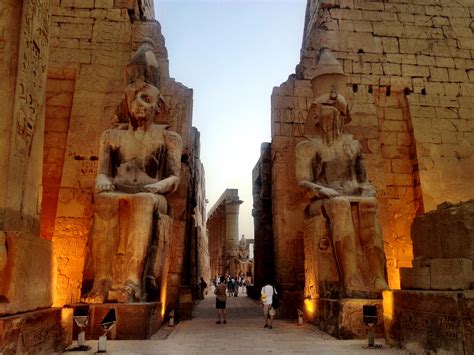
Luxor Temple
You might have been told that Egypt has only two seasons - hot and really hot - but there's a little more variation than that. With a Mediterranean coastline as well as much of the country in desert, it can experience a whole range of weather, from arid heat to even snow! The fertile Nile Valley and Delta, which makes up 5.5% of Egypt's land mass, is said to be home to around 99% of the country's population. Here, temperatures are more steady, and although still very hot in the summer, much more bearable than other parts of Egypt. Rainfall is very low across the country, only occurring in the winter months, and although the temperatures dip slightly around then, average winter minimums in Egypt don't hit the usual lows you may expect.
Make a considered choice about the time of year that you head off on an Egypt adventure, as traveling in very high heat and visiting outdoor sights can be pretty demanding, especially for those who are not used to such extreme temperatures.
General Climate Overview
Luxor has a subtropical desert / low-latitude arid hot climate (Köppen-Geiger classification: BWh). Luxor is situated in or near the subtropical desert biome. The annual average temperature is 24.3 degrees Celsius (75.8 degrees Fahrenheit). Average monthly temperatures vary by 18.5 °C (33.3°F).
Read also: Your Guide to Luxor International Airport
Average Temperatures Table for Luxor
The mean temperature in Luxor, Egypt is fairly hot at 24.3 degrees Celsius (75.8 degrees Fahrenheit). Mean monthly temperatures have a variation of 18.5 °C (33.3°F) which is a slightly low range. The range/ variation of diurnal average temperatures is 18.8 °C (33.8 °F). July is the hottest month (very, very hot) with a mean temperature of 32.3 degrees Celsius (90.14 degrees Fahrenheit). January is the coldest month (mild) having a mean temperature of 13.8 degrees Celsius (56.84 degrees Fahrenheit).
| Month | Average Max Temperature °C (°F) | Average Temperature °C (°F) | Average Min Temperature °C (°F) |
|---|---|---|---|
| Jan | 23 (73.4) | 13.8 (56.8) | 5 (41) |
| Feb | 26 (78.8) | 15.9 (60.6) | 7 (44.6) |
| Mar | 30 (86) | 20.2 (68.4) | 10 (50) |
| Apr | 35 (95) | 25.6 (78.1) | 15 (59) |
| May | 40 (104) | 29.6 (85.3) | 21 (69.8) |
| Jun | 41 (105.8) | 32.2 (90) | 21 (69.8) |
| Jul | 41 (105.8) | 32.3 (90.1) | 23 (73.4) |
| Aug | 41 (105.8) | 31.8 (89.2) | 23 (73.4) |
| Sep | 39 (102.2) | 29.7 (85.5) | 21 (69.8) |
| Oct | 37 (98.6) | 25.9 (78.6) | 19 (66.2) |
| Nov | 31 (87.8) | 20 (68) | 12 (53.6) |
| Dec | 25 (77) | 15.1 (59.2) | 7 (44.6) |
| Annual Average | 34.1 (93.4) | 24.3 (75.8) | 15.3 (59.6) |

Giza Pyramids
Seasonal Weather Breakdown
Temperature ranges throughout the year show a distinct contrast between the sweltering summer months and the cooler winter months. High temperatures move from 23°C (73.4°F) in January, climbing steadily to reach an inferno peak of 41.4°C (106.5°F) in July. Following this peak, they start decreasing to close the year at 24.4°C (75.9°F). The city's lowest temperatures follow a similar trend, starting at 5.4°C (41.7°F) in January and warming up to 23.6°C (74.5°F) by July, before cooling down again to 7.1°C (44.8°F) by December.
Humidity is relatively low in Luxor, maintaining an average band from 27% to 57%. As is expected of a desert environment, rainfall is minimal regardless of the month; the only noticeable precipitation, barely 1mm (0.04"), happens in October.
Daylight hours gradually increase from 10.7 hours in January to peak at 13.7 hours in June, before slowly shortening again toward the year-end. This trend directly correlates with the duration of sunshine which oscillates from 9 hours in January and December and a maximum of 12 hours between June and August.
Read also: Complete Guide: Cairo - Luxor Flights
Spring (March - May)
Spring months of March to May signal the start of warming temperatures in Luxor. Highs progress from 27.4°C (81.3°F) in March to an intense 35°C (95°F) by May. Likewise, low temperatures rise from a cool 10.4°C (50.7°F) to a more agreeable 16°C (60.8°F). Relative humidity begins to decrease in anticipation of the impending summer, decreasing from 39% in March to 31% in May. Rainfall remains virtually non-existent during this period.
Summer (June - August)
Summers in Luxor are not for the faint-hearted: extreme temperature highs range between 39.2°C (102.6°F) in June and peak at 41.4°C (106.5°F) in July. Likewise, nights remain warm with lows of 20.2°C (68.4°F) in June and peaking at 23.6°C (74.5°F) in July. Humidity is at its lowest, dipping down to 27% in June, while daylight stretches to its annual high of 13.7 hours.
Discover Luxor’s Ancient Wonders And what#chatgpt says@ Top Historical Attractions in Luxor, Egypt #
Autumn (September - November)
A feeling of respite emerges in autumn, with temperature highs starting to decline from 38.8°C (101.8°F) in September down to 28.9°C (84°F) by November. Overnight lows also become more bearable during this period, falling from 21.3°C (70.3°F) in September to 11.6°C (52.9°F) by November. Relative humidity starts rising again, going from 37% up to 51%.
Winter (December - February)
Winter comes as a refreshing season in Luxor, featuring much cooler and comfortable weather conditions. Daytime highs range from 24.4°C (75.9°F) down to 23°C (73.4°F) and night lows vary from 7.1°C (44.8°F) to 5.4°C (41.7°F). Winters see a minor increase in rainfall but overall, Luxor maintains its dry climate. The daylight hours reduce to around 10.6 to 10.9 hours throughout the winter months.
Monthly Weather Details
January
The transition from winter to spring brings the warmth back to Luxor, Egypt, with a relatively lower relative humidity of 55%. As winter recedes, one can appreciate the moderate cool temperatures compared to colder regions. January offers nearly 10.7 hours of daylight daily, providing an ample window for daytime activities.
Read also: Routes from Cairo to Luxor
February
As Luxor marches into February, the city will experience greater sunlight duration, extending to 11.3 hours a day. The warming trend continues, facilitating an early-initiation-of-spring feel for residents and tourists alike. The city remains mostly dry throughout the month, ensuring unhampered outdoor plans.
March
Luxor experiences an early embodiment of spring in March. There is an apparent increase in daylight hours to 12 per day, a prospect that inspires more outdoor activities. A fascinating 39% relative humidity factored with virtually no rainfall, March in Luxor means genuinely pleasant outdoors.
April
April’s weather conditions position Luxor as an intriguing summer holiday destination. Warmer temperatures dominate Luxor’s predominantly dry climate with day temperatures rising from March’s range. The city also experiences an impressive 12.8 hours of daylight, enhancing the intrigue for tourists and locals to savor outdoor antics.
May
May unfolds as the definitive entrance into summer with soaring temperatures and strong sun exposure. The continuing rise in temperature further intensifies the city’s dry and arid climate. The month outshines its predecessor with a slight increase in daylight to 13.4 hours and the reduced relative humidity at 29%.
June
June represents the pinnacle of Luxor’s summer season with the highest daylight duration and sun intensity. The temperature rapidly ascends from May’s limit becoming increasingly challenging for outdoor activities. The UV index remains at its peak at 12, exacerbating the potent sun exposure.
July
July maintains the intense heat pattern from June, keeping Luxor in the sweltering grip of summer. The consistently high temperatures and dry conditions set the atmosphere for extended indoors stays and nocturnal outdoor activities.
August
The fierce heat in Luxor persists through August with the smallest dip in maximum temperature compared to July. Despite being in late summer, the weather remains arduously hot and dry, discouraging extensive outdoor activity during the day.
September
September invites a slight reprieve from Luxor's relentless summer heat, paving the way for the transition to the much-awaited fall season. The temperature exhibits a declining trend, prompting a rise in communal activities which had withered in the summer heat.
October
October reveals a pleasant transformation towards autumn in Luxor with a significant drop in temperatures. The cooler weather enhances outdoor engagements and serves as a welcoming feature for visitors seeking historical explorations.
November
November brings remarkable relief from Luxor's prolonged dry and hot weather, with considerably cooler temperatures and expanded nighttime hours. Although the UV index drops to 6, it is imperative to adhere to sun protection measures during daytime.
December
December in Luxor heralds the winter season with noticeable changes in the city's climatic conditions. The marked drop in temperature creates a cozy winter ambiance and comparatively longer nighttime. The UV index drops further to 5, reducing the intensity of sunlight during the reduced daylight duration of 10.6 hours.
Best and Worst Times to Visit
The best times to visit Luxor are from March to April and between October and November. These brief shoulder seasons offer pleasant temperatures, small crowds and more affordable hotel rates. Luxor's coolest temperatures can be enjoyed in winter, but you'll also find hordes of tourists and high prices during this season. And though you'll snag great hotel deals once summertime rolls around, unbearably hot temperatures make touring Luxor's sights between May and September uncomfortable.
Consider visiting Luxor during the early spring or late autumn months to experience the most ameniable climatic conditions. particularly during March, temperature highs remain within a comfortable range, reaching up towards 27.4°C (81.3°F) while in November it falls to 28.9°C (84°F). These months also provide ample daylight with 12 hours in March and 11.5 hours in November.
Summer months are the most challenging period to visit Luxor, especially from June to August. The extreme high temperatures, reaching up to 41.4°C (106.5°F) in July, may not provide a comfortable setting for tours and sight-seeing. Moreover, the longer daylight hours, often filled with intense sunshine, may lead to heat exhaustion for those unaccustomed to such harsh conditions.
Popular articles:
tags: #Egypt
