Nigerian women are a diverse group with a wide array of experiences and backgrounds. They are mothers, daughters, sisters, wives, entrepreneurs, professionals, and activists. Nigeria has a long history of gender inequality and discrimination against women, and they face numerous challenges, including limited access to education, healthcare, and economic opportunities. Despite these challenges, Nigerian women have consistently demonstrated resilience and strength, shaping their society in profound ways.
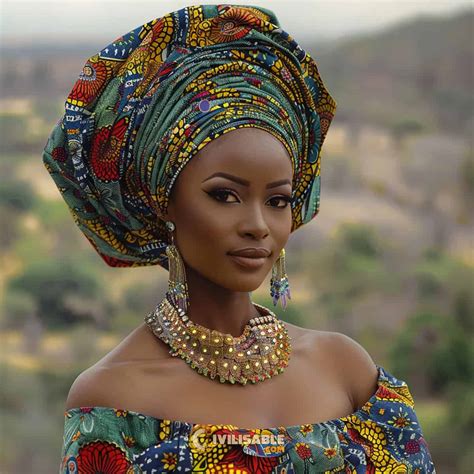
A group of Nigerian women in traditional attire.
Historical Roles and Status of Women in Nigeria
From precolonial times to the early 21st century, the role and status of women in Nigeria have continuously evolved. In the precolonial period, women played a major role in social and economic activities. Division of labour was along gender lines, and women controlled such occupations as food processing, mat weaving, pottery making, and cooking. Moreover, land was communally owned, and women had access to it through their husbands or parents.
Although a man was the head of the household in a patrilineal system, older women had control of the labour of younger family members. Women were also central to trade. Among the Yoruba, they were the major figures in long-distance trade, with enormous opportunities for accumulating wealth and acquiring titles. The most successful among them rose to the prestigious chieftaincy title of iyalode, a position of great privilege and power.
In politics, women were not as docile or powerless as contemporary literature tends to portray them. The basic unit of political organization was the family, and in the common matrifocal arrangement, which allowed a woman to gain considerable authority over her children, a woman and her offspring could form a major bloc in the household. Power and privileges in a household were also based on age and gender, thereby allowing senior women to have a voice on many issues. Because the private and public arenas were intertwined, a woman’s ability to control resources and people in a household was at the same time an exercise in public power.
Read also: The Mystery of Egypt Plantation
Beyond the household level, power was generally dominated by men, but in many areas specific titles were given to women. The queen mother, a powerful title among the Edo and Yoruba, could be bestowed upon the king’s mother or a free woman of considerable stature. Yoruba and Hausa legends describe periods when women were either the actual kings or heroines. Such women as Moremi of Ile-Ife and Amina of Zaria are notable legendary figures, as are the powerful queens in the Ondo and Daura histories.
The most serious threat to the influence and privileges of women occurred during the 20th century, when patriarchy combined with colonial changes to alter gender relations. As male chiefs collaborated with the British colonial administration in collecting taxes and governing, the position of female chiefs declined in importance. When the economy became increasingly geared toward the production of cash crops for export, Nigerian men and European firms dominated the distribution of rubber, cocoa, groundnuts (peanuts), and palm oil. Women, pushed to the background, were forced to shift to the production of subsistence crops. Western-style education also favoured boys over girls and thus largely excluded women from many of the new occupations introduced by colonialism.
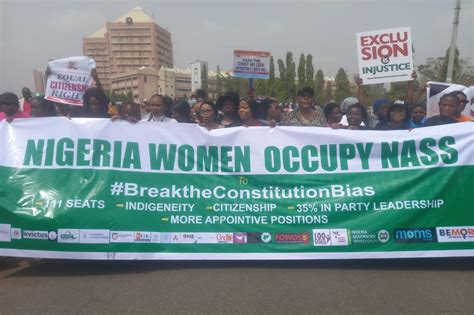
Nigerian women protesting for their rights.
Top 6 Nigerian Women In Politics
Challenges Faced by Women in Nigeria
Nigeria's underdevelopment regarding the status of their women, due to a long history of colonial exploitation and oppression, has brought about a distortion of Nigeria's economic, educational, religious, cultural, social, ideological and social orientations. Women are also disproportionately affected by poverty, violence, and other forms of discrimination. The Nigerian government has taken steps to address these issues, but progress has been slow. Women are still underrepresented in politics and decision-making roles, and they are often excluded from economic opportunities.
Additionally, traditional gender roles and cultural norms continue to limit the potential of women in Nigeria. The social role of women in Nigeria varies according to religious, cultural, and geographic factors. Child marriage is a marriage or union between two people in which one or both parties are under the age of 18. It is a violation of human rights and is considered a form of child abuse.
Read also: Exploring Themes in Lady Margaret
Domestic violence is prominent in Nigeria as in other parts of Africa. There is a deep cultural belief in Nigeria that it is socially acceptable to hit a woman as a disciplinary measure. Cases of Domestic violence are on the high and show no signs of reduction in Nigeria, regardless of age, tribe, religion, or even social status. The CLEEN Foundation reports 1 in every 3 respondents identified themselves as a victim of domestic violence. Domestic violence takes many forms including physical, sexual, emotional, and mental. Traditionally, domestic violence is committed against females.
Incidents of domestic violence in Nigeria include battery, beatings, torture, acid baths, rape, and consequently, death. It is, however, estimated that approximately one in every three women suffers domestic violence and Intimate Partner Violence from the hands of those who claim to love and supposedly, protect them. On the 27th of February, 2021, The Guardian, Nigeria, recorded in their Saturday edition that cases of Domestic Violence are on a high rate, especially the physical aspect of it.
Prostitution in Nigeria is illegal in all Northern States that uses the penal code and sharia law also known as Islamic law. The Nigeria criminal system prohibits national and trans-national trafficking of women for commercial sex or forced labour. Poverty is a major cause of prostitution in Nigeria. Many girls in the nation work as shop helpers and street hawkers. In Nigeria, child labour is driven by social, demographic, and economic factors such as poverty, loss of parental employment, loss of a parent or family guardian, rural-urban migration, large family size, and cultural norms such as polygamy.
Nigerian women and girls are disproportionately affected by Nigeria's ineffective healthcare system. One reason for this is the prevalence of patriarchal norms that give men jurisdiction over women's medical decisions. This is exacerbated by poverty, lack of education, and the resources required in order to visit medical facilities. Nigerian laws only allow for abortions in cases where pregnancy poses a threat to the mother's life. Nonetheless, an estimated 1.8 to 2.7 million women terminate their pregnancies each year.
While customs and norms regarding women's health do vary when it comes to the northern and southern regions of Nigeria, one similarity that can be found is that girls and women are given less food relative to their male counterparts, they are expected to perform more labor domestically than their male counterparts, and their movement is more restricted than the boys and men in their household. Girls in Hausa communities may get married at the age of 11 and begin to have children a few years later which results in them developing health problems. Female genital cutting (also known as female genital mutilation) in Nigeria accounts for a significant portion of female genital cutting/mutilation (FGM/C) cases, worldwide. Nationally, 27% of Nigerian women between the ages of 15 and 49 were victims of FGM, as of 2012.
Read also: Our Lady of Africa: Faith and Unity
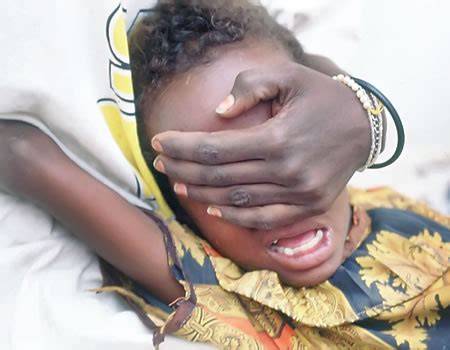
Infographic on Female Genital Mutilation in Nigeria.
Women in Nigerian Politics
Prior to colonization, Nigerian women were involved in political process. In the Bornu Empire, women took part in administering the state. Queen Bakwa Turuku founded the city of Zaria and her daughter built a defensive wall around the city in order to repel invasions. Nigerian women were also politically active when it came to the decolonization of their homeland during the 1940s and 50s. Women's organizations were the channels through which women organized and mobilized against colonization. Nigerian women did not gain their voting rights until relatively recently. It was not until 1979 when all Nigerian women gained their voting rights.
The role of women in Nigerian politics is shaped by the patriarchal nature of the society. This dense religious and tribal country provides the setting for the oppression Nigerian women face in politics and in everyday life. Nonetheless, women in Nigeria have been able to come together in feminist movements, such as the Women in Nigeria (organization) (WIN) founded in 1982, to combat male supremacy in Nigeria and shape feminism as a force for Nigerian women.
In The World's Economic Forum's Global Gender Gap report for 2018, Nigeria was ranked 139th out of a total 149 countries, in terms of gender gap in 'political empowerment'. As of 2019, out of 193 countries globally, Nigeria is at the 181st position when it comes to women's descriptive representation in parliament. As of the most recent elections, 7.3% of the Nigerian Senate and 3.1% of the House of Representatives are women. There are no state governors that are women. There are no laws implemented to improve the gender gap.
The barriers to women participation in politics are election time violence, economic restrictions, and patriarchy according to the Head of the Gender Division for the Independent National Electoral Commission. To help increase the number of women working in the government, The Nigerian Women's Trust Fund (NWTF) uses funding, networking opportunities, mentoring, training for leadership, and advocacy. As of 2006, Nigeria's National Gender Policy has called for the increase of women in government positions to 35%.
Notable Nigerian Women in Politics and Advocacy
As we celebrate Women’s History Month around the world, I’m thinking especially of the women who fight for equal rights. Here are some notable women who have contributed to Nigerian politics and advocacy for women’s rights:
- Chief Funmilayo Ransome Anikulapo-Kuti: A pioneering Nigerian activist, educator, freedom-fighter and suffragist. She founded the Abeokuta Women’s Union (AWU) and played a pivotal role in Nigeria’s independence movement.
- Lady Kofoworola Ademola: A prominent Nigerian educator, author, activist, and women’s rights advocate. She served as President of the National Council of Women’s Sciences in Nigeria.
- Margaret Ekpo: A pioneering Nigerian women’s rights activist and politician who founded the Market Women Association in the city of Aba.
- Hajia Gambo Sawaba: A prominent Nigerian politician, women’s rights activist and philanthropist who campaigned against under-aged marriages and forced labor.
- Ngozi Okonjo-Iweala: An economist, diplomat, and public servant who served twice as Nigeria’s Finance Minister and is now the Director-General of the World Trade Organization.
- Obiageli Ezekwesili: An economist, educator, and activist known for her significant contributions to governance and public policy and co-founded the #BringBackOurGirls movement.
- Bisi Adeleye-Fayemi: A prominent gender rights activist and author who led various gender rights efforts as First Lady of the Ekiti State.
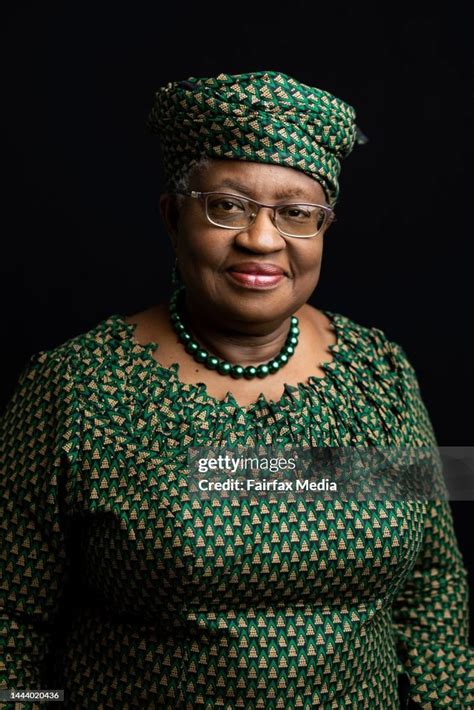
Ngozi Okonjo-Iweala, Director-General of the World Trade Organization.
Women in Nigerian Literature
The early Nigerian literacy scene was largely dominated by male authors such as Wole Soyinka, Chinua Achebe, Cyprian Ekwensi, and Gabriel Okara, who rose to prominence between the 1950s and 1970s. However, the contributions of Nigerian women authors, though often overlooked, have had a profound impact on both society and the literacy scene in the West African country, and globally, for decades. Pioneers like Flora Nwapa, Buchi Emecheta, and Balaraba Ramat Yakubu, challenged the status quo through their storytelling, fearlessly discussing social issues affecting women in their communities, such as child marriage, women’s education, and financial independence.
Today, Nigerian female writers are continuing a legacy of creating literature as a social movement, calling for justice while also highlighting the realities that women in the country face. Here are six Nigerian women authors you should add to your bookshelf:
- Flora Nwapa: Celebrated as the mother of modern African literature. Her work confronted and reshaped the stereotypical narratives of African women in a predominantly male literary landscape.
- Balaraba Ramat Yakubu: A prominent writer in northern Nigeria, and the first female Hausa language author to have her work translated into English. Her book Wa Zai Auri Jahila critiques child marriage and advocates for girls' education.
- Chimamanda Ngozi Adichie: A highly acclaimed Nigerian author and feminist. Through her influential work, such as Half of a Yellow Sun, Americanah, and Purple Hibiscus, she has inspired millions around the globe.
- Abi Daré: A globally recognised Nigerian-British author. Her first novel, The Girl with the Louding Voice follows Adunni, a 14-year-old girl from a poor family, in a small town near Lagos.
- Tomi Adeyemi: A Nigerian-American writer known for bringing West African mythology to the fantasy genre. Her debut novel, Children of Blood and Bone, became an instant bestseller and blossomed into a trilogy.
- Chinelo Okparanta: Renowned for her novels, including, Runs Girl, Happiness, Like Water, Under the Udala Trees and Harry Sylvester Bird. Her books often explore themes of identity, sexuality, and the challenges faced by the LGBTQ+ community in Nigeria.
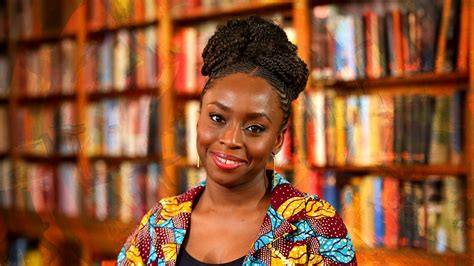
Chimamanda Ngozi Adichie, a renowned Nigerian author.
Coping Strategies During Pregnancy and Labour
Pregnancy and labour are defining moments in the lives of women. However, this change is accompanied by many unpleasant physical symptoms, including nausea, fatigue, heartburn, and musculoskeletal pain, which result in an array of psychological issues like stress and anxiety, especially among first-time mothers. Similarly, pregnancy requires adjustments in the physiological, familial, financial, occupational, and other realms, which may evoke emotional distress for women, especially women of low income with fewer resources. Little is known about coping experiences of Nigerian women with pregnancy and labour, which prompted a qualitative study which aimed at exploring their coping experiences during pregnancy and labour.
This qualitative study with conventional content analysis was conducted from November 2021 to January 2022 at Federal teaching hospital Ido Ekiti, Ekiti State and Kubwa General Hospital, Federal Capital Territory, Nigeria. Thirty women with an age range of 24-41 years and an overall mean age of 33 years were interviewed. The results showed that Nigerian women had a wide range of coping mechanisms during pregnancy and labor, which were highly influenced by culture, religion, and family.
Coping Strategies Utilized During Pregnancy
- Obtaining Relatives’ Experiences: Many women coped through the information they received from nurses at the antenatal clinic, their mothers, and Google.
- Seeking Information: Some participants got health information from their mobile devices, which prepared them psychologically.
- Religious Practices: They will call on Jesus’ name whenever they do not feel fine.
- Engaging in Exercise: Some participants identified doing exercise as one way of coping with discomfort during pregnancy.
Strategies Used During Labour
- Engaging in Exercises and Household Chores: Participants identified exercises such as walking around and doing household chores to relieve labour pain.
- Relying on God: Some others completely relied on God for the grace to see them through the labour process; this was done through prayers and calling the name of Jesus Christ throughout the process.
- Visualizing the Joy of Having a Baby: Some participants could cope by visualizing that the joy of having a baby is greater and better than the pain experienced during labour.
- Seeking Support: Their support came in different forms, ranging from physical and emotional support from their husbands to words of encouragement from health professionals and pieces of advice from family members.
- Cultural Beliefs: Some participants reported that they were not taught anything culturally, so as not to scare them away from childbirth. However, for some, it is cultural for a woman to go through labour pain as a form of womanhood.
General Statistics of Women in Nigeria
| Statistic | Value |
|---|---|
| Maternal mortality (per 100,000) | 630 (2010) |
| Women in parliament | 6.7% (2012) |
| Women in labour force | 50% (2017) |
| Gender Inequality Index | Value: 0.680 (2021), Rank: 168th out of 191 |
| Global Gender Gap Index | Value: 0.639 (2022), Rank: 123rd out of 146 |
