Labour Day is a worldwide celebration honoring the contributions of workers and the labor movement. Originating as a call for fair wages, reasonable working hours, and safe conditions, Labour Day has evolved into a day of rest, solidarity, and celebration in many countries. The history of Labour Day is rooted in labor struggles of the 19th century, when workers worldwide sought fair treatment and rights, leading to the establishment of this holiday in numerous nations.
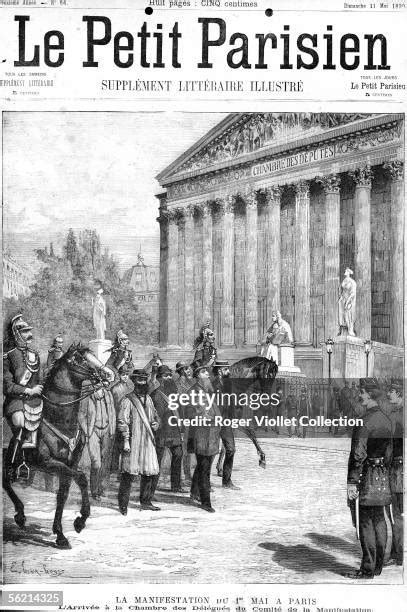
Labour Day demonstration in Paris, 1890
Labour Day’s origins trace back to the Industrial Revolution of the 19th century, a period marked by intense labor demands, low wages, and exploitative working conditions. Workers, often working 10- to 16-hour days in unsafe factories, began to form unions to advocate for better treatment. These movements gained momentum worldwide as workers rallied for an eight-hour workday and safer conditions.
The Haymarket Affair and International Workers' Day
The United States played a pivotal role in the history of Labour Day. On May 1, 1886, hundreds of thousands of American workers, organized by unions, went on strike demanding an eight-hour workday. This strike is often referred to as the Haymarket affair, which turned violent when a bomb exploded during a rally in Chicago, leading to deaths and widespread violence. May 1 is Labour Day to honour the workers who died in the Haymarket Square, Chicago, on May 4, 1886.
In 1889, the first meeting of the Second International was held in Paris, following a proposal by Raymond Lavigne that called for international demonstrations on the 1890 anniversary of the Chicago protests. On 1 May 1890, demonstrations took place in the United States and most countries in Europe. International Workers' Day was formally recognized as an annual event at the International's second congress in 1891.
Read also: The Labour Party of Nigeria: An in-depth look
Labour Day Celebrations Around the World
Though the intent of honoring workers is shared, the date and customs surrounding Labour Day vary globally.
- For many countries, May 1 is International Workers’ Day, a date chosen to commemorate the Haymarket affair and to celebrate labor solidarity and workers’ rights.
- In the UK, May Day has a long history and combines traditional spring festivities with labor rights observances. While it isn’t always celebrated on May 1, the country observes May Day on the first Monday of May as a public holiday. Some cities hold rallies organized by trade unions and workers’ associations, highlighting workers’ achievements and advocating for labor rights.
- Germany observes International Workers’ Day on May 1 as a public holiday, where it is known as “Tag der Arbeit” (Day of Labor). The day typically involves marches organized by labor unions, political speeches, and rallies advocating for workers’ rights. Cities like Berlin host large gatherings where workers, activists, and the public participate in a day of solidarity.
- In France, May 1 is a national holiday known as “Fête du Travail.” Similar to Germany, it includes labor union rallies and marches across major cities, especially in Paris. An interesting tradition in France is the gifting of Lily of the Valley flowers on May 1 as a symbol of good luck and happiness.
- In Australia, Labour Day is celebrated on different dates depending on the state. For example, in Queensland and the Northern Territory, Labour Day is observed on the first Monday in May, while in Victoria and Tasmania, it falls in March. Each state marks the day with marches, community events, and festivities.
- In China, International Workers’ Day, or “Laodong Jie,” is celebrated on May 1 and is one of the “Golden Week” holidays, providing a three-day period for travel, relaxation, and family gatherings. Workers’ Day is a time for both relaxation and recognition of workers’ contributions to the nation.
- Brazil celebrates Workers’ Day on May 1 with a blend of political and cultural events. In major cities like São Paulo, the day is marked by parades, rallies organized by labor unions, and large concerts that attract thousands of attendees.
- In South Africa, Workers’ Day on May 1 is both a public holiday and a day of labor solidarity. Workers’ Day took on a unique significance during the anti-apartheid struggle, as labor unions and workers played a crucial role in the fight for freedom and equality.
- In the United States, Labour Day is celebrated on the first Monday in September and serves as a tribute to American workers’ contributions to the nation’s economic strength, social progress, and overall well-being. The holiday originated in the late 19th century, during a period of intense labor activism when workers across the country advocated for better wages, reduced hours, and safer working conditions.
The early rallies and strikes that marked the fight for an eight-hour workday and fair treatment have given way, in many places, to a day of rest and celebration. In some countries, the political and activist tones of Labour Day remain strong, especially in places where workers’ rights continue to face challenges. In other parts of the world, Labour Day is less politically charged and more of a cultural holiday or a day for family gatherings, picnics, and parades. In the United States, Labour Day weekend in September marks the unofficial end of summer and is associated with sales, festivals, and barbecues, a far cry from its early association with labor struggles.
Here is a table summarizing Labour Day celebrations in different countries:
| Country | Date of Celebration | Customs and Traditions |
|---|---|---|
| International | May 1 | Commemoration of the Haymarket affair, labor solidarity, workers' rights |
| UK | First Monday of May | Traditional spring festivities, labor rights observances, rallies |
| Germany | May 1 | Marches, political speeches, rallies |
| France | May 1 | Labor union rallies, gifting of Lily of the Valley flowers |
| Australia | Varies by state | Marches, community events, festivities |
| China | May 1 | "Golden Week" holiday, travel, relaxation, family gatherings |
| Brazil | May 1 | Parades, rallies, concerts |
| South Africa | May 1 | Labor solidarity, celebration of workers' contributions |
| United States | First Monday of September | Family gatherings, parades, festivals, barbecues |
Labour Day in Kenya
In Kenya, Labour Day is a public holiday and celebrated as Labour Day. Kenya celebrated its first International Workers' Day as an independent nation on 1 May 1964. On Labour Day in Kenya, workers do not go to work. Instead, they attend public events organised by trade unions and labour organisations. Influential leaders from the Central Organisation of Trade Unions (COTU), as well as the country's president and labour minister, make speeches to highlight the plight of workers.
Labour Day celebrations in Kenya have seen significant milestones over the years. For example, in 2022, Kenya's minimum wage was increased by 12% with effect from 01 May 2022.
Read also: History and Objectives of the NLC
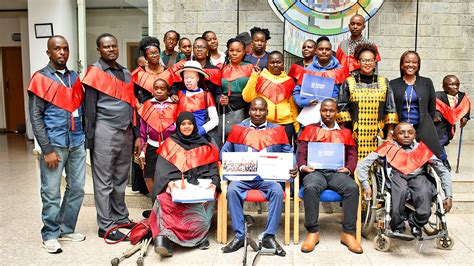
Jobseekers with disabilities in Nairobi
As Kenya celebrates Labour Day, it is an opportunity to recognise the accomplishments and challenges faced by women in the workforce. As a lesson from Labour Day, all awareness groups, institutions, and notably women's organisations should work together to attain their rights. Only after recognising proper demands and removing barriers to acquiring rights should we strive. Take every precaution to save life.
The Role of Women in the Labour Movement
In this massive labour movement, women led and participated. Women workers learned their rights to join labour unions and speak out to improve their working conditions. Mary John was the first woman to advocate for workers. Lucy Parsons was May Day's first notable woman. As president of the International Ladies Garment Workers Union, she was the first to demand eight-hour days at factories. Lucy Parsons and Lizzie Holmes discreetly disseminated revolutionary material and educated other women about their rights. Both gave clear, powerful statements during rallies.
Due to their bravery and remarks, police and authorities abused them. Numerous intimidations occurred. Lucy Parsons, wife of hanging victim Albert Parsons, carried an embroidered red flag during demonstrations. She encased her spouse properly. She wanted to put this red flag on her husband’s grave, despite the mayor’s request to avoid it during the funeral procession. With 125,000 workers, this funeral procession passed through Chicago calmly.
Even later, rights struggles persist. These battles led to the creation of the Department of Labour in 1913 after a 1911 shirtwaist factory fire killed 150 women owing to unsafe conditions. Its major goal was to inform the US government of labour issues. The US Congress created the Department of Labour Women's Bureau in 1913 to defend working women's rights. The 1920 constitutional amendment gave women the vote.
Read also: Waste to Wonder: Flip Flop Art
Labour Day’s story is one of resilience, solidarity, and the pursuit of fairness for workers around the world. Its origins in the labor struggles of the 19th century have paved the way for modern labor rights, reminding us of the progress achieved and the work that remains. Celebrated in different forms and on different dates across the globe, Labour Day unites workers in a shared history and common purpose.
Why do Americans and Canadians celebrate Labor Day? -Kenneth C. Davis
Popular articles:
tags: #Kenya
