Uganda's political landscape is complex, marked by a history of shifting constitutional frameworks, periods of instability, and a transition towards multiparty politics. This article delves into the structure of Uganda's government, its electoral processes, and the challenges it faces in upholding democratic principles and human rights.
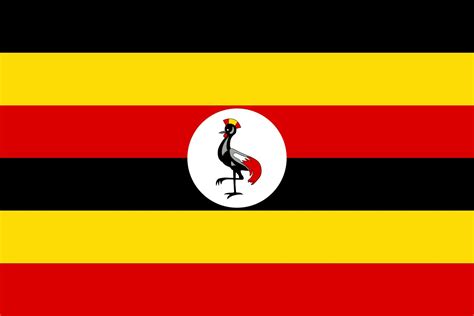
Constitutional Framework
Until 1967, Uganda operated under a quasi-federal system with subregional monarchies, non-monarchical districts, and a central government.
The republican constitution adopted in 1967 abolished the monarchies and assigned ultimate political power to an elected president. The president was to be aided by a ministerial cabinet drawn, in the British tradition, from among members of the unicameral National Assembly.
In theory, the judiciary, legislature, and executive were to be autonomous, if coordinate, institutions of governance, but in reality the powers of the different branches of government have varied widely with each president.
Under Idi Amin’s presidency (1971-79), representative institutions were abolished altogether, and, with the first of several military coups in 1985, the constitution was suspended.
Read also: Voice of Culture and Entertainment
Under the new constitution promulgated in October 1995, and since amended, the president is the head of state, government, and the armed forces and is assisted by a prime minister and cabinet.
Legislative power is vested in the unicameral Parliament. Most members of Parliament are directly elected to five-year terms; the remaining seats are reserved for one female representative from every district and representatives of specific groups, such as the army, youth, labour, and persons with disabilities.
The constitution also recognizes the right of ethnic groups to pursue their own cultural practices.
Uganda had a “no-party” political system until a 2005 referendum overwhelmingly supported a return to multiparty politics. The next year the country held its first multiparty elections since 1980.
Government Structure
The 1995 constitution established Uganda as a republic with an executive, legislative, and judicial branch. The president of Uganda, who is the head of state and head of government, leads the executive branch.
Read also: Used Vehicles in Uganda
Legislative responsibility is vested in the Parliament. The Ugandan judiciary operates as an independent branch of government and consists of magistrate's courts, high courts, courts of appeals, and the Supreme Court.
Branches of Government
- Executive: President (Head of State and Government), Vice President, Prime Minister, Cabinet
- Legislative: Parliament (National Assembly)
- Judicial: Magistrate's Court, High Court, Court of Appeals, Supreme Court
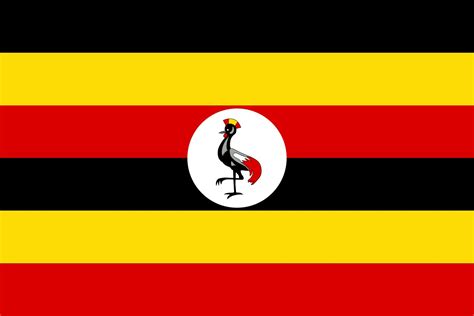
Legislative Branch
The 2016 elections for the unicameral Parliament were held concurrently with the presidential vote. A total of 426 members were chosen, including 289 elected in single-member districts, 112 elected to reserved seats for women, and 25 chosen to represent special interest groups (the military, youth, people with disabilities, and trade unions). Members serve terms of five years.
The ruling NRM won an absolute majority with 293 seats. Independents won 66 seats, the opposition FDC took 36, and smaller parties divided the remainder.
Local Government
Uganda is divided into districts. Each district is administered by an elected chairperson and a district council. Subdistrict administrative units are governed by a tiered structure of elected councils. Each council consists of elected members with the political and judicial power to manage local affairs.
Justice System
The Supreme Court is the court of highest appeal; it also acts as a constitutional court. Below the Supreme Court is the Court of Appeal and the High Court. The Magistrates’ Courts were established in 1970 and decide criminal and civil matters. Islamic and customary law also exist in the country.
Read also: UGX to USD Exchange Rate
Electoral Process
The president is directly elected to serve five-year terms. In the 2016 election, incumbent Yoweri Museveni won with 60.6 percent of the vote, according to official results. Kizza Besigye of the opposition Forum for Democratic Change (FDC) placed second, with 35.6 percent.
A 2017 constitutional amendment removed the presidential age limit of 75, allowing the president to seek reelection in 2021.
Independent observers, civil society, and opposition leaders have long critiqued and called for substantive reforms to Ugandan electoral laws.
On election day in 2016, the EC experienced significant technical and logistical problems. It extended the voting time for polling stations that opened late, with voting in some areas continuing for an extra day even as counting was well under way.
Following the flawed 2016 elections, the Supreme Court called on the attorney general to implement electoral reforms to address these issues within two years and update the court on the progress of the changes.
Between February and March 2020, the parliament passed five electoral reform bills that they had been ordered to draft in 2019.
Between July 2018 and February 2019, the EC suspended the Citizens’ Coalition for Electoral Democracy in Uganda (CCEDU), a prominent nongovernmental organization (NGO), from election observation and voter education, claiming the group is partisan and undermines the integrity of elections.
Political Parties and Participation
The formation of political parties is protected by law, and multiple parties exist and compete in practice. The ruling party dominates all levels of government.
There are several dozen opposition lawmakers in Parliament, as well as numerous independents, though some of the latter support the NRM.
Leaders of opposition parties and political movements are sometimes arrested on trumped-up criminal charges. There were multiple arrests of FDC leaders during 2019, and Bobi Wine was arrested in November 2020 and harassed throughout the year.
At the end of 2020, Wine and more than 30 others were still awaiting trial on treason charges arising from a 2018 incident in the Arua district; police alleged that Wine and his supporters obstructed President Museveni’s motorcade and threw stones at the vehicles.
The military is closely aligned with Museveni and the NRM, and holds 10 seats in Parliament.
Although Uganda has a large number of diverse ethnic groups, they lack equal representation and opportunities. The dominant position and coercive tactics of the NRM impede free political participation and advocacy of interests by Uganda’s various ethnic groups, including those affiliated with subnational kingdoms and smaller Indigenous groups.
Challenges to Democracy and Human Rights
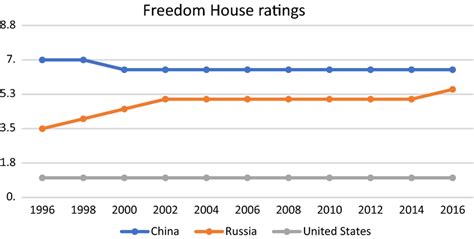
Power is concentrated in the hands of the NRM leadership, the security forces, and especially the president, who retains office through deeply flawed electoral processes.
Lawmakers have little practical ability to influence legislation in which the government has a particular interest, though there is more consultation on ordinary policy matters. The executive has secured passage of key legislation through inducement, harassment, and intimidation of the legislative branch.
Corruption is a serious problem. There are laws and institutions designed to combat official malfeasance, including the Anti-Corruption Act of 2009 and the Inspectorate of Government, and instances of alleged graft have led to investigations and intense media attention.
Many government departments deny requests for information under the country’s Access to Information Act. Other laws related to national security and confidentiality also impede open access to information in practice. The Access to Information Act is not uniformly applied.
Government agencies seem to release information that only favors the regime. For example, in September 2020, the Electoral Commission made public the academic documents of Bobi Wine while refusing to release those of President Museveni, despite numerous petitions.
Restrictions on Freedoms
The media sector features many independent outlets, but their journalists face arrest, harassment, intimidation, and assault in reprisal for their work. Throughout 2020, journalists covering the campaign events of Bobi Wine were harassed, assaulted, and detained, on various charges.
The Committee to Protect Journalists, a press freedom watchdog, reported that at least seven journalists were harassed and attacked by police and members of the public between November and December while covering campaigns for the 2021 presidential elections. Further, authorities issued new guidelines for foreign journalists, requiring them to reapply for accreditation within a week of the guidelines being announced.
Between March and May, police arrested and assaulted at least 10 journalists while enforcing COVID-19-related restrictions.
Academic freedom has been undermined by alleged surveillance of university lectures by security officials, and by the need for professors to obtain permission to hold public meetings at universities. In December 2018, 45 staff members at Makerere University in Kampala were dismissed for indiscipline, but critics argued that the dismissals were meant to silence critics of the government within the university.
Private speech is relatively unrestrained, and Ugandans openly criticize the government on social media. However, individuals are at risk of criminal penalties for such speech, and the government reportedly monitors social media platforms.
In August 2019, the UCC issued an order requiring all social media bloggers, YouTubers, and online influencers to be registered. In September 2020, the UCC announced that all online content creators must register by October 5. The registration process includes a $27 fee, and applicants have to provide their passport, national identification information, and contact information.
In March 2020, the Constitutional Court annulled the Public Order Management Act (POMA), the 2013 public order law that required groups to register with local police in writing three days before any gathering, public or private, to discuss political issues.
In 2020, the number of unlawful, unjustified, and disproportionate use of force against protesters dramatically increased. The annulment of POMA did not stop police from repeatedly using tear gas, live ammunition, and arrests to disrupt opposition events in 2020.
Civil society in Uganda is active, and several NGOs address politically sensitive issues. However, their operations are vulnerable to various legal restrictions, burdensome registration requirements, and occasional threats. In August and September 2019, the government required NGOs to submit information to the National Bureau for NGOs on their staffing, finances, and activities.
Other Human Rights Issues
Executive influence weakens judicial independence, as does systemic corruption. Police routinely engage in arbitrary arrests and detentions, despite legal safeguards against such practices. Other impediments to due process include prolonged pretrial detention, inadequate access to counsel for defendants, and corruption.
Rape, extrajudicial violence, and torture and abuse of suspects and detainees by security forces are persistent problems, and prosecutions of the perpetrators are rare. The alleged torture of Bobi Wine and other opposition politicians in August 2018 led to protests against police brutality.
On December 27, 2020, Bobi Wine’s bodyguard, Francis Senteza Kalibala, was run over and killed by a military vehicle. Wine said the killing was “deliberate,” which the military denied. On December 30, boxer Isaac “Zebra” Ssenyange was shot dead by security officers at his home.
Ugandan laws prohibit discrimination based on ethnic origin, religion, age, race, disability, color, and sex. However, the LGBT+ community continues to face overt hostility from the government and much of society. Same-sex relations are criminalized under a colonial-era law. Men and transgender women accused of consensual sex are sometimes forced to undergo an anal exam that Human Rights Watch (HRW) says could amount to torture. In October 2019, LGBT+ activist Brian Wasswa was fatally attacked at his home in Jinja.
Domestic violence is widespread and underreported, and underage marriages are common in some communities. Some 34 percent of women aged 20 to 24 are married by age 18 and more than 60 percent of young adults experienced physical abuse as children, according to a 2019 UN Children’s Fund report.
Poor enforcement of labor laws contributes to unsafe or exploitative conditions for some workers, including extremely low pay. Child labor in agriculture, domestic service, and a variety of other industries is a significant problem, and the issue is most prevalent in rural areas.
Economic Context
A very uncertain political and economic outlook and a business environment with many troublesome weaknesses can have a significant impact on corporate payment behavior. Corporate default probability is high.
Economic Autonomy: Grades each country on a scale of 0 to 100, based on ten freedoms, with 100 representing the greatest amount of economic autonomy from government intervention.
Historical Context
Africans of three main ethnic groups--Bantu, Nilotic, and Nilo-Hamitic--constitute most of the population. The Bantu are the most numerous and include the Baganda, which, with 18% of the population, constitute the largest single ethnic group.
Popular articles:
tags: #Uganda
