Ethiopia holds a unique place among Christian lands, distinguished by the remarkable prominence of the cross in the lives of its people and the vast array of intricate decorative patterns adorning cross-shaped objects of all kinds. These crosses, displaying wondrous diversity and sophistication, are extensively employed in religious and magical rituals, as well as in everyday social interactions and personal experiences across various contexts.
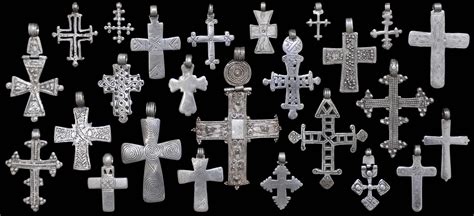
Ethiopian crosses, also known as Abyssinian or Ethiopian-Eritrean crosses, are a distinctive group of Christian cross variants that symbolize Christianity in Ethiopia, Eritrea, and among Ethiopians and Eritreans. Their elaborate and stylized designs set them apart from other Christian cross variants.
Historical Context
Christianity most likely arrived in Ethiopia in the first century. The conversion of King Ezana in 330 CE led to its official acceptance and the minting of coins bearing one of the earliest uses of the cross as a Christian symbol. Around 340 CE, Ethiopia became one of the first Christian states in the world when the religion was spread from Egypt to its north. Aksum, the seat of the newly converted King Ezana and already the capital of the region, became the center of Christianity in Ethiopia.
In biblical times, Ethiopia was linked to the Holy Land through frequent pilgrimages to Jerusalem. Christianity in Ethiopia is a product of almost two millennia of practice, isolation, and conflict. For much of the country’s history, it has been isolated from other Christian countries, which has led to the development of unique religious architecture and practices not seen anywhere else.
Despite Egypt being overwhelmingly Muslim, the Coptic Orthodox Church of Alexandria administrated the Ethiopian Orthodox Church up until 1959.
Read also: Ethiopian Cuisine: Philadelphia Guide
Forms and Materials
The concept of what can be constituted in the shape of a cross has an inclusive meaning in Ethiopia. They vary in scale and proportion, from a few centimeters to architectural buildings such as the church at Lalibela, where the entire church, in the form of a cross, is hewn directly from rock. There are three main types of crosses made in Ethiopia:
- Crosses worn around the neck
- Crosses intended to be held
- Processional crosses, which had wooden staffs socketed into them
Originally, they were made by casting metal with the lost wax process. This is a technique commonly used in West Africa, and it is speculated that it may have been introduced into the region by nomadic people. Some of the oldest crosses in existence today are made from iron. “Silver” crosses in the past were made from Maria Therese thalers. Crosses are also painted on church walls or on large gesso-covered wood altar panels.
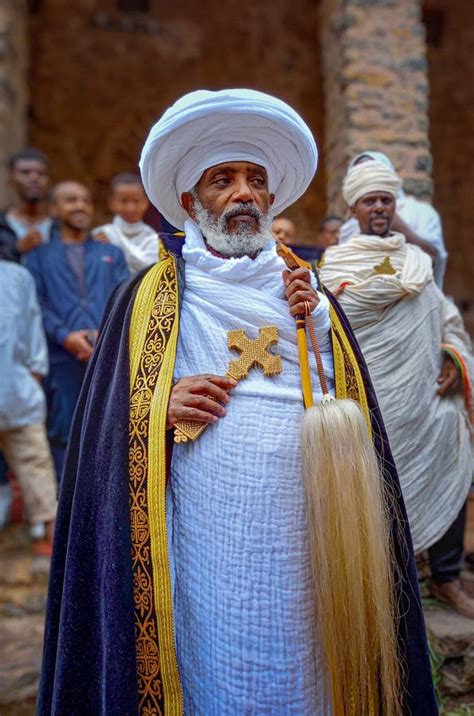
Handheld crosses, made from iron, brass, silver, and wood, are typically 20-25cm in height and are specifically used by priests to touch and bless the faithful. Gifted by Ethiopian monarchs and dignitaries to the church, large processional crosses with openwork designs and shafts are carried at the apex of sticks.
Different types of crosses and their uses:
| Cross Type | Material | Use |
|---|---|---|
| Hand Crosses | Iron, brass, silver, wood | Used by priests to bless the faithful |
| Processional Crosses | Metal (originally cast with lost wax process) | Carried on long poles in religious processions |
| Pendant Crosses | Silver (historically from Maria Therese thalers) | Worn around the neck |
Symbolism and Rituals
Ethiopian crosses are almost always made from elaborate latticework; the intertwined lattice represents everlasting life. No two crosses are exactly identical in style, the artisans who make them being allowed the freedom to exercise a measure of individual taste and creativity in their choice of shape and pattern.
Read also: Authentic Ethiopian Cuisine
The cross is also an apotropaic object: Small bilateral diptychs of the late 17th and 18th centuries, made in wood, were decorated with carved cruciform designs on the outside, acting as a protective emblem of the contents within and their owner. Hand crosses are either hand-held or suspended from a cord around the neck and are kissed by the faithful to receive a blessing. Processional crosses are carried on long poles in religious processions. Prayer staffs are used to mark rhythms during sacred dances and as supports to lean on while standing for long hours during Orthodox church services.
The most beautiful and intricate crosses are the processional crosses used in ceremonies and festivals throughout the liturgical calendar. They are mounted on long poles and sheltered by canopies and parasols of silk and velvet. A model of a cross would be made from wax, a negative mold was made around it from clay, and then superheated metal was poured in.
The Meaning of the Cross in Ethiopia
The cross of the Ethiopian tradition emerges as the sacred matrix that encompasses the life of the world in both its microcosmic and macrocosmic dimensions; and as the social and cultural nexus through which and with which people interact in order to shape and express personal and communal identities and hopes. The investigation includes textual and visual evidence, as well as aspects of Ethiopian history and cultural tradition, and highlights elements of both continuity and change.
Special attention is given to religious rituals in which crosses guide the participants to internalize abstract ideas central to their culture, through sensorial experience and interaction. A main objective of this analysis is to contribute to an understanding of visual creations as interactive depositories and therefore also generators of ideas, with an influential role in identity formation, socio-cultural interactions and the construction of power relations.
Read also: A Taste of Ethiopia in South Carolina
