Prunus africana, commonly known as the African cherry, holds a special place in Cameroon as its national flower. This remarkable tree species is not only a symbol of the nation's natural beauty but also plays a significant role in its ecology, medicine, and culture. This article delves into the characteristics, distribution, uses, and conservation status of Prunus africana, shedding light on its importance to Cameroon and beyond.
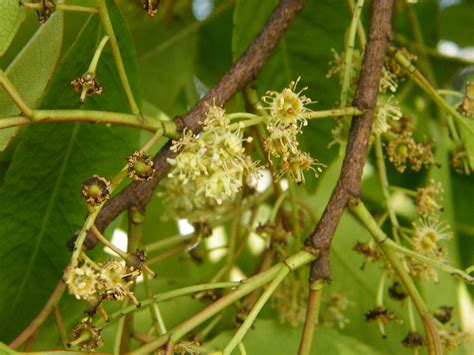
Prunus africana
Distribution and Habitat
Prunus africana, belonging to the Prunus subg. P. sect. Prunus, boasts a wide distribution across Africa. It thrives in the montane regions of central and southern Africa, as well as on the islands of Bioko, São-Tomé, Grande Comore, and Madagascar. This species can be found at elevations ranging from 900 to 3,400 meters (3,000-10,000 ft) above sea level.
As a canopy tree, Prunus africana typically reaches heights of 30-40 meters, making it the tallest member of the Prunus genus. Large-diameter trees are characterized by their impressive, spreading crowns. The tree thrives in moist climates with an annual rainfall of 900-3,400 mm (35-130 in) and exhibits moderate frost tolerance.
Botanical Characteristics
The bark of Prunus africana ranges from black to brown and is corrugated or fissured, with a scaly texture. The bark's fissuring pattern is characteristically rectangular. The leaves are arranged alternately and are simple in structure, measuring 8-20 cm (3.1-7.9 in) in length. They are elliptical in shape, with bluntly or acutely pointed tips, a glabrous surface, and a dark green color on the upper side, contrasting with a pale green underside. The leaf margins are mildly serrated.
Read also: Cameroonian Basketball Star: Nkwain Kennedy
A central vein is depressed on the top of the leaf and prominent on the bottom. The petiole, measuring 2 cm (0.8 in), is pink or red. The flowers are androgynous, featuring 10-20 stamens and are insect-pollinated. They range in size from 3-8 cm (1-3 in) and are greenish-white or buff in color. The flowers are distributed in 70 mm (2.8 in) axillary racemes, with the plant flowering from October through May.
The fruit is a drupe, varying in color from red to brown, and measures 7-13 mm (0.3-0.5 in). It is wider than long, two-lobed, with a seed in each lobe.
Uses and Cultural Significance
Prunus africana is valued for its timber and medicinal properties, and it also serves as an important food source for frugivorous birds and mammals. Dian Fossey noted its presence on the northwestern slopes of Visoke, highlighting its ecological importance.
The timber of Prunus africana is a hardwood used in the manufacture of various items, including axe and hoe handles, utensils, wagons, floors, chopping blocks, carving boards, bridge decks, and furniture. The extract from its bark, known as pygeum, is a herbal remedy with a long history of traditional uses.
Prunus Africana
Medicinal Properties and Traditional Uses
The extract called pygeum is a herbal remedy prepared from the bark of P. africana. The species has a long history of traditional uses.
Read also: History of Cameroon Soccer
The extract called pygeum is a herbal remedy prepared from the bark of P. africana. The extract called pygeum is a herbal remedy prepared from the bark of P. africana.
Conservation Status and Threats
The collection of mature bark for medicinal and other uses has led to the species becoming vulnerable. Large numbers of trees are harvested for their bark to meet international demand based on its medicinal qualities.
Early studies on the effects of bark harvest showed that the harvest affected population structure, increased mortality, and decreased fecundity. P. africana continues to be taken from the wild, but quotas have been awarded by the South African Forestry Department without adequate forest inventories due to some harvesters, spurred on by the high prices, removing too much of the bark in an unsustainable manner.
In the 1990s, an estimated 35,000 debarked trees were being processed annually.
Historical Context and Discovery
The name of the remedy "Pygeum" comes from the name of the plant, which was discovered to botany by Gustav Mann during his now-famous first European exploration of the Cameroon Range, with Sir Richard Francis Burton and Alfred Saker, in 1861. When the publication came out the Hookers had named the plant Pygeum africanum, followed by the designation "n. sp.", an abbreviation for nova species.
Read also: A Look at Cameroon's Qualifying History
The habitat is listed as "Cameroons Mountains, alt. 7000-7500 feet", which was above the tropical forest and in the alpine grasslands. Hooker notes that another specimen had been "gathered in tropical Eastern Africa" at 3000 feet by Dr.
Pollen Analysis and Radiocarbon Dating
A 1994/1995 study published in 1997 by Marchant and Taylor did a pollen analysis on and radiocarbon-dated two core samples from montane Mubindi Swamp in Uganda. The swamp is a catchment at 2,100 m (6,900 ft) altitude between mountain ridges. The investigators found montane Prunus, represented by currently growing P.
Cameroon's National Identity
Cameroon is a country populated by a variety of peoples and polities. French and English are the official languages. Cameroon has a community with a common ancestry.
The coat of arms of Cameroon consists of a shield with a banner above and below it. The shield has the same color pattern as the flag of Cameroon, and in the center is a map of the nation.

Coat of arms Cameroon
Popular articles:
tags: #Cameroon
