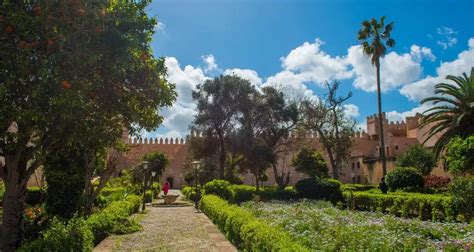
The Andalusian Gardens in Rabat is a picturesque oasis that showcases the blend of Islamic and Andalusian architectural styles. The tranquil atmosphere, lush greenery, and colorful flowers make it a perfect place for relaxation and leisurely strolls. Visitors can admire the intricately designed fountains, tiled paths, and traditional Moroccan aesthetics. The garden also offers captivating views of the Kasbah of the Udayas and the Bou Regreg river.
The Trust’s early spring Study Trip Abroad to Morocco was our first foray outside of Europe and offered an opportunity to explore a fascinating and photogenic country with a rich cultural history stretching back two millennia. Morocco’s architecture reflects the thorough cultural exchange created through seven centuries of Islamic rule over southern Spain. Portions of this region, known as Andalusia, for the Arabic “Land of the Vandals,” remained under Muslim control until the fall of the Nasrid kingdom of Granada in 1492.
A Blend of Cultures: Influences on Moroccan Architecture
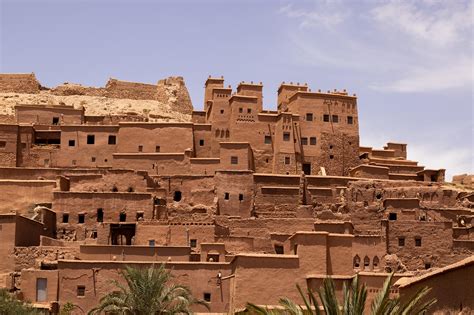
Moroccan architecture, as we know it today, dates back all the way to the 2nd century with the Berber Kingdom. The Berbers, or the Imazighen, are an indigenous ethnic group of North Africa and have lived in this region for thousands of years. In Morocco, the Berbers built traditional kasbahs and fortifications in the high mountains and desert, which we can still see today. Their architectural style is characterised by imposing buildings made from pise, or red mud clay bricks that have been dried in the sun.
At the time, Berber rulers were fending off frequent invaders, so the buildings were intentionally formidable to dissuade them. If you want to witness this ancient Moroccan architecture, head to the Atlas Mountains. Here you’ll find old Berber villages and kasbahs made with red clay bricks that make a striking contrast to the blue sky. One of the most impressive is Ait Benhaddou in Ouarzazate. Built in the 1600s, this UNESCO-listed fortified village is made of clay buildings surrounded by defensive walls. You’ll see the classic small windows on the outer walls and tall towers punctuating the skyline. Once inside, you’ll find well-preserved homes with fascinating carvings in wood and clay.
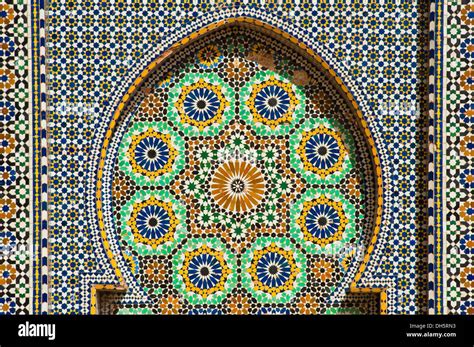
Morocco has witnessed a long line of invaders including Saharans, Phoenicians, Romans, Greeks, Byzantines, Ottomans, Arabs, Spanish and French. The region was conquered by Muslim Arabs by the 7th century and since then, Islam has had the most significant impact on Moroccan architecture. Traditional Moroccan tiles, or Zellij, were introduced, with spectacular geometric tiles lining the interiors and exteriors of buildings across Morocco.
Read also: Nanyuki Hotel Recommendation
The classic colours are green, blue, brown, white, and black, and you’ll spot all kinds of intricate patterns like diamonds, stars, and triangles. Fountains are an integral part of Islamic Moroccan architecture, as they represent paradise. You’ll spot Islamic Moroccan architecture almost everywhere, from the dazzling domes and towers to the elaborate mosques, palaces, and plazas.
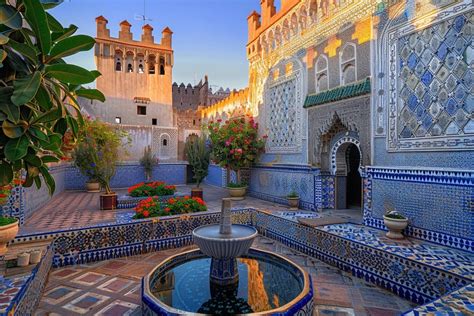
By the 8th century, the Moors, the Islamic Berber population, were greatly influencing Moroccan architecture. The Moors occupied parts of Spain and Morocco for centuries, so aspects of Spanish architecture became entwined with Islamic and African influences. Some distinctive Moorish influences include the white stucco facades, red-tiled roofs, and elements from Art Deco and Art Nouveau styles. These are indoor courtyards filled with greenery and a central water feature.
When the French colonised South Morocco from 1912 to 1956, they introduced elements of French design to Moroccan architecture. One of the most distinctive changes was the windows. As the French architects built new cities, they often constructed buildings that had European layouts but traditional Moroccan styles. The result was a Mauresque or Neo-Moorish style, and this can be found in cities like Rabat. Walk along the European-style boulevards and you may notice the grand administrative buildings.
Key Features of Moroccan Architecture
At the heart of traditional Moroccan architecture lies the riad, a house centered around a tranquil courtyard. These inward-facing spaces are designed for privacy and comfort, often featuring fountains or small pools surrounded by lush greenery. The combination of fragrant plants and shaded areas creates a refreshing retreat from the Moroccan sun.
Riads reflect a striking contrast between their simple exteriors and elaborately decorated interiors. Wrought-iron balconies and windows overlook the courtyards, allowing for natural light and ventilation, while intricate ornamentation elevates every corner into a visual masterpiece.
Read also: Detailed Review: Medina Gardens Marrakech
Zellige Mosaics: Patterns of Precision
No feature of Moroccan architecture better reflects its artistic spirit than zellige mosaics. These hand-cut tiles, arranged in intricate geometric patterns, adorn spaces with a vivid testament to generations of Islamic craftsmanship. The precision and patience required to create these designs are remarkable.
The Role of Arches, Domes, and Minarets
Arches, domes, and minarets are iconic features of Moroccan architecture, deeply rooted in Islamic traditions. The horseshoe arch, with its graceful curves, is a hallmark of doorways and windows, inviting both light and beauty into spaces. Domes crown important buildings, blending intricate designs with functional benefits like improved acoustics and natural light.
Minarets, the towering symbols of Moroccan skylines, serve as both a spiritual and architectural focal point. Adorned with detailed carvings and calligraphy, they embody the craftsmanship that defines Morocco’s rich architectural legacy.
Iconic Landmarks of Moroccan Architecture
The Koutoubia Mosque in Marrakech
Rising above the bustling streets of Marrakech, the Koutoubia Mosque is a symbol of the city’s spiritual and architectural heritage. Its 69-meter minaret, built in the 12th century, dominates the skyline, showcasing the intricate geometric patterns and ornate arches characteristic of Almohad design.
Hassan Tower in Rabat: A Symbol of Unfinished Grandeur
Standing as a testament to ambition and history, Hassan Tower in Rabat is an incomplete masterpiece of 12th-century architecture. Planned to be the world’s tallest minaret, construction ceased after Sultan Yacoub al-Mansour’s death in 1199, leaving the tower at 44 meters-just over half its intended height.
Read also: Uhuru Gardens: A Detailed Guide
The tower’s intricate stonework and reddish hues make it a striking feature against the Rabat skyline. Surrounded by the ruins of what would have been a grand mosque, the site now includes the Mausoleum of Mohammed V, blending ancient and modern elements of Moroccan architecture.
Al-Qarawiyyin Mosque and University in Fez: A Center of Knowledge
Founded in 859 CE, Al-Qarawiyyin in Fez is a cornerstone of Islamic scholarship and the world’s oldest continuously operating university. Its architecture reflects the cultural and intellectual exchange that flourished during the Middle Ages.
Ait Benhaddou: The Legendary Kasbah
Nestled in southern Morocco, Ait Benhaddou is a stunning example of traditional earthen clay architecture. This UNESCO World Heritage site features red mud-brick buildings, fortified walls, and decorative towers that blend harmoniously with the surrounding landscape.
The Andalusian Gardens in Detail
Nestled in the heart of Rabat, Morocco, the Andalusian Gardens within the Kasbah des Oudaias are a captivating retreat designed by the French during the colonial era. Spanning 8,400 square metres, this traditional garden showcases citrus trees, towering palms, and vibrant bougainvillaea, offering a cool escape on hot days.
The wall is over 1.4 km long, and its height varies between 4.9 m and 5.5 m for an average thickness of 1.65 m. The wall was pierced by five gates, not all of which have been preserved today.
Bab Teben or Bab al-Tben ("Gate of Hay"), was the westernmost gate (close to Bab el-Hadd in the Almohad wall). Today the area is known as Bab Jdid ("New Gate") and the gate was largely demolished to make way for new buildings. Only one side tower and chamber from the former gate has been preserved and is now used as a police post.
A minor gate, Bab al-Bouiba ("the Small Gate"), exists further east from here. Towards the middle of the wall is the gate called Bab Chellah ("Gate of Chellah"), the only one with a slightly monumental appearance. Its current form dates from a reconstruction in 1813 under Sultan Moulay Sliman.
At the wall's eastern end, near the river, is a bastion tower named Borj Sidi Makhlouf ("Tower of Sidi Makhlouf"), which was built to guard the nearby port. This is the only tower of the wall which has a rounded profile. It is named after a local marabout of Jewish origin, Sidi Makhlouf, whose tomb is adjoined to it. The bastion dates from the 18th century, but was most likely repaired sometime after being bombarded by the English in 1637.
Another tower, called Borj Lalla Qdiya or Borj Qadia ("Tower of (Lady) Qadiya"), is situated on the northeastern perimeter of the medina, away from the main Andalusian wall, but also dates from the 17th century. Rather than a fortified bastion, the tower served as an observation post.
Besides the captivating architecture and remnants of ancient sculptures and ramparts, the garden includes a variety of greenery and several tree species including date, oleander, orange, banana, and lemon trees, as well as lofty palms, shrubs, and vibrant bougainvillea.
The garden, a UNESCO World Heritage Site, is a travel destination for many Moroccans and tourists to take in the beauty of nature and explore the history of Morocco as well as rest under the shade of the trees.
Top 10 Best Things to Do in Rabat, Morocco [Rabat Travel Guide 2024]
The Modern Influence of Moroccan Design
Zellige tiles, with their vivid hues and precise geometric patterns, have become a cornerstone of modern interior design. Similarly, the iconic horseshoe arch, a hallmark of Moroccan architecture, is making its way into sleek entryways and modern interiors, offering a timeless touch.
Moroccan craftsmanship extends to ornate woodwork and metalwork, which have been reinterpreted in furniture and lighting design. Intricate lattice patterns now grace room dividers, decorative panels, and window screens, while textiles inspired by traditional Moroccan rugs add texture and warmth to global interiors.
Even urban architecture is embracing Moroccan principles. Modern riads are emerging in bustling cities, combining tranquil courtyards with contemporary amenities. This fusion of traditional Moroccan design with minimalist and Art Deco influences has created a distinctive aesthetic that resonates with designers and homeowners across the globe.
Experiencing Morocco’s Architectural Beauty
To truly appreciate the essence of Moroccan architecture, one must explore the medinas of Morocco’s imperial cities. In Marrakesh, the bustling streets reveal hidden treasures: ornate riads and hammams adorned with delicate zellige mosaics. Fez, home to the world’s oldest university, Al-Qarawiyyin, showcases the elegance of Islamic architectural mastery.
From the Kasbahs of the Atlas Mountains to the mud-brick structures of the Sahara, Morocco’s architectural marvels continue to inspire awe. Many are recognized as UNESCO World Heritage Sites, preserving their beauty and significance for generations to come.
Popular articles:
tags: #Morocco
